
ITR Filing 2026: New Form Changes Every Taxpayer Must Know Before Submitting a Return
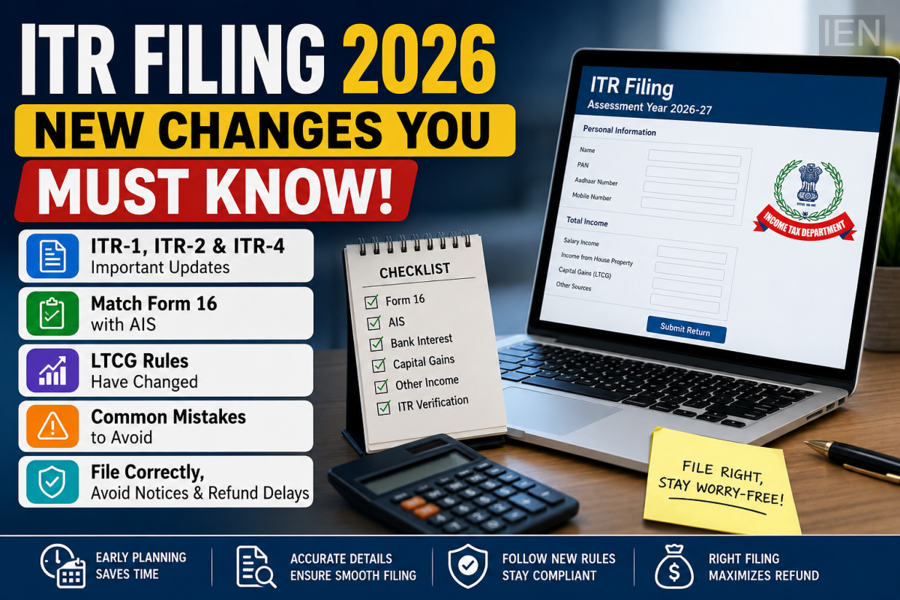
The income tax filing season is underway, and taxpayers across the country are preparing to submit their returns for the financial year. However, tax experts are warning that filing an Income Tax Return (ITR) without understanding the latest changes could lead to mistakes, delayed refunds, or even notices from the Income Tax Department.
For Assessment Year 2026-27, several important updates have been introduced in ITR-1, ITR-2, and ITR-4 forms. These changes are aimed at improving transparency, ensuring accurate reporting, and simplifying compliance. Taxpayers who fail to pay attention to the revised requirements may face unnecessary complications later.
Why Filing an ITR Requires Extra Attention This Year
Over the past few years, the Income Tax Department has significantly strengthened its data collection and verification systems. Information from employers, banks, stockbrokers, mutual fund companies, and other financial institutions is now automatically linked to taxpayer records.
As a result, any mismatch between the information reported in an ITR and the data available with the department can trigger scrutiny, refund delays, or requests for clarification.
This makes it more important than ever to carefully verify all financial information before submitting a return.
Matching Form 16 With AIS Has Become Essential
One of the most important steps before filing an ITR is reconciling Form 16 with the Annual Information Statement (AIS).
Form 16 contains salary and tax deduction details provided by an employer, while the AIS offers a broader view of a taxpayer's financial activities.
The AIS may include:
-
Salary income
-
Interest earned from savings accounts and fixed deposits
-
Dividend income
-
Mutual fund transactions
-
Stock market investments
-
Property-related transactions
-
High-value financial activities
Experts advise taxpayers not to rely solely on Form 16. Instead, all income details should be cross-checked against the AIS to ensure complete and accurate disclosure.
Long-Term Capital Gains Rules Have Changed
Another key area requiring attention is the reporting of Long-Term Capital Gains (LTCG).
Taxpayers who have sold shares, mutual funds, or other capital assets during the financial year must carefully review the updated reporting requirements.
Incorrect disclosure of capital gains can lead to tax calculation errors and may increase the likelihood of future notices from the department.
Investors are advised to verify capital gains statements received from brokers and asset management companies before filing their returns.
Choosing the Wrong ITR Form Can Create Problems
A surprisingly common mistake made by taxpayers is selecting an incorrect ITR form.
Each return form is designed for specific categories of taxpayers and income sources.
For example:
ITR-1
Generally used by salaried individuals with relatively simple income sources.
ITR-2
Typically applicable to individuals with capital gains, multiple house properties, or certain other income categories.
ITR-4
Designed for eligible taxpayers opting for the presumptive taxation scheme.
Using the wrong form can result in the return being treated as defective, requiring additional compliance and corrections.
Key Changes Introduced in the Latest Forms
The updated ITR forms contain several new reporting requirements and structural modifications aimed at improving tax administration.
Some of the major changes include:
-
Expanded disclosure requirements for certain income categories.
-
Additional reporting fields for capital gains.
-
Enhanced property income reporting provisions.
-
Improved verification and reconciliation mechanisms.
-
Greater integration with AIS and other tax databases.
Taxpayers should carefully review the instructions applicable to their selected form before filing.
Common Mistakes That Can Delay Refunds
Tax professionals frequently observe several errors that slow down return processing.
These include:
-
Incorrect bank account details.
-
Mismatch between Form 16 and AIS information.
-
Failure to report interest income.
-
Errors in capital gains reporting.
-
Wrong PAN or personal information.
-
Selection of an incorrect ITR form.
-
Incomplete verification after filing.
Even a small mistake can delay refund issuance or require additional follow-up with the tax department.
Steps to Take Before Filing Your Return
Experts recommend following a checklist before submitting an ITR:
-
Download and review AIS.
-
Check Form 26AS for TDS details.
-
Compare AIS with Form 16.
-
Verify bank interest income.
-
Review capital gains statements.
-
Confirm personal details and bank information.
-
Select the correct ITR form.
-
Verify the return after submission.
Completing these steps can significantly reduce the risk of future corrections or notices.
Accuracy Is More Important Than Speed
Many taxpayers rush to file returns immediately after the filing window opens. While early filing has advantages, accuracy should never be sacrificed for speed.
A carefully prepared return that reflects all income sources and complies with the latest reporting requirements can help avoid refund delays, compliance issues, and future disputes.
With several changes introduced in the ITR forms for Assessment Year 2026-27, taxpayers should take the time to understand the new rules, reconcile all financial records, and ensure that every detail is reported correctly before hitting the submit button.
