
ITR Filing 2026: Made a mistake while filing your ITR? Get a chance to rectify the return without any penalty—know the full details...
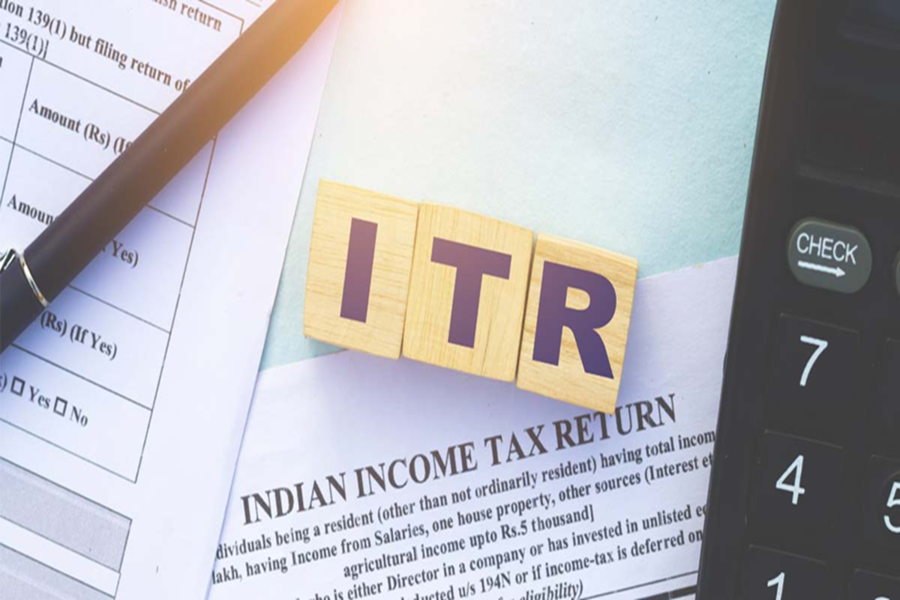
How Many Times Can We Revise an ITR Form? Selecting the correct form is the most crucial step when filing an Income Tax Return (ITR). If you inadvertently choose the wrong ITR form, your return could be declared defective or invalid. This could not only stall your refund but also lead to a notice from the Income Tax Department.
Tax experts advise that if you have made a mistake in selecting the form, you should rectify it yourself as soon as possible rather than waiting for a notice from the Income Tax Department. Let us understand how the wrong form can be corrected, how many times changes are permitted, and what significant changes regarding deadlines were introduced in Budget 2026.
Can an incorrect ITR form be corrected?
Yes, it certainly can be corrected. If you have already filed and verified your original return, you can rectify the error by filing a 'revised return' under Section 139(5) of the Income Tax Act.
Praveen Kakde, a Mumbai-based Chartered Accountant, explains, "Legally, taxpayers can change their ITR form by filing a revised return. The revised return completely replaces the original return. For instance, if someone had capital gains requiring ITR-2 but mistakenly filed ITR-1, they can file a revised return using the correct form."
According to CA Shreya Gupta Goyal, if the department detects the error beforehand and issues a notice regarding a defective return under Section 139(9), you must respond within the stipulated timeframe. Ignoring the notice could lead to the assumption that the return was never filed in the first place.
How many times can you revise your ITR?
The Income Tax Act does not restrict the number of times you can revise your return. If you repeatedly discover errors, you can file a revised ITR as many times as necessary within the stipulated timeframe.
Get a monthly pension of ₹6 lakh and a bonus of ₹2.64 crore through an SIP of just ₹6,000—here is the secret formula.
Although there is no limit on the number of revisions allowed, CA Pravin Kakde advises against filing revised returns repeatedly. It is better to verify all corrections thoroughly and file a single final revised return, as frequent revisions could draw the attention of the tax department to your case.
Deadline extended in Budget 2026, but a penalty applies!
A major change regarding the deadline for filing revised returns has been introduced in Budget 2026, which is crucial to know:
Extended window: The deadline for filing a revised return for the Assessment Year (AY 2026-27) has been extended from December 31 to March 31, 2027. This means you now have an additional three months to make corrections.
Free until December 31, 2026: If you make any corrections to your return by December 31, 2026, you will not have to pay any additional fees or penalties.
Fee of ₹5,000 after January 1: If you utilize this extended window to file a revised ITR between January 1, 2027, and March 31, 2027, you will be charged a fee of ₹5,000. However, if your total income is less than ₹5 lakh, the fee will be ₹1,000.
What are the consequences of not correcting errors?
Failure to rectify errors in the form promptly can lead to serious consequences:
Refund delayed: The tax refund process will be halted if the form contains errors. No carry-forward of losses: You will not be able to carry forward capital losses or business losses to subsequent years.
The final option—ITR-U: Once the window for filing a revised return closes on March 31, your only remaining option will be to file an Updated Return (ITR-U), which entails paying additional penalty tax along with substantial interest.
