
Is Your Bank Deposit Safe? Finance Ministry Tightens Security After ₹590 Crore Fraud Case
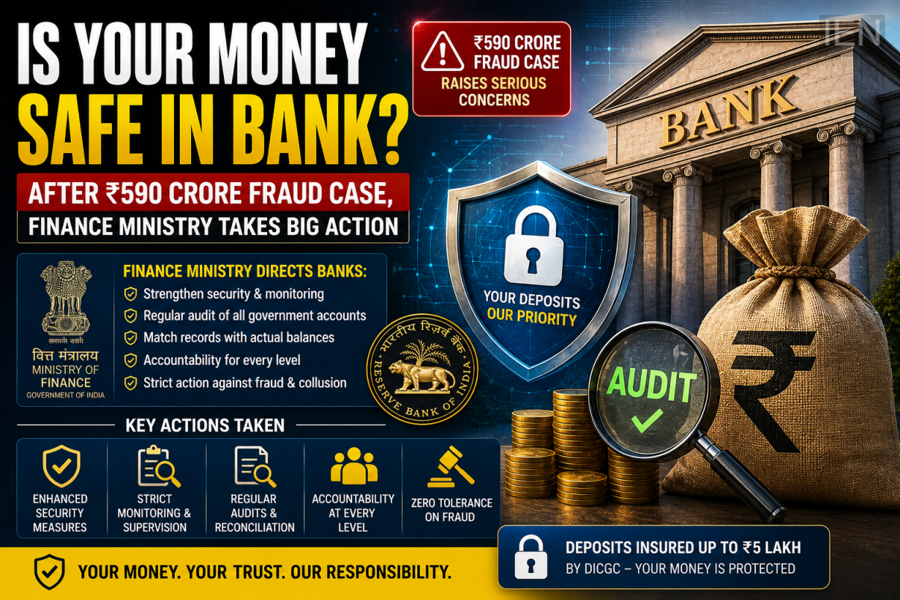
Concerns over the safety of bank deposits have resurfaced following a major fraud case involving approximately ₹590 crore linked to a government account in Haryana. The incident has prompted the Ministry of Finance to direct public sector banks to strengthen internal controls, improve monitoring systems, and enhance auditing procedures to prevent similar cases in the future.
The fraud, reportedly associated with an account maintained at IDFC First Bank, has raised questions about oversight mechanisms, record verification processes, and the safeguards in place to protect public funds. In response, authorities have initiated a review of banking procedures and directed financial institutions to improve risk management practices.
Finance Ministry Orders Stronger Oversight
Following the discovery of the alleged fraud, the Finance Ministry convened a high-level meeting with banking officials and stakeholders. During the discussions, banks were instructed to strengthen their security frameworks, particularly in branches that handle government accounts and public funds.
The ministry emphasized the need for:
-
Enhanced monitoring of high-value accounts
-
Regular reconciliation of records
-
Improved internal audits
-
Stronger verification procedures
-
Increased accountability at branch level
-
Better fraud detection systems
Officials have also been asked to ensure that account records accurately reflect actual fund positions to prevent discrepancies from going unnoticed.
What Triggered the Concern?
According to preliminary findings, the case involved a significant mismatch between official records and the actual funds available. Reports suggest that account documents indicated that approximately ₹590 crore remained available, while the corresponding funds were allegedly missing.
The discrepancy reportedly remained undetected for an extended period, raising concerns about monitoring mechanisms and internal controls within the banking system.
Investigators are examining how such a large gap between recorded balances and actual funds could occur without triggering immediate alerts.
Allegations of Multiple-Level Involvement
Authorities suspect that the fraud may have involved coordinated actions by multiple individuals.
Investigative reports indicate that the alleged irregularities could involve:
-
Bank officials
-
Branch-level employees
-
External individuals
-
Financial intermediaries
-
Certain administrative personnel
Investigators are currently examining transaction records, approval processes, and audit trails to determine the extent of the alleged misconduct.
Are Ordinary Bank Deposits at Risk?
While incidents of banking fraud often generate concern among customers, experts point out that isolated fraud cases do not necessarily indicate a systemic threat to retail deposits.
India's banking system operates under multiple layers of regulation and supervision, including oversight by the Reserve Bank of India and various government agencies.
Banks are required to follow strict guidelines relating to:
-
Capital adequacy
-
Risk management
-
Internal audits
-
Fraud monitoring
-
Regulatory reporting
However, experts stress that strong compliance and continuous monitoring remain essential to maintaining public confidence.
Deposit Insurance Provides Additional Protection
Bank customers should also be aware that eligible deposits in commercial banks, small finance banks, regional rural banks, and cooperative banks are protected by the Deposit Insurance and Credit Guarantee Corporation.
Currently, deposit insurance covers eligible deposits up to ₹5 lakh per depositor per bank, including principal and accrued interest, in the event of bank failure.
Although the Haryana fraud case involves alleged misappropriation rather than a bank collapse, deposit insurance remains an important safeguard within India's financial system.
Key Measures Banks Have Been Asked to Implement
Following the incident, banks have reportedly been instructed to focus on several critical areas:
Regular Reconciliation of Records
Branches must frequently compare account records with actual fund positions to identify discrepancies quickly.
Stronger Internal Audits
More rigorous auditing procedures can help detect irregular transactions before they escalate into large-scale fraud.
Enhanced Monitoring of Government Accounts
Government-related accounts often involve substantial sums and therefore require additional oversight.
Improved Accountability
Banks have been directed to clearly define responsibilities and strengthen supervisory mechanisms at various operational levels.
Technology-Based Fraud Detection
Advanced analytics, automated monitoring tools, and real-time alerts can help identify suspicious activity more effectively.
What Customers Can Do to Protect Their Accounts
While banks and regulators are responsible for maintaining institutional security, customers can also take precautions to protect their funds.
Financial experts recommend:
-
Regularly reviewing account statements
-
Enabling transaction alerts
-
Monitoring unusual account activity
-
Reporting discrepancies immediately
-
Keeping banking credentials secure
-
Using official banking channels only
Staying informed and vigilant can help customers detect potential issues at an early stage.
Why This Case Matters
The alleged ₹590 crore fraud highlights the importance of robust internal controls and transparent auditing systems within financial institutions. It also underscores the need for continuous monitoring of high-value accounts and government funds.
The Finance Ministry's response demonstrates a broader effort to strengthen trust in the banking sector and ensure that similar incidents are detected and prevented in the future.
Conclusion
The Haryana fraud case has prompted renewed scrutiny of banking oversight and security procedures across the country. While regulators have moved quickly to strengthen monitoring and auditing requirements, the incident serves as a reminder of the importance of strong governance and accountability within the financial system.
For depositors, the case reinforces the value of staying informed, monitoring account activity, and understanding the safeguards that exist to protect funds within India's banking network.
