
Is it cost-effective to install a solar system if your electricity consumption is 100–200 units? Find out the details..
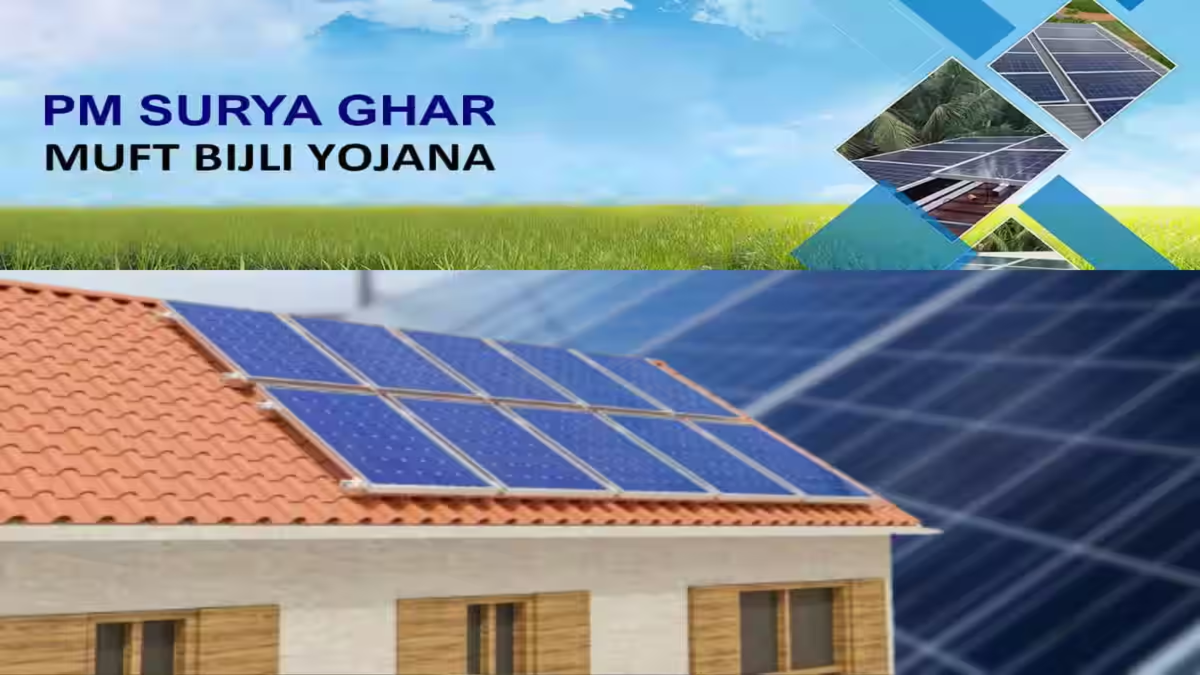
Under the PM Surya Ghar Yojana, more than 6 million (60 lakh) people across the country have installed rooftop solar systems in their homes. In Uttar Pradesh alone, 900,000 (9 lakh) people have availed themselves of this benefit. Through this 'free electricity' scheme, eligible consumers receive a subsidy ranging from ₹45,000 to ₹108,000. State governments also provide additional assistance, ranging from ₹15,000 to ₹30,000. This enables users to get up to 300 units of free electricity every month. But the question remains: is the PM Surya Ghar Yojana beneficial for everyone? What should your household's electricity load be for it to be truly advantageous? Let’s see what solar experts have to say, along with a case study...
Electricity consumption of 200 to 400 units
Solar panel expert Vishwas Kumar states that solar panels are most beneficial for households with a monthly consumption of at least 200 to 400 units. At this level of consumption—typically involving the regular use of at least one air conditioner (AC), a refrigerator, a washing machine, and a cooler—the monthly electricity bill usually ranges from ₹1,800 to ₹3,500. Installing a 2–3 kilowatt (kW) on-grid solar system in such a scenario can bring the electricity bill down to zero. Under the PM Surya Ghar Yojana, a 2–3 kW connection qualifies for a direct subsidy of ₹60,000 to ₹78,000. The initial cost of the solar panel setup—approximately ₹200,000—is typically recovered within 3 to 4 years, after which the user continues to enjoy free electricity for another 20–21 years.
Are solar panels beneficial for a consumption of 100–150 units?
If your household consumes 100–150 units of electricity per month, a 1 kW solar system—generating about 4–5 units daily—would be appropriate. The cost for such a system is approximately ₹60,000 to ₹70,000. This includes a subsidy of ₹30,000 from the central government and an additional subsidy of ₹15,000 from the state government. In other words, your actual expenditure will be only 25,000 to 30,000 rupees. In Uttar Pradesh, where the electricity tariff is 6–7 rupees per unit for consumption of 100–150 units—resulting in a monthly bill of 900–1,200 rupees—the initial investment can be recovered within 3–4 years. In states like Delhi, Punjab, Rajasthan, and Karnataka, domestic electricity consumption of up to 100–200 units is either free or charged at a very low rate, keeping electricity bills as low as 100–200 rupees. In such cases, installing solar panels may not prove to be very beneficial.
Where and how much do solar panels benefit you?
Consumption of 300 to 600+ units
If your household electricity consumption ranges from 300 to 600 units, you are charged a tariff of 8–11 rupees per unit. Installing a 3-kilowatt solar panel system entitles you to a subsidy of 78,000 rupees, and your high electricity bill can be reduced by as much as 80–90 percent.
Consumption of 200 to 350 units
If your household electricity consumption is between 200 and 350 units, installing a 2 to 3-kilowatt system can bring your electricity bill down to zero. If you opt for an installment-based (EMI) payment plan for the solar panel system, the monthly EMI amount is roughly equivalent to your previous electricity bill. Since electricity at commercial rates costs 10–14 rupees per unit, an on-grid solar system leads to significant monthly savings. If your monthly electricity bill exceeds 1,500 rupees, installing solar panels is a highly profitable investment. Conversely, if your bill is less than 500 rupees, it is not advisable to rush into installing a solar system until your electricity consumption increases. Rishabh Kanojia, co-founder of Excelic Tech Solutions—a provider of renewable energy testing solutions—stated that India has reached a pivotal moment in the solar energy sector, with the 'PM Surya Ghar: Muft Bijli Yojana' (PM Solar Home: Free Electricity Scheme) surpassing 5 million (50 lakh) rooftop solar installations. By leveraging green and clean energy, this initiative can reduce household expenses—specifically those related to electricity bills—by up to 10 percent. Grid-tied solar inverters play a crucial role by converting DC power from solar panels into AC power and maintaining synchronization with the electrical grid. For households with rooftop solar panels, these systems ensure a reliable installation, optimize energy utilization, and promote the adoption of clean energy technology.
Case Study 1: Vijay Kumar Mishra’s electricity bill becomes negligible
The 'PM Surya Ghar: Muft Bijli Yojana' has transformed the lives of many in Odisha, including Vijay Kumar Mishra from the Keonjhar region. Mishra’s electricity bill has dropped to zero. He opted to install a solar system under the 'Surya Ghar' scheme; previously, his household electricity bills were quite high. The monthly burden of electricity costs—a persistent issue—has now been eliminated. Mishra shared that, in the past, power outages caused significant hardship, making it difficult to carry out tasks at night or during emergencies. With the installation of the solar system, his daily routine has become much easier.
Disclaimer: This content has been sourced and edited from NDTV India. While we have made modifications for clarity and presentation, the original content belongs to its respective authors and website. We do not claim ownership of the content.
