
Is a diamond real or fake? Identify it at home using these 5 easy methods—and find out which tests you should avoid..
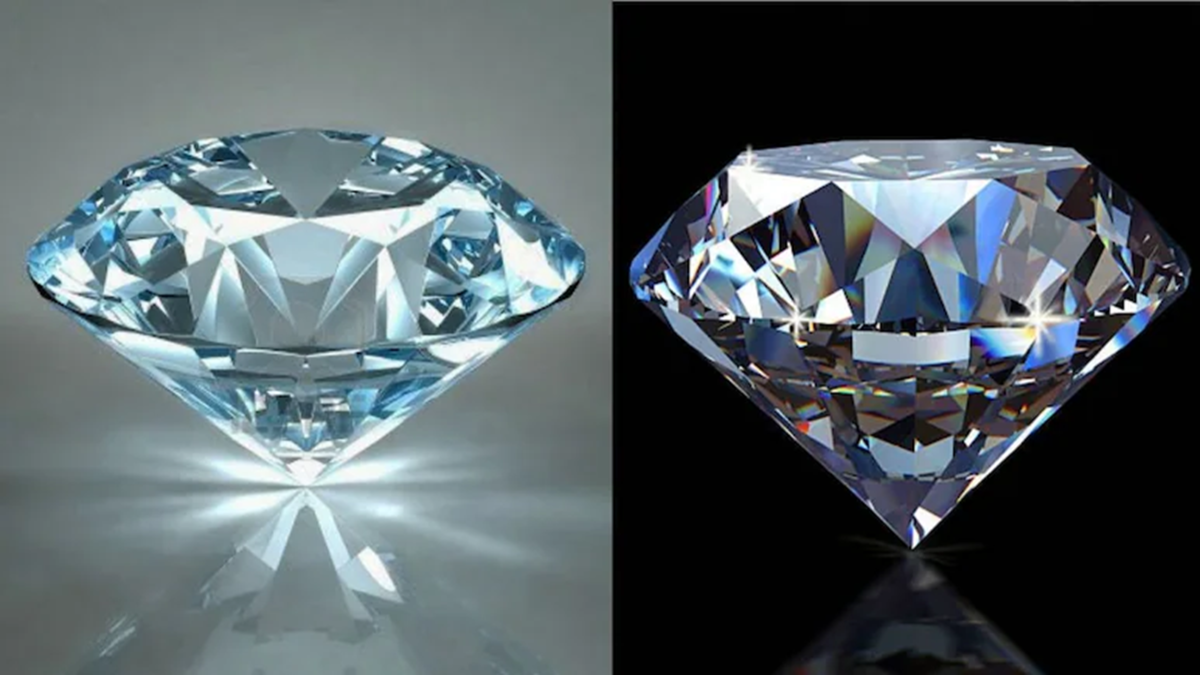
Diamonds have always been a symbol of royal grandeur, wealth, and prestige. Even today, they remain the top choice for the affluent. However, the market is flooded with synthetic or imitation stones—such as cubic zirconia, glass, and moissanite—that are sold in a way that makes it difficult for the average consumer to distinguish them from genuine diamonds. If you own a diamond and are unsure of its authenticity, there is no need to worry. You can easily differentiate between a real diamond and a fake one from the comfort of your home, using simple DIY methods or scientific tests.
Perform these simple checks at home.
If the diamond is not set in a ring or any other piece of jewelry—that is, if it is a "loose" diamond—you can conduct a preliminary assessment at home using the following methods:
Fog Test: Hold the diamond between your fingers and breathe on it to create a light mist (fog). Because of its high thermal conductivity, a real diamond dissipates heat rapidly, causing the mist to vanish within one to two seconds. In contrast, on glass or cubic zirconia, the mist will linger for several seconds.
Line or Newspaper Test: Draw a thick black line or make a small dot on a piece of white paper. Place the diamond, flat side down, over the mark. A real diamond reflects light so intensely that you will be unable to see or read the line or mark beneath it. If the line remains clearly visible, the stone is likely a fake.
Water Test: Drop the diamond into a glass filled with water. Due to its high density, a genuine diamond will sink immediately to the bottom. However, since some heavy imitation stones may also sink, this method alone is not entirely definitive.
Checking the Brilliance: A genuine diamond emits a beautiful, sharp white and grey sparkle from within, while its outer surface may display subtle, rainbow-like flashes. In contrast, imitation stones often exhibit excessive and overly vivid, rainbow-colored flashes.
Checking Jewelry Stamps: If the diamond is set in a piece of jewelry, examine the stamp on the inside of the metal. Genuine diamonds are typically set in 10-karat, 14-karat, or 18-karat gold, or in platinum. If you see the mark "CZ," it indicates the stone is cubic zirconia.
Avoid These Risky Testing Methods
Never attempt risky experiments at home, such as exposing a diamond to fire or rubbing it against glass. Synthetic stones, like moissanite, can also scratch glass, and extreme heat can cause permanent damage to a gemstone.
Modern Scientific and Professional Testing Methods
For 100% accurate verification, professional jewelers and gemologists utilize modern scientific instruments.
Scientific Method How It Works Result
Thermal Conductivity Teste: This pen-like device measures the rate at which a stone absorbs and releases heat. A genuine diamond conducts heat rapidly, causing the device to beep or a green light to illuminate.
Electrical Conductivity Tester: This is specifically used to distinguish between a genuine diamond and moissanite. Diamonds are poor conductors of electricity, whereas moissanite exhibits a slight degree of electrical conductivity.
10x Jeweler’s Loupe: This is a powerful magnifying glass used to examine the internal structure of a diamond. Natural diamonds often contain tiny mineral inclusions and sharp, defined edges, whereas imitation stones tend to be completely flawless with rounded edges.
UV Light Test: Ultraviolet light is shone onto the diamond in a dark room. Many genuine diamonds emit a blue glow; however, not all real diamonds exhibit this fluorescence.
Medical X-ray: A standard X-ray is performed on a diamond ring or stone. A genuine diamond is radiolucent, meaning it remains completely invisible on an X-ray film, with only the metal of the ring being visible.
Gemological Certificate: International laboratories, such as GIA or IGI, examine diamonds and provide a report. Always check this report when making a purchase.
This certificate confirms whether the diamond is natural, lab-grown, or an imitation stone.
Disclaimer: This content has been sourced and edited from Amar Ujala. While we modified it for clarity and presentation, the original content belongs to its respective authors and website. We do not claim ownership of the content.
