
Indian Households Hold More Gold Than Top Central Banks—Value Rivals Many Global Economies
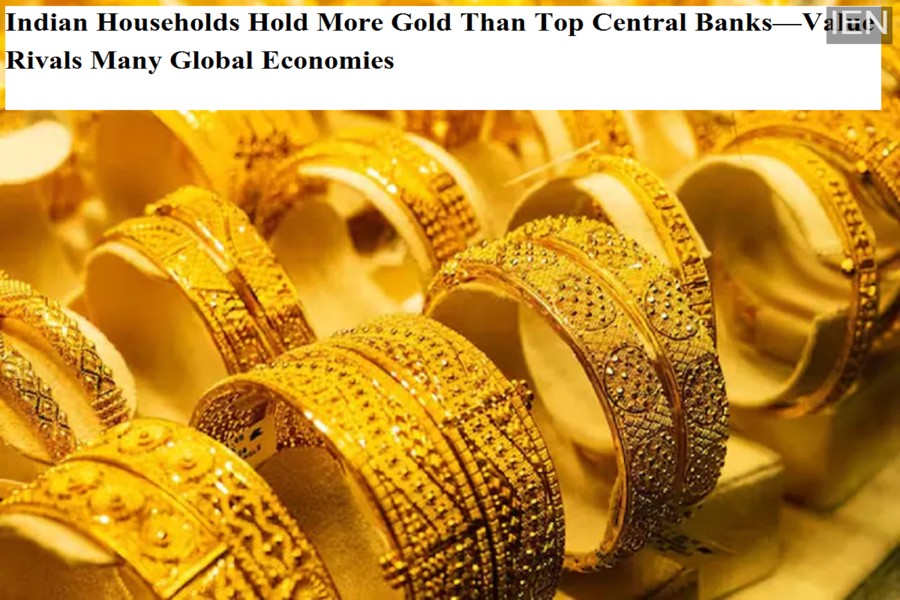
India’s Hidden Wealth: Household Gold Stockpile Outshines Global Reserves
India’s deep-rooted cultural affinity for gold has quietly created one of the largest private wealth reserves in the world. According to estimates shared by the ASSOCHAM, Indian households collectively hold more gold than the combined reserves of the world’s top 10 central banks. The total value of this privately owned gold is so massive that it surpasses the annual GDP of most countries globally.
This staggering accumulation highlights not only the financial strength of Indian households but also the untapped economic potential lying idle in lockers and vaults across the country.
Gold Holdings Worth Trillions: A Massive Untapped Asset
Various estimates suggest that Indian households possess gold worth nearly $5 trillion. This makes it one of the largest components of household wealth in the country. What makes this figure even more striking is that this valuation exceeds the GDP of almost every nation except economic giants like the United States and China.
Despite such immense value, a significant portion of this gold remains outside the formal financial system. Unlike financial assets such as stocks or bonds, this wealth does not actively contribute to economic growth.
India’s Official Gold Reserves vs Household Holdings
While private gold ownership dominates, India also holds substantial official reserves. According to the World Gold Council, India currently ranks as the eighth-largest holder of gold reserves globally, with approximately 880 tonnes held by the central bank.
However, this official reserve is only a fraction of the total gold owned by Indian citizens. In fact, household gold far exceeds the reserves of any single country, underlining the unique position India holds in the global gold landscape.
Economic Potential: Small Shifts, Big Impact
Experts believe that even a small shift in how this gold is utilized could significantly boost India’s economy. According to ASSOCHAM, if just 2% of household gold holdings are gradually redirected into financial assets every year, it could add nearly $7.5 trillion to India’s GDP by 2047.
Such a transformation could potentially push India’s economy beyond the $40 trillion mark, accelerating its journey toward becoming one of the world’s largest economic powers.
Why Physical Gold Limits Economic Growth
One of the key challenges is that most of India’s gold is held in physical form—jewelry, coins, and bars. While this offers security and emotional value, it restricts the productive use of the asset.
Physical gold does not generate income, create jobs, or directly contribute to sectors like infrastructure, manufacturing, or agriculture. As a result, a large portion of national wealth remains economically inactive.
Bringing Gold Into the Financial System
To unlock this potential, experts and policymakers are encouraging a gradual shift from physical gold to financial instruments. Options such as gold monetization schemes, gold-backed loans, and gold-linked savings products can help integrate this wealth into the formal economy.
This transition not only ensures better returns for households but also provides liquidity to fuel economic development across sectors.
A Cultural Asset With Economic Power
Gold has always held emotional and cultural significance in India—be it weddings, festivals, or savings for future generations. However, in today’s evolving financial landscape, there is growing awareness about using gold more strategically.
Balancing tradition with modern financial planning could help Indian households maximize returns while contributing to national growth.
Final Takeaway
India’s vast household gold reserves represent more than just stored wealth—they are a powerful economic resource waiting to be utilized. With the right policies and awareness, even a small shift in how this gold is managed could unlock enormous value for both individuals and the nation.
As India moves toward becoming a global economic powerhouse, mobilizing this hidden treasure could play a crucial role in shaping its financial future.
