
Income Tax Rules: If you keep cash at home, be careful! If caught, you will be fined 84%. Learn the new rules..
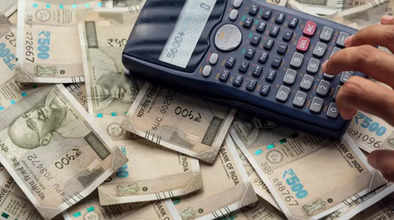
Nowadays, many people keep cash at home, thinking it will make their work easier. However, the government has tightened its scrutiny of cash. If the cash kept at home doesn't match your income or you can't provide a valid reason, the Income Tax Department can impose a hefty penalty. Recently, investment banker and CA Sarthak Ahuja explained in detail how the new rules work and what people should keep in mind.
If you also keep a lot of cash at home, first understand these income tax rules; otherwise, you could suffer huge losses. So let's find out...
How is 84% tax levied? Understand the rules in simple terms.
According to CA Sarthak Ahuja, if the Income Tax Department seizes cash in your home for which you can't provide a valid reason or proof, a total tax and penalty of approximately 84% could be levied on that amount. This also includes various surcharges, cess, and penalties. This means that if cash worth Rs 10 lakh is found without any reason, you could be subject to a tax and penalty of up to Rs 8.4 lakh.
How does the Income Tax Department detect cash?
People often wonder how anyone would know if they keep cash at home. But nowadays, banks and digital payment systems continuously send information about your transactions to the department.
If you withdraw more than ₹10 lakh from your savings account in a year, the bank sends this information to the Income Tax Department.
If you withdraw more than ₹20 lakh, the bank deducts TDS immediately.
If the department finds something suspicious in a transaction, it can immediately initiate a search and investigation.
Therefore, every cash transaction is recorded in the system, providing the department with information.
Heavy penalties apply even for accepting cash in property transactions.
Many people still accept cash in property transactions, but this is risky. If you take more than ₹20,000 in cash when selling a property, you could face a 100% penalty on the entire amount. This means you will have to pay a separate penalty equal to the amount of cash taken.
Similarly, if you borrow more than ₹2 lakh in cash from a single customer in a single day, a 100% penalty will be levied on the entire amount.
Taking cash loans from friends or family is also illegal.
Many people borrow cash from friends or relatives, but the law prohibits this. If you borrow cash from someone, you may incur a 100% penalty on the entire amount. Therefore, any loan should always be obtained through a bank or digitally.
Government surveillance is now stronger than ever.
According to CA Sarthak Ahuja, the government now has such advanced systems that any suspicious cash movement can be easily detected. Banks, payment apps, and other financial institutions are constantly sharing data. This means that if your cash transactions don't match your income, action can be taken at any time.
Sarthak Ahuja clearly stated, "Today the government has so much information that it can arrest anyone based on a transaction, so be careful."
Disclaimer: This content has been sourced and edited from NDTV India. While we have made modifications for clarity and presentation, the original content belongs to its respective authors and website. We do not claim ownership of the content.
