
If you have also received a message from the Income Tax Department, here's how to file your revised return; this is the process..
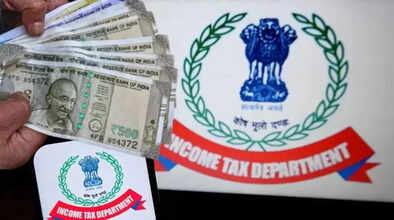
The last date to file Income Tax Returns (ITR) is December 31st, which means only seven days are left. Meanwhile, the Income Tax Department has sent a large number of SMS and emails to some taxpayers, informing them that their income tax refund has been temporarily withheld under the risk management provisions due to discrepancies in the information provided in their ITR. The department has also asked these taxpayers to file a revised income tax return within the due date of December 31st.
What is a Revised Income Tax Return?
When taxpayers file their ITR for the first time, they sometimes miss certain details or make mistakes. However, these mistakes can be corrected. Section 139(5) of the Income Tax Act, 1961, allows taxpayers to file a revised income tax return to correct omitted income, incorrect deductions, or calculation errors. This means that if there are any errors or omissions in your original ITR, you can file a Revised Return under Section 139(5).
Deadline for Filing Revised ITR
The last date for filing a revised income tax return is the last day of the relevant assessment year (AY). Therefore, the last date for filing a Revised ITR for AY 2025-26 is December 31, 2025. A revised ITR is used to correct errors made in the previously filed ITR.
Possible Errors:
Omission or under-/over-reporting of income
Claiming excessive or incorrect deductions
Choosing the wrong ITR form
Claiming less or more refund than entitled to
Things to keep in mind while filing a Revised ITR:
When you file a Revised ITR, your previous ITR is completely replaced. The Revised Return is considered your final ITR. Even if you have already received a refund on your original ITR, you can still file a Revised ITR within the stipulated date. Even if you have accidentally chosen the wrong ITR form, a Revised Return can still be filed. There is no limit to filing Revised Returns; you can make corrections multiple times. However, if the Assessing Officer has completed the assessment under Section 143(3), then a Revised ITR cannot be filed afterward.
How to file a Revised Income Tax Return?
Go to the income tax e-filing website: https://www.incometax.gov.in/iec/foportal/
Log in using your PAN, password, and captcha.
Click on the e-File menu and select Income Tax Return.
Select the relevant Assessment Year and ITR form number.
In Filing Type, select Original/Revised Return.
In Submission Mode, select Prepare and Submit Online.
In the General Information tab of the online ITR form:
In the Return Filing Section, select Revised return under section 139(5).
In the Return filing type, select Revised.
Enter the Acknowledgement Number and Date of filing of the original return.
Is there any penalty for filing a Revised ITR?
There is no penalty for filing a Revised ITR. However, if your actual tax liability turns out to be more than the amount shown previously, you may have to pay some additional amount as interest.
Difference between Revised ITR and Belated ITR
A revised ITR is filed when there is a genuine mistake in the original ITR and it needs to be corrected. A Belated ITR is filed when the ITR is not filed by the due date. In the case of a Revised ITR, an original ITR already exists, while a Belated ITR itself is considered the original ITR. A penalty of ₹1,000 to ₹5,000 may be levied on a Belated ITR, while there is no penalty for a Revised ITR.
Disclaimer: This content has been sourced and edited from TV9. While we have made modifications for clarity and presentation, the original content belongs to its respective authors and website. We do not claim ownership of the content.
