
If you have a good CIBIL score, tell your bank to lower the interest rate – don't believe it? The RBI itself made this rule..
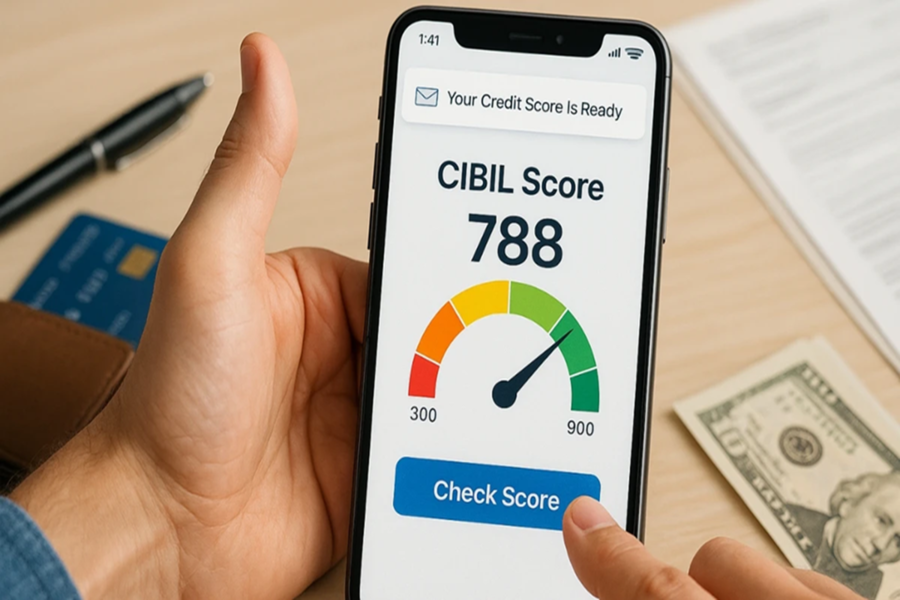
Taking out a loan has become commonplace these days. Some people take out loans to buy a house, others for a car, and some for personal needs. But have you ever wondered why some people pay less interest on the same loan while others pay more? The biggest reason for this is your CIBIL score.
If your CIBIL score is good, especially 750 or above, it's a powerful asset. Very few people know that the RBI (Reserve Bank of India) has given banks and NBFCs the freedom to set interest rates based on the customer's risk profile. This means that if you are a trustworthy customer, the bank will not charge you a high interest rate.
CIBIL's Impact on Loan Interest Rates
According to RBI rules, banks adopt a Risk-Based Pricing Model. This simply means that a customer with a lower probability of default will get a cheaper loan, and this probability is determined by your CIBIL score. This is why, with a good CIBIL score, you can confidently tell the bank, "My score is good, please reduce the interest rate."
Benefits of a Good CIBIL Score
What is an Ideal CIBIL Score?
Today, most banks and NBFCs consider a CIBIL score of 750+ as ideal. Such customers not only get loans easily, but also often benefit from lower processing fees, faster approval, and lower interest rates compared to others. In many cases, customers with high credit scores are offered preferential interest rates that are not available to regular customers.
Now the question arises, how do banks determine interest rates? Whether it's a home loan or a car loan, every bank has a different base rate, but the margin added to it depends on your CIBIL score. A low score means a higher risk, resulting in higher interest. On the other hand, with a good score, banks themselves are willing to offer you better deals.
How to Improve Your CIBIL Score?
If your CIBIL score is not good, there's no need to worry. It can be improved with a little understanding and patience. The most important thing is timely payments, as even a single late EMI or credit card bill can damage your CIBIL score. According to RBI records, information about late payments remains on your credit report for several years.
Pay attention to credit card usage.
Furthermore, excessive credit card usage is also detrimental. If your limit is ₹1 lakh and you are spending ₹90,000 every month, the bank will perceive you as being under financial stress. It is wise to use only a small portion of your credit limit.
Incorrect entries in the CIBIL report
Sometimes, there are incorrect entries in the CIBIL report, such as a loan you never took or a payment that was made on time but is showing as late. In such situations, it is crucial to check the report and correct the errors. Even a small mistake can lead to higher interest rates.
Another important point is not to close old credit card or loan accounts unnecessarily. A long and clean credit history is a positive sign for banks. It strengthens your CIBIL score, and this score helps you get loans at lower interest rates.
In conclusion, a good CIBIL score strengthens your financial health. The rules set by the RBI are in your favor; you just need to understand the value of your score. So, the next time you need a loan and have a good CIBIL score, be sure to negotiate for a lower interest rate with the bank.
Disclaimer: This content has been sourced and edited from Zee Business. While we have made modifications for clarity and presentation, the original content belongs to its respective authors and website. We do not claim ownership of the content.
