
If a Restaurant Adds ‘Fuel’ or ‘LPG’ Charges to Your Bill, Complain Here—Note Down These Details Immediately
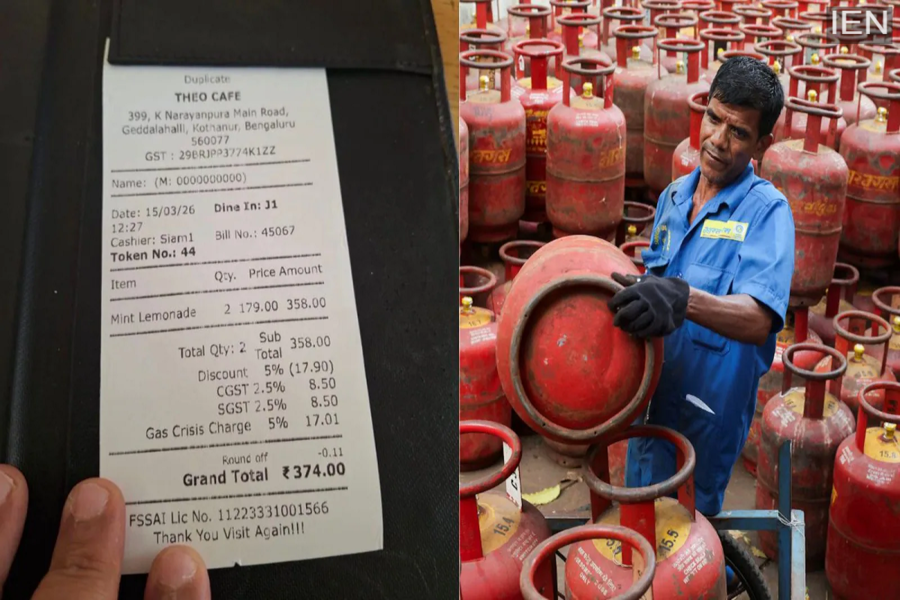
Gas/Fuel Charges Complaint: Adding an ‘LPG’ or ‘Fuel Charge’ to a restaurant bill is completely improper. The government has clarified that if you spot such extra charges on your bill, you should refuse to pay and file a complaint immediately.
Gas/Fuel Charges Complaint: In light of current international circumstances and rising demand, both gas prices and availability have become major topics of discussion. This is having a direct impact on our wallets—yours and mine—especially when we dine out at hotels or restaurants. Taking advantage of this situation, many restaurant owners have started surreptitiously adding extra charges—such as an ‘LPG Charge,’ ‘Fuel Surcharge,’ or ‘Gas Fee’—to their customers’ food bills.
But did you know that charging separately for gas or fuel on a food bill is strictly against the rules? If you are planning to dine out for lunch or dinner anytime soon, be extra vigilant when checking your bill. Let’s find out how you can protect yourself from this kind of clever rip-off and how you can take action against a fraudulent bill.
Why is Charging Separately for Gas Wrong?
Expenses such as LPG, electricity, staff salaries, and maintenance are fundamental operational costs for any restaurant. The rules stipulate that a restaurant must incorporate all these expenses into the prices listed on its menu. Just think about it: could anyone legitimately ask you to pay a separate “tava rental fee” (griddle charge) alongside the cost of your roti? Absolutely not! Therefore, tacking on a separate “fuel charge” at the end of the bill is a gross injustice to customers.
- Restaurants are required to factor all their operational expenses into the listed price of each dish.
- Apart from legitimate taxes (such as GST), no charges other than the price listed on the menu card may be collected.
- Adding any separate service or fuel fee without prior disclosure constitutes a violation of consumer rights.
- Deceiving customers by sneaking in small, additional charges is considered an “unfair trade practice.” According to the rules, once you place an order based on the menu, you are legally obligated to pay only the listed price and applicable taxes.
Beware! Here is how you are overcharged:
Restaurants often add an extra charge—labeled as “LPG” or “Fuel Charge”—in very small print at the very bottom of the bill. Most people are in a hurry after finishing their meal; they simply glance at the total amount and proceed to make the payment immediately. For instance, imagine your bill totals ₹500, but an additional ₹50 is surreptitiously added under the guise of a “gas charge.” This brings the total to ₹550. While this extra ₹50 may seem like a trivial amount to you, when collected from hundreds of customers throughout the day, it becomes a significant source of illicit income for the restaurant.
- Before paying the bill, always carefully review every item listed as well as all associated charges.
- If you spot terms like “LPG” or “Fuel” on the bill, immediately ask the manager to remove them.
- It is your absolute right to pay only the actual cost of the food consumed and the legally mandated taxes.
- If the restaurant staff argues with you, remind them that such practices are legally prohibited and that you have the right to file a formal complaint.
- Awareness is the simplest and most effective way to protect yourself from such fraudulent practices.
How to File a Complaint?
If the restaurant staff refuses to listen to you or declines to remove the erroneous charges, there is no need to be intimidated. The government has established simple, digital-friendly channels to assist consumers. You can register your complaint from the comfort of your home and ensure that strict action is taken against the restaurant in question. Under India’s Consumer Protection Act, levying hidden or incorrect charges on any customer is a punishable offense.
- You can register a complaint by calling the National Consumer Helpline (NCH) toll-free number: 1915.
- Alternatively, you can file an online complaint by downloading the NCH app on your smartphone.
- For more serious or complex cases, you may approach the ‘e-Jagriti’ portal or the office of the District Collector. One can also demand action by writing directly to the Consumer Protection Authority (CCPA) via email or letter.
- In today’s times, remaining vigilant is simply a matter of prudence, for no one has the right to wrongfully lay their hands on your hard-earned money.
