
Hyderabad Metro: ₹13,527 Crore Loan to Boost Metro Rail's Financial Health; Passengers to Benefit
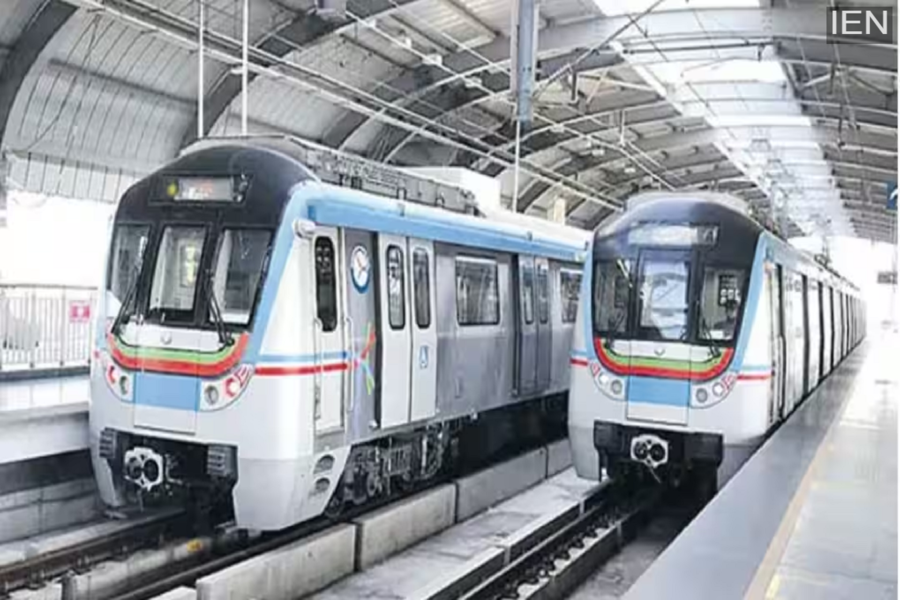
Hyderabad Metro Rail: The IRFC has extended a substantial loan of ₹13,527 crore to the Hyderabad Metro; this move will reduce the metro's debt burden, and the system has now come entirely under the control of the Telangana government.
Hyderabad Metro Rail: The Indian Railway Finance Corporation (IRFC) has signed a term loan agreement worth ₹13,527 crore with Hyderabad Metro Rail (Hyderabad) Limited. The objective of this agreement is to refinance and restructure the city's metro network debt and to stabilize its long-term financial health. The agreement was finalized in the presence of Telangana Chief Secretary K. Ramakrishna Rao. The official signing was executed by IRFC Chairman and Managing Director (CMD) Manoj Kumar Dubey, alongside senior administrative officials of the state.
Under the terms of this financial restructuring, the IRFC is providing a loan facility of ₹13,527 crore, with a tenure of 20 years and a repayment schedule structured in quarterly installments. This facility will replace high-cost commercial debts—including Non-Convertible Debentures, Commercial Papers, and existing term loans—which had previously placed a heavy financial burden on the project. Notably, this competitively priced, long-term financing comes with no processing fees, commitment charges, or prepayment penalties.
Hyderabad Metro Becomes a State Asset
According to Chief Secretary Ramakrishna Rao, this refinancing package serves an even broader strategic objective: it has successfully facilitated the transfer of 100 percent ownership of Hyderabad Metro Rail to the Telangana state government.
Consequently, this 69.2-kilometer system has transitioned away from its original Public-Private Partnership (PPP) model (operated under Larsen & Toubro) to become a fully state-owned public asset under the aegis of Hyderabad Metro Rail Limited (HMRL). Interest rates on loans from commercial banks and short-term debt instruments tend to be high and volatile. By transferring its debt to the IRFC, the Metro project secures significantly lower interest rates. A structured repayment mechanism involving quarterly installments provides relief to the system and ensures a highly predictable cash flow model. Now that the network has come entirely under the control of the Telangana government, corporate red tape has been eliminated.
Passengers to Benefit from Improved Facilities
Bringing the Metro under public ownership establishes a robust financial foundation, enabling the rapid advancement of critical Phase II expansion works. This will allow the State Government to easily extend eco-friendly connectivity to emerging growth corridors and upcoming airport lines.
Previously, the Metro's heavy debt burden served as a major financial impediment, necessitating continuous equity support from its parent company, L&T. The reduction in debt servicing costs dramatically improves the project's fundamental viability, shielding it from the volatility of daily operations and minor fluctuations in passenger ridership.
Operating with a reduced long-term debt burden allows the State Government to focus more intently on the passenger experience. This provides the necessary financial flexibility to implement potential fare revisions, integrated digital ticketing systems, improved 'last-mile connectivity,' and infrastructural upgrades across the existing 57 stations—which currently serve over 500,000 passengers daily.
This transaction is underpinned by a robust 'Credit Enhancement Framework.' This framework comprises an unconditional and irrevocable commitment from the Telangana government to settle all dues payable to the IRFC, a formal guarantee issued by the State Government, and an RBI-backed 'Direct Debit Mandate' designed to ensure uninterrupted repayment over a 20-year tenure.
