
How to save ₹7,000 from a ₹30,000 salary? A CA shares an easy way to create a budget..
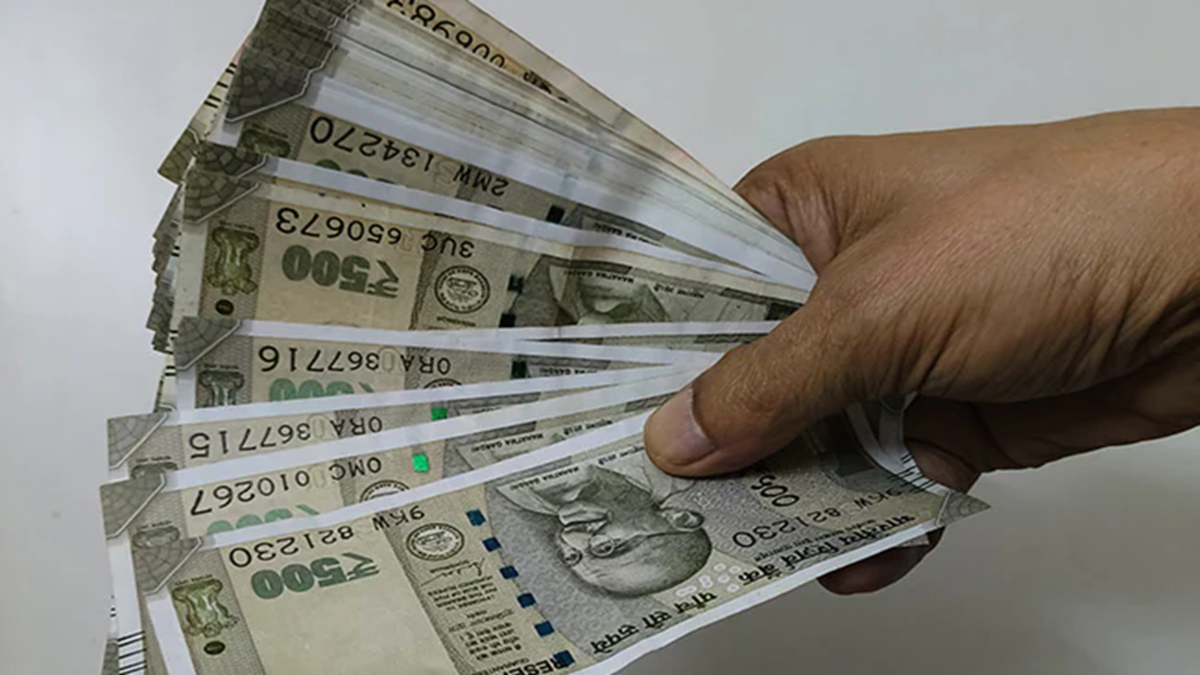
Investment Plan for a ₹30,000 Salary: If your monthly salary is ₹30,000, saving money after covering expenses like house rent, electricity bills, groceries, and commuting costs might seem difficult. However, by creating a proper budget, it is possible to save a portion of your income each month and invest it for the future. According to Sunil Kumar Singh, a Chartered Accountant based in Agra, planning your expenses as soon as you receive your salary can make saving much easier.
According to Chartered Accountant Sunil Kumar Singh, if an individual earns a monthly salary of ₹30,000—with ₹7,000 spent on rent and approximately ₹3,000 on essential bills like electricity—they are left with ₹20,000. By budgeting for groceries, commuting, entertainment, and other miscellaneous expenses, it is possible to save around ₹6,000 to ₹7,000 every month. He suggests setting aside funds for essential expenses as soon as the salary arrives. For instance, a budget of about ₹3,000 can be allocated for commuting or fuel, while approximately ₹1,000 can be set aside for mobile phone recharges (assuming two phones in the household). Planning for essential expenses in advance helps avoid a shortage of funds by the end of the month and makes it easier to determine a specific savings amount.
Sunil Kumar Singh notes that with a monthly income of ₹30,000, one can save approximately ₹6,000 to ₹7,000 after accounting for rent, electricity, groceries, transport, and other necessary costs. This requires keeping unnecessary purchases and wasteful spending in check. Saving even small amounts each month can accumulate into a significant sum over time. Therefore, rather than spending the remaining salary without a plan, it is better to set aside a portion specifically for savings and investments as soon as the salary is received. According to a chartered accountant, one should begin saving by building an emergency fund. This sum can prove useful in the event of sudden medical expenses, job-related issues, or other urgent situations, potentially reducing the need to borrow money from others or take on immediate debt during difficult times. Once an emergency fund is in place, one might consider allocating a portion of their savings into options such as bank savings accounts or fixed deposits (FDs). Before selecting any such option, it is essential to understand its interest rate, terms and conditions, and the ease with which funds can be withdrawn when needed.
Sunil Kumar Singh suggests that one could also consider starting a Systematic Investment Plan (SIP) with an amount of around ₹3,000 to work toward future goals. Through an SIP, investments are made into mutual funds at regular intervals. While this involves market-related risks—meaning returns are not guaranteed—long-term investment can offer the benefit of compounding. Before beginning any investment, it is important to consider one's income, risk tolerance, and future objectives.
When planning to save and invest on a modest income, one can explore various government-backed savings schemes in addition to bank savings accounts and FDs. Before investing in any scheme, it is crucial to examine its interest rate, investment tenure, withdrawal rules, and other associated terms. Investment choices should be aligned with one's specific needs and financial situation. According to chartered accountant Sunil Kumar Singh, even with a monthly salary of ₹30,000, it is possible to start saving and investing through proper financial management. This requires creating a budget for expenses as soon as the salary is received, curbing unnecessary spending, and consistently setting aside a portion of one's income as savings.
Disclaimer: This content has been sourced and edited from News18 Hindi. While we have made modifications for clarity and presentation, the original content belongs to its respective authors and website. We do not claim ownership of the content.
