
How much do you have to pay to book an LPG cylinder today? Check the rates now.
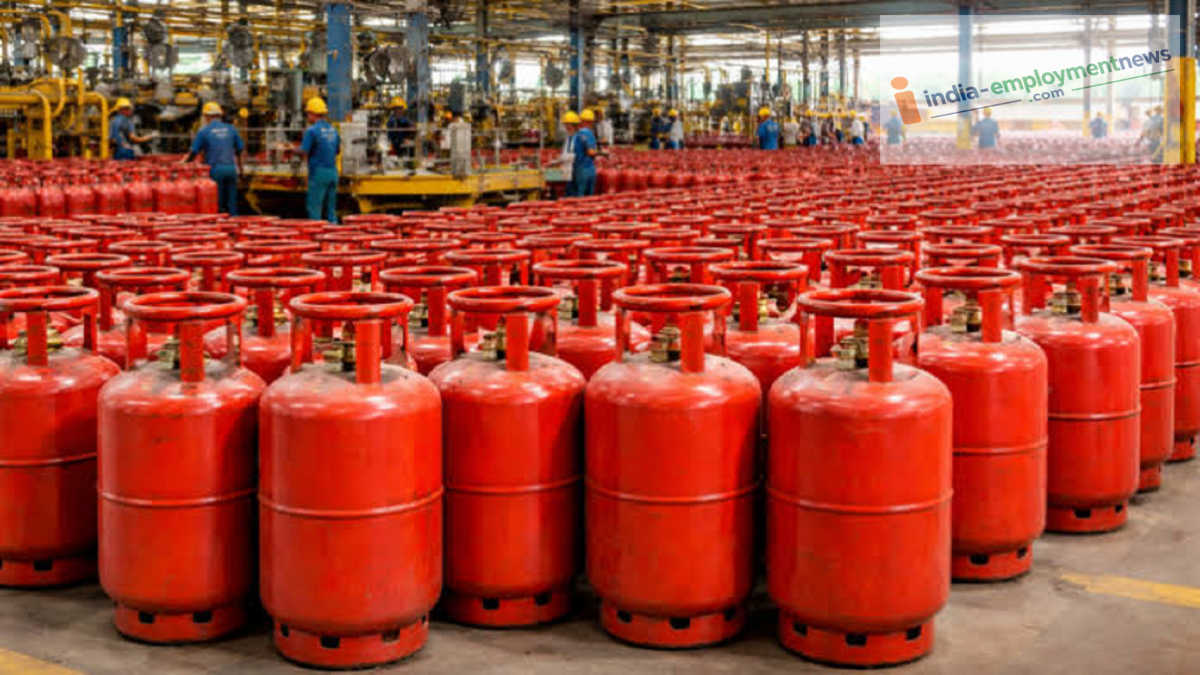
Even minor fluctuations in LPG prices significantly impact household budgets, given its widespread use for cooking across India.
LPG gas cylinder prices remain stable today, October 12, 2026; there have been no changes to the rates. Since Liquefied Petroleum Gas (LPG) is used daily for cooking in millions of Indian households, cylinder prices constitute a significant portion of monthly household expenses. With major festivals like Dussehra, Diwali, and Chhath Puja approaching, consumers are keeping a close watch to see if cooking gas prices rise during this period.
| City |
Domestic LPG Cylinder Price |
Commercial LPG Cylinder Price |
|---|---|---|
| Delhi |
₹942.00 |
₹2,810.00 |
| Noida |
₹939.50 |
₹2,747.50 |
| Gurugram |
₹951.00 |
₹2,828.00 |
| Mumbai |
₹912.50 |
₹2,764.00 |
| Kolkata |
₹945.00 |
₹2,954.00 |
| Chennai |
₹950.00 |
₹2,983.00 |
| Patna |
₹1,000.00 |
₹3,100.50 |
| Ranchi |
₹1,010.50 |
₹2,988.00 |
| Jaipur |
₹945.50 |
₹2,839.00 |
Why aren't domestic cylinder prices increasing?
Retail prices for cooking gas depend on factors such as global market conditions, import costs, and current currency exchange rates. When crude oil or gas prices rise in the international market, oil companies—such as IOCL, BPCL, and HPCL—absorb the resulting losses themselves to prevent placing a financial burden on ordinary consumers.
India imports a large portion of its LPG requirements; therefore, fluctuations in international energy prices and shipping costs can affect the supply cost of cooking gas within the country. However, the decision regarding when and by how much retail prices change rests with the oil marketing companies.
The government runs various schemes to safeguard the interests of economically disadvantaged families in India. One such initiative is the Ujjwala Yojana, designed for those who cannot afford to purchase gas cylinders at high prices. If prices fluctuate even slightly, they would revert to using wood and coal stoves—which is detrimental to health—so the government provides them with a subsidy and absorbs the additional costs itself to ensure they remain unaffected.
