
How does the LNG train launched from Sabarmati differ from the hydrogen train?
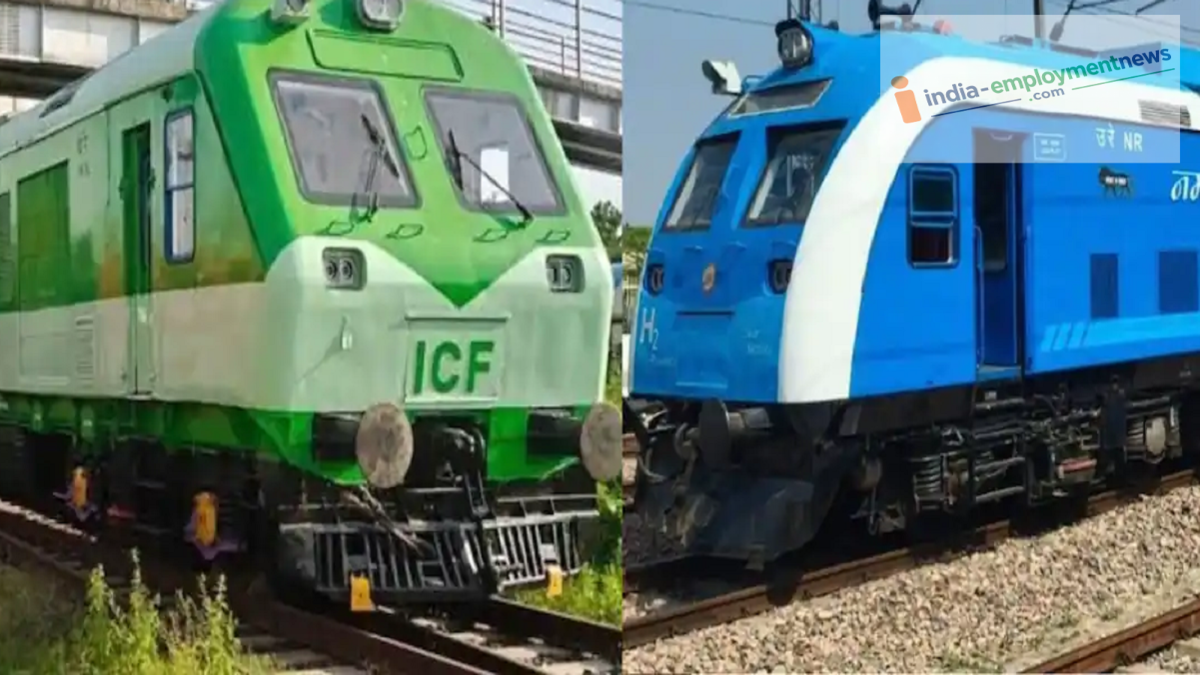
On September 27, Indian Railways launched the country's first LNG-diesel dual-fuel train from Sabarmati. Prior to this, the first hydrogen train had been launched on July 17. Both initiatives aim to reduce diesel consumption and pollution.
If you travel by train, you have likely heard about LNG and hydrogen trains. On September 27, Indian Railways launched the country's first LNG-diesel dual-fuel train from Sabarmati, Gujarat. A key feature of this train is that it does not run entirely on LNG; instead, it utilizes both LNG and diesel as fuel.
Meanwhile, the country's first hydrogen-powered train had previously been launched on July 17, 2026. While both share the same objective—reducing dependence on diesel and curbing pollution—their underlying technologies differ significantly. This raises the question: what exactly distinguishes the two trains?
How does the LNG train operate?
The LNG train utilizes a modified version of an existing diesel engine. It employs both LNG and diesel as fuel sources. Two 1,400-horsepower driving power cars have been modified to run on both fuels. According to the Railways, the system is designed to replace approximately 40% of diesel consumption with LNG.
How does the hydrogen train work?
The country's first hydrogen train was launched on July 17, 2026. Unlike trains with diesel engines, this train utilizes fuel cell technology. Electricity is generated through a chemical reaction between hydrogen and oxygen (derived from the air). This electricity powers the train's propulsion system. This process results in no direct carbon emissions from the tailpipe; instead, water vapor is released as a by-product.
What is the major difference between LNG and hydrogen trains?
While the objective of both trains is to reduce reliance on conventional fuels, their operating mechanisms differ significantly. In an LNG train, the diesel engine is not completely removed; instead, the fuel source is modified. In contrast, a hydrogen train generates electricity using fuel cells to power the train's electric propulsion system.
Simply put, LNG trains involve modifying existing diesel systems to reduce fuel consumption, whereas hydrogen trains utilize a completely different technology for energy generation and propulsion.
