
How do solar panels generate electricity without direct sunlight? Learn about the technology here.
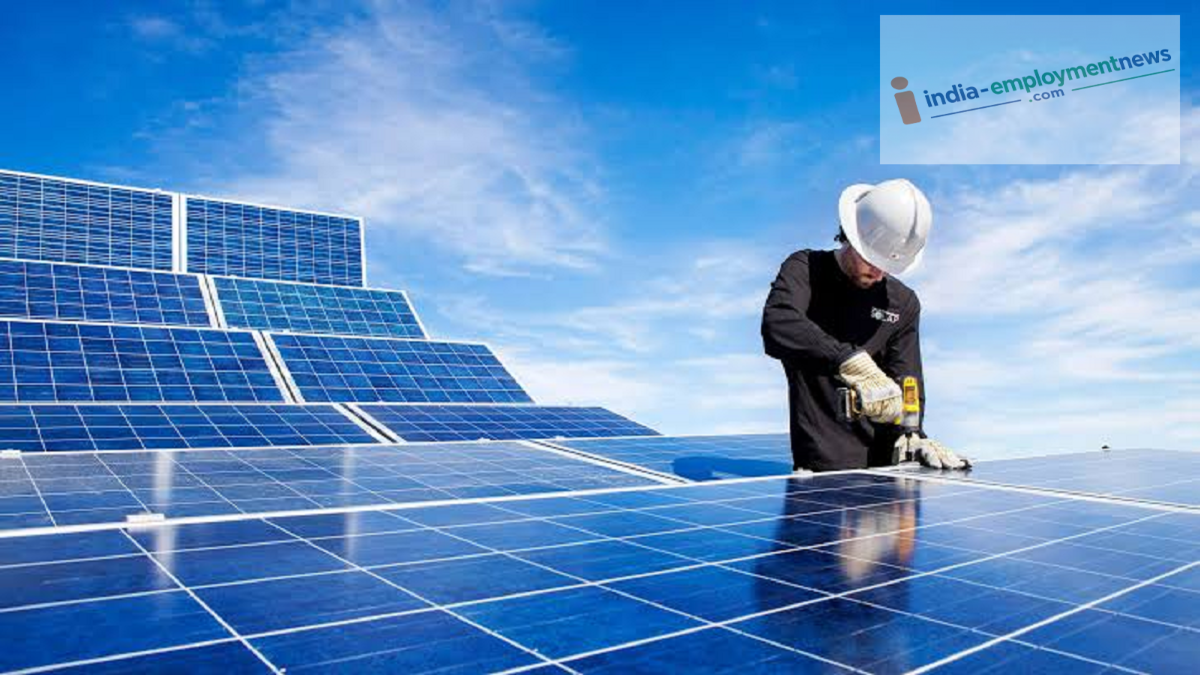
Solar Panel Performance: Solar panels require direct sunlight for maximum output, but energy production does not cease simply because there is no direct sunlight.
Solar Panel Performance: Solar panels need sunlight to generate electricity. Barring extreme temperatures, the stronger and more direct the sunlight, the higher the panel's output—essentially, more sun means more electricity. However, this does not mean that solar panels stop generating electricity entirely when there is no direct sunlight. During the monsoon season, the sky is often overcast, and direct sunlight is absent; yet, the panels continue to generate electricity. Similarly, energy production continues even when direct sunlight is not hitting the panels. Panels only stop generating electricity after the sun sets. This often raises the question: how do panels function when it is cloudy? Today, we will explore the answer to this.
How do solar panels generate electricity without direct sunlight?
Whenever a photon strikes the photovoltaic cells of a solar panel, electricity is generated. In other words, solar panels require visible light—not heat—to function. Sunlight contains photons with varying energy levels and wavelengths. When these photons collide with the semiconductor material within the solar cell, a flow of electrons is initiated, thereby generating electricity. Electricity is actually produced through photonic interaction rather than sunlight itself; consequently, panels can convert visible light into electricity. Furthermore, solar panels utilizing advanced technologies are now available that can capture photons of various wavelengths to generate power. While a solar panel's efficiency decreases in low-light conditions, the output does not stop completely.
Technologies transforming the landscape
TOPCon: TOPCon—or Tunnel Oxide Passivated Contact technology—enhances carrier selectivity and minimizes recombination losses. The advantage here is that these panels are more efficient than traditional PERC modules, even in low-light conditions. Studies have shown that TOPCon panels generate more electricity than other panels when direct sunlight is absent. Due to their low cost, excellent performance, and ease of manufacturing, these panels remain the industry's top choice.
Heterojunction (HJT): Like TOPCon, HJT panels also deliver excellent performance in low-light conditions. When compared, HJT panels offer higher efficiency than TOPCon panels, though their manufacturing process is somewhat more complex.
Bifacial Solar Modules: As the name suggests, bifacial panels generate electricity from both direct sunlight and light reflected from the rear side. Depending on factors like ground reflectivity, installation height, and site design, their efficiency can be 5–30% higher. This specific feature proves highly beneficial during the rainy season and winter months. Beyond rooftops, they are particularly advantageous when installed at solar farms or near lakes and other water bodies.
The Challenge of Temperature for Solar Panels
As mentioned earlier, barring temperature considerations, the stronger the sunlight, the more electricity the panels generate. In reality, high temperatures directly impact energy production. Ideally, solar panels perform best at a temperature of 25°C. As the temperature rises above this level, efficiency drops by 0.3–0.5% for every degree Celsius increase. This means that at 35°C, solar panels will generate 3–5% less electricity compared to 25°C. During summer, the surface temperature of solar panels can reach up to 60°C, which affects efficiency. High temperatures impact more than just energy production; prolonged exposure to high heat accelerates material degradation. Additionally, it increases stress on the solar cells and reduces the overall lifespan of the module.
