
How can one obtain a land or house lease (patta) in a village? Who is eligible for the benefit, and how does one apply?
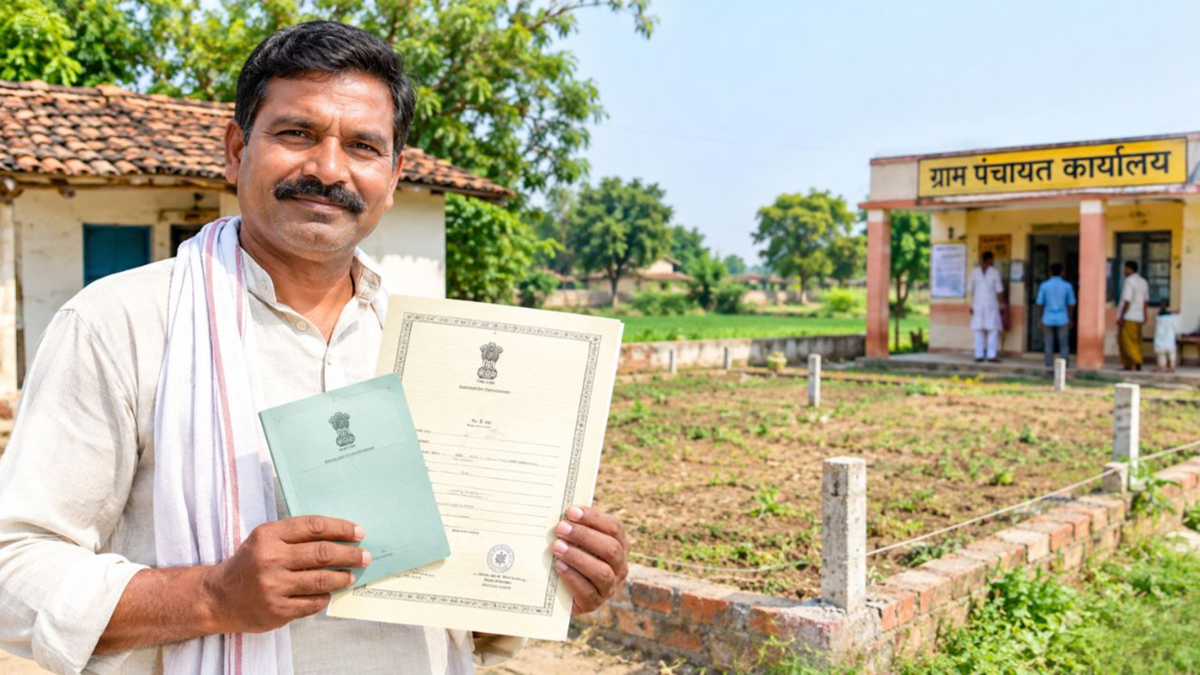
Applying Online for a Rural Land Lease (Patta): A *Patta* (lease deed) is a crucial document for securing legal ownership rights over one's house or land in rural areas. Often, villagers reside in ancestral homes or on land for years without possessing any official legal documentation. A *Patta* is a government document that grants individuals valid ownership rights over such land or houses. Once a *Patta* is issued, the property becomes secure, and the owner can even avail of bank loans against it. It not only makes the holder eligible for benefits under government schemes but also safeguards them against future illegal encroachments or land disputes.
**How to Obtain a Land *Patta***
Explaining the land lease process in Uttar Pradesh, *Lekhpal* Yagya Prakash Dixit stated that a public announcement (*Munadi*) is first made in the area, followed by the issuance of 'Form 1' to identify suitable land. The Land Management Committee reviews the identification and prepares a list of eligible candidates. Priority is accorded sequentially to SC/ST communities, Backward Classes, and families of martyrs. Eligibility regarding other castes is considered thereafter. A report on eligible candidates is submitted to the *Tehsil* office. Subsequently, the *Kanungo* and *Naib Tehsildar* conduct a field assessment, which is then verified by the *Tehsildar* and SDM. Finally, 'Form 57-Kha' is prepared, and the lease is granted for purposes such as agriculture, housing, fisheries, pottery, or other activities.
**Documents Required for a Land *Patta***
Documents needed to obtain a *Patta* in the village:
Identity proof, ration card, or Below Poverty Line (BPL) certificate.
Proof of long-term residence on the land or in the house (e.g., electricity bill, water bill, or old house tax receipts).
Recent passport-sized photographs of the applicant.
Details of the land boundaries (*Chauhaddi*) and, if available, the *Khasra* (land record) or map. Affidavit confirming peaceful and lawful possession of the land
It must be confirmed that the land does not fall within government-owned or disputed territory.
Offline process for obtaining a *Patta* (land lease/title deed)
Meet your village *Sarpanch*, Village Development Officer, or Panchayat Secretary to obtain the prescribed application form for *Patta* allocation.
Online process for obtaining a *Patta*
In many states, the facility to apply online for a residential *Patta* is available through the Revenue Department or the e-District portal. Attach all necessary documents—such as proof of identity, receipts confirming possession, and the affidavit—to the filled-out application form and submit it to the Gram Panchayat office or the concerned *Tehsil* or *Anchal* office.
Inspection by the Revenue Officer and *Patwari*
Upon receiving the application, the concerned *Halka Patwari* (or *Lekhpal*) and the Revenue Officer visit the site to inspect the land. They verify the duration of your possession and check whether the land falls under any public category belonging to the *Gram Sabha*, such as a pathway or a pond.
Approval and issuance of the *Patta* certificate
If the inspection report is favorable, a resolution is passed during an open meeting of the Gram Panchayat, and the file is forwarded to the *Tehsildar* or Sub-Divisional Officer for final approval. After depositing the prescribed government fee, the *Patta* certificate is issued in the applicant's name.
How to obtain a house *Patta* under the SVAMITVA Scheme
Under the Central Government's SVAMITVA scheme, a survey of inhabited land in rural areas is being conducted using drone technology. Under this scheme, digital maps of every house in the village are being prepared, and property cards are being issued to homeowners. If the drone survey has already been conducted or is currently underway in your village, you can check the status of your property card by contacting your local *Patwari*, *Lekhpal*, or Panchayat Secretary.
Disclaimer: This content has been sourced and edited from NDTV India. While we have made modifications for clarity and presentation, the original content belongs to its respective authors and website. We do not claim ownership of the content.
