
Home Loans and Car Loans Unlikely to Get Costlier Soon as RBI Governor Dismisses Rate Hike Speculation
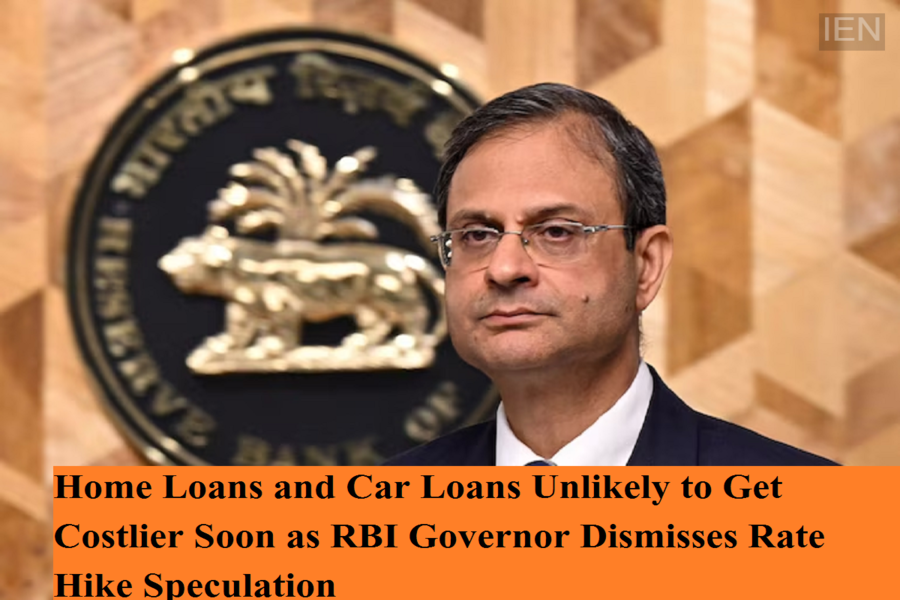
Borrowers can breathe a sigh of relief for now, as home loans, car loans, and other retail credit products are unlikely to become more expensive in the immediate future. Reserve Bank of India (RBI) Governor Sanjay Malhotra has dismissed recent speculation about an imminent increase in interest rates, stating that it would be premature to discuss monetary tightening at this stage.
His remarks come amid growing concerns over rising inflation and global economic uncertainties, which had sparked fears that the central bank might soon raise borrowing costs.
RBI Maintains a Cautious but Neutral Stance
Speaking in a recent media interaction, Governor Malhotra emphasized that the RBI’s Monetary Policy Committee (MPC) continues to maintain a neutral policy stance. According to him, the central bank is carefully evaluating incoming economic data before making any future decisions regarding interest rates.
He explained that inflation trends, economic growth indicators, and global developments will play a crucial role in shaping future policy actions. At present, the RBI believes that maintaining stability is the most appropriate course of action.
The governor added that the economic outlook remains uncertain, making it important for policymakers to avoid rushing into restrictive measures.
No Immediate Plan to Increase Interest Rates
Malhotra clarified that if the RBI eventually feels the need to raise rates in response to inflationary pressures, it would first signal a shift in policy stance before taking such a step.
Currently, the central bank has not indicated any move toward a restrictive monetary policy framework. This means borrowers should not expect an immediate increase in loan interest rates.
Earlier this month, the six-member Monetary Policy Committee decided to keep the repo rate unchanged at 5.25 percent. The committee cited geopolitical tensions, supply chain risks, and weather-related uncertainties as key reasons for maintaining the current rate structure.
Why Were Rate Hike Fears Emerging?
Concerns about higher interest rates intensified after recent inflation data showed an increase in consumer prices during April and May.
A significant factor behind rising inflation has been the surge in global crude oil prices. Geopolitical tensions in key oil-producing regions pushed energy prices higher, increasing transportation and fuel costs worldwide.
As oil marketing companies passed on higher costs to consumers through increased petrol, diesel, and LPG prices, inflationary pressures began building across various sectors of the economy.
Rising Fuel Prices Can Impact Inflation
Fuel prices have a direct influence on the overall inflation environment because transportation costs affect the prices of goods and services throughout the economy.
Recognizing these risks, the RBI recently revised its inflation forecast upward while trimming its economic growth projections for the current financial year.
Economists believe prolonged inflation could slow consumption and investment activity, ultimately impacting economic growth. However, the central bank appears willing to wait for additional data before considering any policy tightening.
What It Means for Borrowers
For existing and prospective borrowers, the RBI governor’s comments are encouraging.
If the repo rate remains unchanged:
-
Home loan EMIs are likely to remain stable.
-
Car loan interest rates may not increase in the near term.
-
Personal loan borrowing costs are expected to stay largely unchanged.
-
Businesses can continue accessing credit without facing higher financing expenses.
This provides temporary relief to households already dealing with elevated living costs and economic uncertainty.
Could Rates Rise Later?
While the RBI has ruled out an immediate rate hike, experts caution that future increases cannot be completely ruled out.
If inflation remains persistently high or accelerates further, the central bank may eventually be forced to adopt a stricter policy approach to control price pressures.
In such a scenario, repo rate hikes could translate into higher borrowing costs across home loans, vehicle loans, and other credit products.
For now, however, the RBI’s message is clear: there is no immediate plan to raise interest rates, and policy decisions will continue to be guided by evolving economic data rather than speculation.
Disclaimer: This article is intended for informational purposes only and should not be considered financial advice. Borrowers and investors should consult qualified professionals before making financial decisions.
