
Higher interest than bank FDs and a 100% government guarantee! Learn about this fantastic RBI scheme..
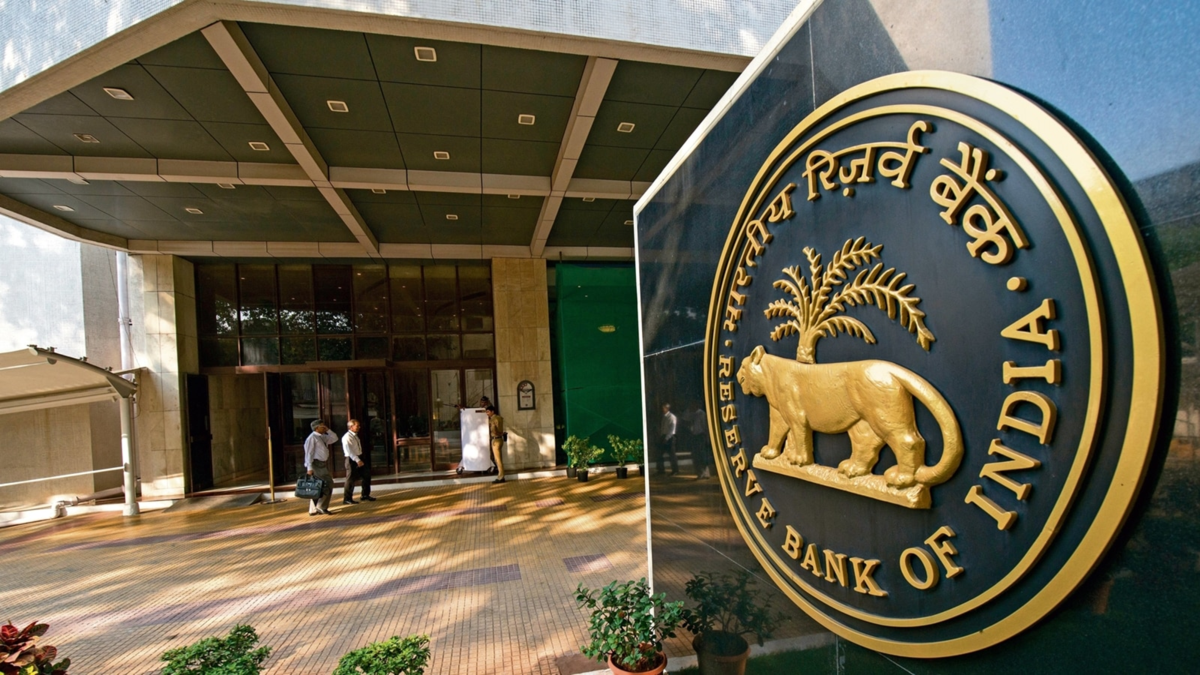
RBI Floating Rate Savings Bonds: If you wish to earn safe and attractive returns on your money while avoiding stock market volatility, the Reserve Bank of India's (RBI) 'Floating Rate Savings Bonds' scheme could be an excellent option for you.
Backed by the Government of India, your money in this scheme is 100% safe, carrying zero risk of capital loss. Due to higher interest rates compared to bank fixed deposits (FDs) and the government guarantee, this scheme is particularly popular among senior citizens and investors seeking secure investments.
What are RBI Floating Rate Savings Bonds?
This is a special savings scheme issued by the RBI on behalf of the Government of India. It is termed 'floating rate' because the interest rate is not fixed; instead, it fluctuates periodically based on market conditions.
Issuer: Government of India (via RBI).
Risk Category: Zero (fully backed by the Government of India).
Eligibility: Only Indian citizens and Hindu Undivided Families (HUFs) can invest. NRIs are not eligible to invest.
How is the interest rate calculated?
The interest rate on these RBI bonds is directly linked to the National Savings Certificate (NSC) interest rate. The interest rate on this bond is always the NSC rate plus 0.35%. The government reviews and revises the interest rate every six months (on January 1 and July 1). Interest is paid out every six months (on January 1 and July 1) directly into the investor's bank account; there is no option for reinvestment.
Lock-in period and premature withdrawal rules
It is crucial to understand the lock-in rules before investing in this scheme:
Standard Lock-in Period: The bond has a total maturity period of 7 years.
Relaxation for Senior Citizens:
Investors aged between 60 and 70 years can withdraw their funds after 6 years. Investors aged 70 to 80 years can withdraw their funds after 5 years.
Investors over the age of 80 can withdraw their funds after 4 years.
How much can be invested?
Minimum investment: ₹1,000 (and in multiples of ₹1,000).
Maximum investment: There is no upper limit on the investment amount; you can invest as much as you wish securely.
Tax rules
The interest earned on this bond is fully taxable. Interest income will be added to your total income and taxed according to your income tax slab. If the total interest in a financial year exceeds ₹10,000 (₹50,000 for senior citizens), the bank or RBI will deduct TDS on it.
How and where to buy these bonds?
You can purchase these bonds online via the net banking or mobile apps of major public sector banks (e.g., SBI, PNB) or select private banks (e.g., HDFC Bank, ICICI Bank, Axis Bank), or by visiting their branches. These bonds are held in digital form with the RBI under a 'Bond Ledger Account' (BLA). These bonds cannot be transferred to another person, nor can they be pledged as collateral to obtain a bank loan.
Disclaimer: This content has been sourced and edited from Money Control. While we have made modifications for clarity and presentation, the original content belongs to its respective authors and website. We do not claim ownership of the content.
