
GST on NBFC: Move to levy 18% tax on co-lending services; Council to take final decision..
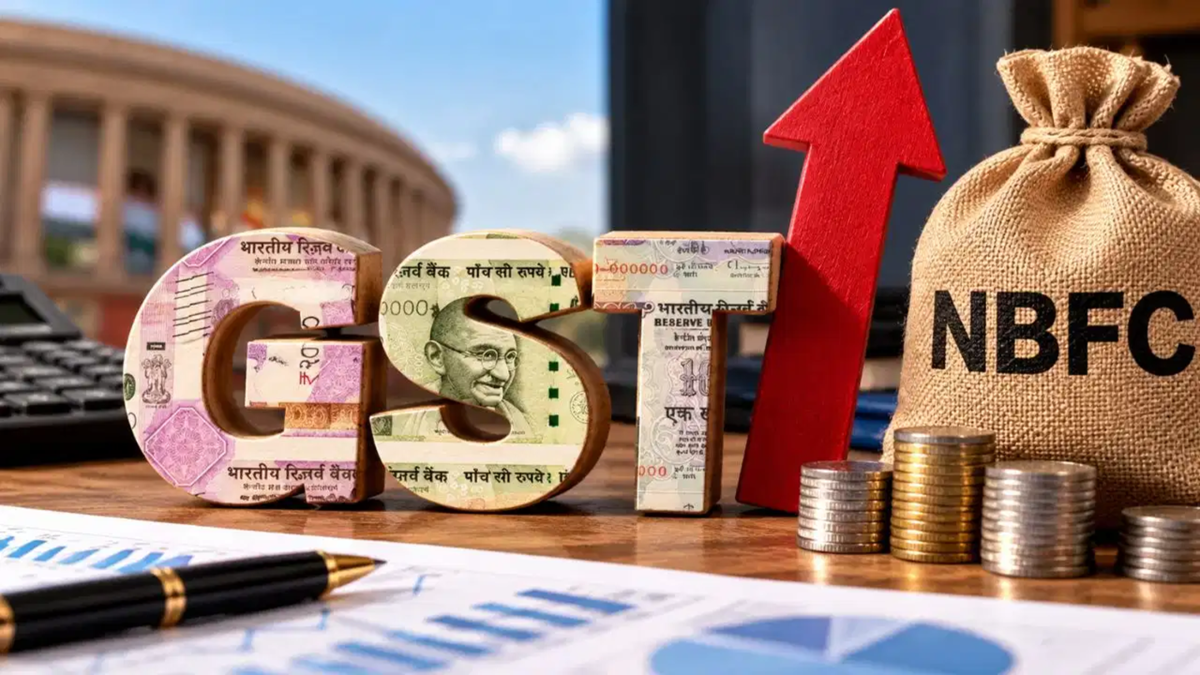
Banks and Non-Banking Financial Companies (NBFCs) are collaborating to streamline the loan disbursement process in the country. In financial terminology, this joint arrangement is known as "co-lending." While this model has facilitated the extension of credit to remote areas, there has long been ambiguity regarding the tax implications. To resolve this issue, the GST Council's Fitment Committee has prepared a major proposal. The committee has recommended imposing an 18% GST on the services provided by NBFCs to banks under the co-lending model. It is important to note that this tax has not yet been implemented; preparations for its implementation are currently underway.
The committee's move aims to put an end to ongoing legal disputes within the financial sector. A point of relief for ordinary borrowers is that the interest charged on the principal loan amount will remain entirely exempt from this tax; in other words, it will not impact the customers' pockets. The proposal for the 18% tax applies solely to the service component provided by the NBFC to the bank.
New Tax Proposal for the Co-Lending Arrangement
Under the co-lending arrangement, banks and NBFCs jointly mobilize funds for a customer's loan. The bank typically contributes the majority of the capital, while the NBFC handles tasks such as customer acquisition, document verification, and loan monitoring. The total interest earned from this entire process is shared between the two institutions in a pre-determined ratio.
This can be understood through a simple example. Suppose a customer is granted a loan at a blended interest rate of 16%. Of this, the bank is entitled to 10% interest on its capital contribution. The remaining 6% is retained by the NBFC that sourced the customer. Last year, the industry sought clarification from the government regarding the classification of this 6% share retained by the NBFC. Had this been classified as interest, it would have been exempt from tax under existing rules; however, the tax department was treating it as a service fee, leading to tax notices being issued to companies. The Fitment Committee has now proposed classifying this as a service provided to the bank, thereby bringing it under the ambit of 18% GST.
**Service value to be determined by RBI formula**
The Fitment Committee has not only suggested the tax rate but also recommended a method for valuing the service. Guidelines established by the Reserve Bank of India (RBI) will serve as the benchmark for this valuation.
Clarifying the rules will eliminate the scope for disputes between the tax department and lending institutions. Banks and fintech platforms will be able to partner without fear of legal repercussions. Previously, the absence of precise regulations forced companies to face protracted litigation. Now, the value of services such as customer acquisition, document verification, and loan recovery will be determined directly by the banking regulator's norms.
**Major relief on inter-branch fund transfers**
In addition to co-lending, the Fitment Committee has put forward another significant proposal regarding the internal operations of banks. Banks frequently transfer funds between their own branches. To record these transactions in their books of accounts, certain indicative or 'notional' charges are often applied.
The Council has proposed treating these internal charges similarly to interest. Consequently, no separate tax would be levied on these charges, providing banks with substantial relief from additional tax liabilities on fund transfers between their own branches.
**Final decision at the GST Council meeting**
The Fitment Committee formulated these recommendations after consulting all relevant stakeholders. These proposals will be presented to the GST Council for consideration. The Council's next meeting is scheduled for October 8. If the GST Council approves this proposal, the Ministry of Finance will issue a formal circular. Only then will this new system come into effect. This proposal is part of a major government reform aimed at addressing long-standing tax-related shortcomings in the financial sector.
Disclaimer: This content has been sourced and edited from TV9. While we have made modifications for clarity and presentation, the original content belongs to its respective authors and website. We do not claim ownership of the content.
