
Gratuity Calculator: How does the company calculate your gratuity? How much money will you get on a basic salary of ₹25,000?
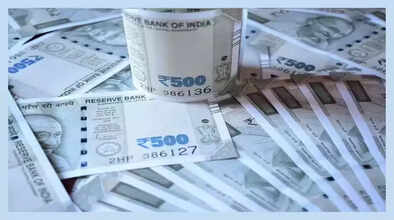
Gratuity Calculation: Recently, a major change has been made to the gratuity rules under the new labour code. Now, gratuity will be given even after one year of service. So the question is, how is gratuity calculated, what is the formula, and which employees will benefit? Let's learn everything about it.
Gratuity Calculation Under New Labour Codes: The new labor code was recently introduced, but the most discussed aspect of the code this time is gratuity. However, most people are still unaware of how the gratuity amount is calculated and what the rules are. The gratuity calculation remains the same for government employees. So, if you want to calculate your one-year gratuity from the comfort of your home, you can learn about the formula and other details here.
Previously, a minimum of 5 years of service was required to receive gratuity, but the new rules have provided significant relief to fixed-term and contract employees. Now, such employees will be entitled to gratuity even after working for just one year. This will strengthen the financial security of temporary workers and provide them with social security benefits similar to permanent employees. This change has been made keeping in mind the changing nature of employment and will further increase employees' trust in the system.
Gratuity is paid under the Payment of Gratuity Act, 1972, and until now, a minimum of 5 years of service was considered necessary. But after the changes in the new rules, employees working on fixed-term or contract basis will now be entitled to gratuity after only 1 year of service. This will increase the financial security of such employees and ensure that their earnings remain safe even if they change jobs.
Employees often wonder how much gratuity they will receive after just one year of service. The answer to this is quite simple, as the formula for calculating gratuity is already fixed. Essentially, it involves adding the employee's last basic salary and dearness allowance. This total amount is then multiplied by 15 and divided by 26. Here, 26 represents the average number of working days in a month, and 15 represents the fixed number of days for gratuity calculation. With this simple calculation, employees can easily calculate their own gratuity amount.
Employees are often confused about why 26 is used in the gratuity formula. According to the Labor Code, an average of 26 working days are considered in a month, as this is the number of normal or actual working days remaining after deducting weekly holidays and other holidays. This is why 26 is used in the gratuity calculation. So, if an employee's basic salary is ₹25,000 and they leave their job after one year of service, their gratuity can be easily calculated using the fixed formula.
If you also want to find out the gratuity you would receive after one year of service, the calculation is quite easy, as the formula fixed by the government will be used. That is, the sum of your last basic salary and DA is multiplied by 15 and then divided by 26, which represents the normal working days in a month. If an employee's last salary is ₹25,000 and they have worked for one year, then according to the formula (25000 × 15 × 1) / 26, the gratuity will be approximately ₹14,423.
In simple terms, gratuity is an amount equivalent to 15 days' worth of your last basic salary and dearness allowance (DA). Generally, the higher your basic salary, the higher your gratuity amount will be. It's important to note that according to the rules, if an employee has completed more than six months of service with a company, it is considered a full year of service. This means that even 11 months of service can entitle you to gratuity. The biggest advantage is that gratuity is completely tax-free, so the entire amount is received directly. (Note: This information is based on general rules; the actual calculation may vary.)
