
Government Offers ₹1.40 Lakh Loan to Women Entrepreneurs Under Mahila Samriddhi Yojana
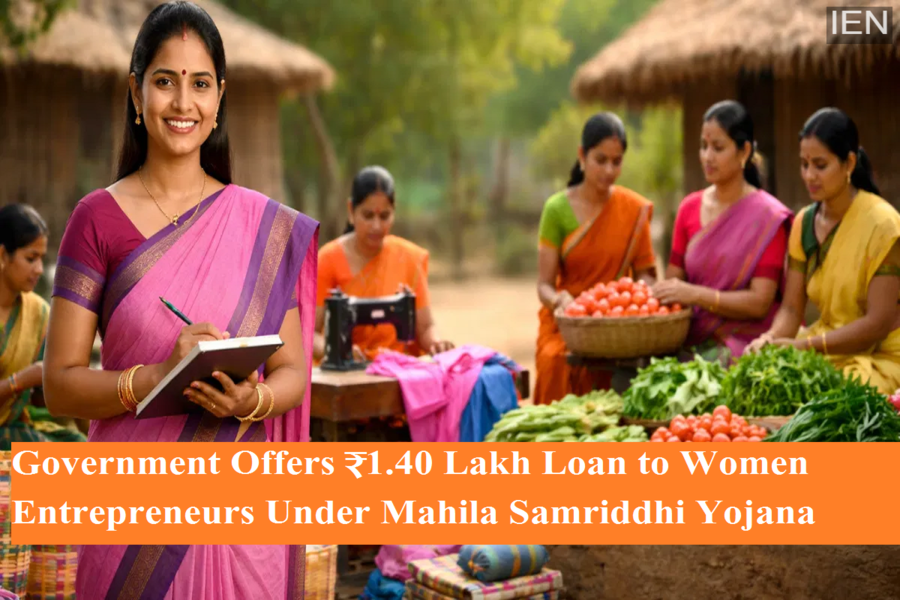
Starting a business often requires financial backing, and for many women from economically weaker sections, lack of funds becomes the biggest obstacle. To address this challenge, the Government of India is offering financial assistance of up to ₹1.40 lakh under the Mahila Samriddhi Yojana (MSY). The scheme aims to empower women by providing skill training and affordable loans so they can launch small businesses and improve their family income.
Here’s everything you need to know about eligibility, benefits, and how to apply.
What Is Mahila Samriddhi Yojana?
Mahila Samriddhi Yojana is a government-backed initiative designed to support women from socially and economically backward communities. The scheme operates under the Ministry of Social Justice and Empowerment and is implemented through the National Backward Classes Finance and Development Corporation (NBCFDC).
The primary goal is to promote self-employment among women by combining vocational training with access to low-interest loans.
How the Scheme Works
Under this initiative:
-
Around 20 women are grouped together based on their business interests.
-
They receive skill-based training tailored to their chosen field.
-
The government covers the entire cost of training and provides allowances during the training period.
-
After completing the program, participants become eligible for financial assistance to start their enterprise.
This structured approach ensures that beneficiaries not only receive funding but also gain practical knowledge to run a sustainable business.
Financial Assistance Details
Eligible women can receive a loan of up to ₹1,40,000 under the scheme. The loan is offered at a concessional interest rate, making it more affordable compared to regular commercial loans.
Key repayment details include:
-
Repayment tenure: Up to 3.5 years
-
Payment mode: Installments
-
Interest rate: Lower than standard market rates
The financial support can be used for small businesses such as tailoring, beauty services, food processing, handicrafts, livestock rearing, or other micro-enterprises.
Who Is Eligible?
The scheme is targeted at women who meet the following criteria:
-
Age between 18 and 55 years
-
Belong to SC, ST, OBC, or economically weaker sections
-
Family annual income below ₹3 lakh
-
Intend to start a self-employment venture
The program is particularly beneficial for women from low-income households who aspire to become financially independent but lack access to affordable credit.
How to Apply
Interested applicants can follow these steps:
-
Visit the official website of NBCFDC or the relevant state government portal.
-
Download the Mahila Samriddhi Yojana application form.
-
Fill in personal details such as name, age, income, and required loan amount.
-
Attach necessary documents, including identity proof, income certificate, caste certificate (if applicable), and business proposal details.
-
Submit the application at the designated district office (SCA/CA).
-
After verification, the application is forwarded to the head office for approval.
-
Upon approval, the loan amount is disbursed through a bank or authorized financial institution.
Beneficiaries must repay the loan according to the agreed installment schedule.
Why This Scheme Matters
Access to affordable credit and proper training can significantly change the economic landscape for women in rural and semi-urban India. By combining skill development with financial support, Mahila Samriddhi Yojana aims to reduce dependency, promote entrepreneurship, and enhance household incomes.
For women who have business ideas but lack capital, this government initiative could be the stepping stone toward long-term financial stability and empowerment.
Before applying, applicants are advised to carefully review eligibility criteria and official guidelines on the respective government portal to ensure a smooth application process.
