
Government in Action Amidst Global Energy Crisis: 20% Increase in LPG Allocation to States—What Does It Signify?
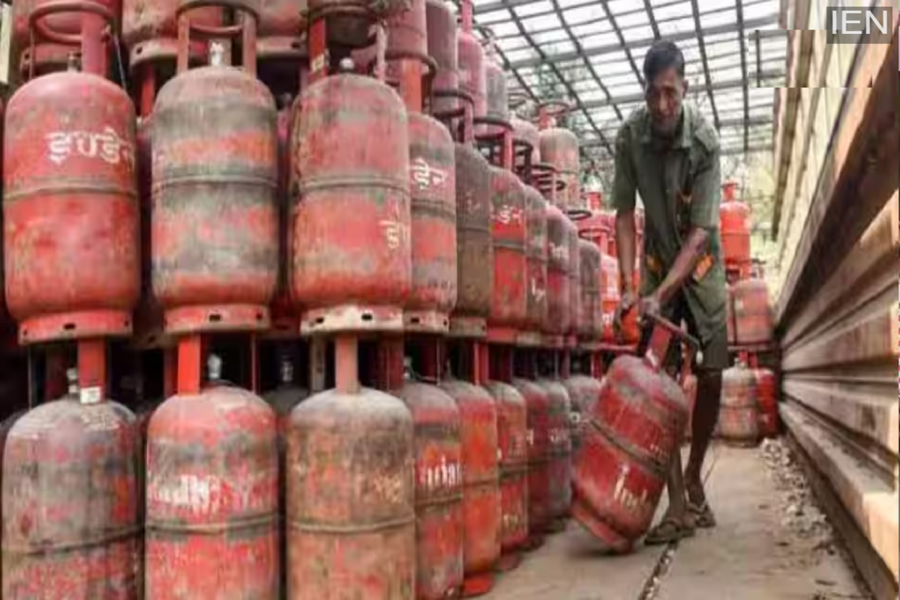
Middle East Tensions: Union Petroleum Minister Hardeep Singh Puri has clarified that priority will be accorded to the steel, automobile, textile, and other labor-intensive industries—particularly in regions where piped gas facilities are not available.
Global Energy Crisis: Amidst escalating tensions in the Middle East, the Government of India remains on high alert regarding energy supplies and is taking swift measures to ensure fuel availability across the country. The government has directed states to increase the distribution of commercial LPG cylinders to 70 percent. In this regard, Dr. Neeraj Mittal, Secretary to the Ministry of Petroleum and Natural Gas, has written to the Chief Secretaries of all states and Union Territories to apprise them of the revised allocation plan.
Under this plan, a proposal has been put forward to increase the allocation by an additional 20 percent—over and above the existing 50 percent commercial LPG allocation—thereby raising the total allocation to 70 percent; this brings the allocation level close to pre-crisis levels.
Centre's Directives to States
Union Petroleum Minister Hardeep Singh Puri has also clarified that priority will be given to the steel, automobile, textile, and other labor-intensive industries—especially in areas where piped gas facilities are not available.
This move by the government comes at a time when the public has recently been reassured that there is no shortage of petrol, diesel, or LPG in the country. The administration has clarified that the fuel supply mechanism is fully under control and there is no need for panic.
Government's Statement on Fuel
Furthermore, while appealing to the public to refrain from heeding rumors, the government has stated that the availability of domestic LPG is adequate and that production is also being ramped up to ensure that supplies remain uninterrupted in the future. It is noteworthy that the conflict involving attacks on Iran by the US and Israel is now entering its fourth week, yet there are no clear indications of an end to the hostilities thus far. Meanwhile, the closure of the Strait of Hormuz has triggered significant turmoil in the global energy market. The impact of this is clearly visible in India as well. On one hand, the prices of premium petrol have been hiked, while on the other, the rates for industrial fuel—namely diesel—have also been increased. Furthermore, prioritizing domestic requirements, the supply of commercial LPG was curtailed to ensure that ordinary consumers would not face any inconvenience.
In essence, global tensions are having a direct impact on India's energy sector, and the government remains continuously engaged in efforts to strike a balance, aiming to fulfill the needs of both the general public and industries alike.
