
Good CIBIL Score Alone Is No Longer Enough: Banks Now Check These Factors Before Approving Loans
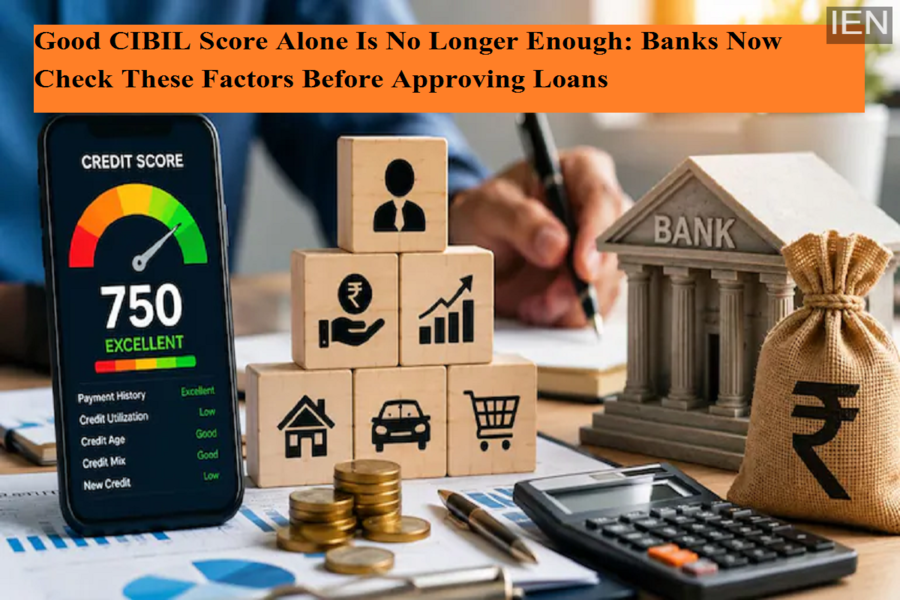
For years, a high CIBIL score was considered one of the strongest indicators for getting a loan approved quickly. But the lending landscape in India is changing rapidly. Today, banks and Non-Banking Financial Companies (NBFCs) are no longer relying solely on credit scores while evaluating borrowers.
Financial institutions are now using more advanced, data-driven assessment models that examine a borrower’s complete financial profile instead of focusing only on past repayment records. This means that even individuals with strong CIBIL scores may still face loan rejection if other financial indicators raise concerns.
Industry experts say lenders are increasingly prioritizing income stability, cash flow, debt burden, spending patterns, and overall repayment capacity before sanctioning loans.
Why CIBIL Score Alone Is No Longer Enough
A CIBIL score still plays an important role in loan approvals, but it is no longer treated as the final deciding factor.
Earlier, lenders mainly depended on credit scores to judge whether a borrower had a good repayment history. However, modern lending systems now use a broader risk assessment approach.
According to industry experts, lenders have realized that a credit score reflects only past financial behavior. It does not always reveal a borrower’s current financial condition or future repayment ability.
As a result, banks are now combining credit bureau data with real-time financial analysis to make lending decisions more accurate.
Lenders Are Studying the Complete Financial Picture
Experts from the fintech and lending sector say loan approval models have become much more sophisticated in recent years.
Instead of checking only the CIBIL score, lenders now analyze factors such as:
- Current income level
- Stability of employment or business income
- Existing EMIs and debt obligations
- Monthly cash flow
- Credit utilization ratio
- Length of credit history
- Banking transactions
- GST records for businesses
- Frequency of borrowing
This shift is especially visible in unsecured lending categories such as personal loans, instant loans, and digital credit products.
High EMI Burden Can Lead to Loan Rejection
One of the biggest reasons for loan rejection today is excessive debt burden.
Even if a borrower has maintained a good repayment history and enjoys a strong credit score, lenders may still reject the application if existing EMI obligations are already consuming a large portion of monthly income.
Financial institutions now closely examine:
- Debt-to-income ratio
- Monthly financial commitments
- Disposable income remaining after expenses
- Ability to comfortably repay a new loan
If lenders feel the borrower is financially stretched, approval chances may drop significantly.
Experts say the focus has shifted from “Did the borrower pay loans on time in the past?” to “Can the borrower realistically handle another loan right now?”
Stable Income Has Become Extremely Important
Another major factor lenders now evaluate is income consistency.
Individuals with irregular earnings, fluctuating cash flow, or unstable employment may find it harder to secure loans, even with strong credit scores.
This is particularly relevant for:
- Freelancers
- Gig workers
- Self-employed professionals
- Small business owners
- Individuals with variable monthly income
Banks now prefer borrowers whose income patterns appear predictable and sustainable over the long term.
Thin Credit History Can Also Create Problems
Experts also point out that many people with limited credit history — often called “thin file” borrowers — face challenges despite having decent scores.
This usually happens when individuals have:
- Very few active credit accounts
- Short borrowing history
- Limited repayment track record
In such cases, lenders may struggle to properly assess risk because there is insufficient historical financial data available.
As a result, even a technically “good” score may not automatically inspire lender confidence.
Banking Behavior Is Now Under the Scanner
Modern lending systems increasingly analyze borrower behavior beyond traditional credit reports.
Lenders now monitor factors such as:
- Average bank balance
- Frequency of account activity
- Sudden large withdrawals or deposits
- Spending habits
- Digital payment patterns
- Borrowing frequency
For businesses and self-employed individuals, lenders may also study GST returns, transaction records, and cash flow statements.
Experts say this broader assessment helps lenders better understand a borrower’s real financial discipline and stability.
Long and Diverse Credit History Helps
According to lending professionals, borrowers with longer and more diversified credit histories are often viewed as more reliable.
For example, someone who has successfully managed:
- Credit cards
- Home loans
- Auto loans
- Consumer durable loans
over several years may appear less risky compared to someone with limited or inconsistent credit activity.
A healthy mix of credit products combined with timely repayments can strengthen overall loan eligibility.
Good CIBIL Score Opens the Door — But Doesn’t Guarantee Approval
Financial experts now compare a good credit score to an entry pass rather than a final approval guarantee.
A strong score may help borrowers clear the initial screening stage, but final approval depends on deeper financial analysis.
Lenders are increasingly asking questions like:
- How much money remains after monthly expenses and EMIs?
- Is income growing or declining?
- Is the borrower financially overleveraged?
- Can the borrower handle future economic uncertainty?
This means loan decisions are becoming more personalized and data-intensive than ever before.
What Borrowers Should Do to Improve Loan Approval Chances
Experts suggest borrowers should focus on overall financial health rather than just chasing a higher CIBIL score.
Some important steps include:
Maintain Healthy Cash Flow
Ensure stable income and avoid frequent financial disruptions.
Reduce Existing Debt
Lowering outstanding EMIs can significantly improve approval chances.
Avoid Overusing Credit Cards
High credit utilization may signal financial stress to lenders.
Build a Long-Term Credit History
Responsible use of different credit products over time helps establish credibility.
Keep Banking Records Clean
Consistent account balances and disciplined financial behavior create a stronger borrower profile.
Lending Rules Are Evolving Rapidly
The Indian lending ecosystem is undergoing a major transformation driven by fintech innovation, advanced analytics, and digital banking data.
As lenders become more focused on risk management, borrowers are now being evaluated through a much wider financial lens. While CIBIL scores remain important, they are no longer the only deciding factor.
In today’s environment, overall financial discipline, income stability, debt management, and real-time cash flow have become just as important as maintaining a strong credit score.
