
Gold Prices Fall Sharply This Week: Gold Down ₹5,060, Silver Slips ₹10,000 — Check Latest Rates in Major Cities
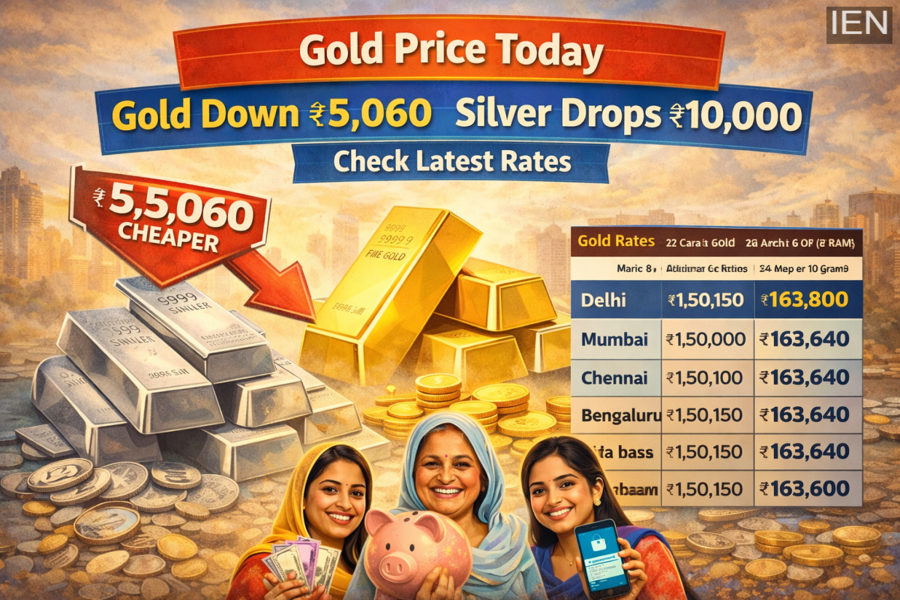
Gold and silver prices in India have witnessed a noticeable decline over the past week despite rising geopolitical tensions in the Middle East. The price of 24-carat gold has dropped significantly on a weekly basis, while silver has also recorded a steep fall. Market experts attribute the decline mainly to profit-booking by investors after gold touched higher levels earlier.
According to the latest market data for March 8, 2026, the price of 24-carat gold in Delhi stands at ₹1,63,800 per 10 grams, while in cities such as Mumbai, Pune, and Bengaluru the price is around ₹1,63,640 per 10 grams. Meanwhile, silver prices have also dropped sharply during the week, declining by nearly ₹10,000 per kilogram.
Gold Prices See Weekly Drop
Gold prices have experienced a noticeable correction this week in domestic markets. Over the last seven days, 24-carat gold has become cheaper by about ₹5,060, while 22-carat gold prices have fallen by nearly ₹4,650.
Earlier this week, on March 6, gold prices in the Delhi bullion market declined by about ₹1,100 per 10 grams, bringing the price down to approximately ₹1,64,100 per 10 grams. Traders say the decline was largely due to profit-booking by investors, which continued for the second consecutive trading session.
Even though geopolitical tensions in the Middle East have increased demand for safe-haven assets globally, domestic prices have still softened due to market corrections after recent highs.
Gold Prices in Major Indian Cities
Gold prices vary slightly across cities due to differences in taxes and local demand. Here are the latest gold rates as of March 8, 2026:
| City | 22 Carat Gold (₹/10g) | 24 Carat Gold (₹/10g) |
|---|---|---|
| Delhi | ₹1,50,150 | ₹1,63,800 |
| Mumbai | ₹1,50,000 | ₹1,63,640 |
| Ahmedabad | ₹1,50,050 | ₹1,63,700 |
| Chennai | ₹1,50,000 | ₹1,63,640 |
| Kolkata | ₹1,50,000 | ₹1,63,640 |
| Hyderabad | ₹1,50,000 | ₹1,63,640 |
| Jaipur | ₹1,50,150 | ₹1,63,800 |
| Bhopal | ₹1,50,050 | ₹1,63,700 |
| Lucknow | ₹1,50,150 | ₹1,63,800 |
| Chandigarh | ₹1,50,150 | ₹1,63,800 |
These prices reflect the average retail market rates and may vary slightly depending on local jewellers and additional charges such as making fees.
Global Market Impact on Gold
International developments have also influenced precious metal prices. Recently, tensions escalated in the Middle East following military actions between Israel, Iran, and the United States. Such geopolitical events usually increase demand for gold as investors consider it a safe-haven asset.
In global markets, spot gold rose by about $14.70, or 0.29 percent, to $5,095.81 per ounce. However, the rise in international prices has not fully translated into higher domestic prices due to profit-booking and fluctuations in currency exchange rates.
Silver Prices Also Decline
Silver has also seen a significant fall in prices during the past week. The metal has become ₹10,000 cheaper on a weekly basis, reflecting reduced demand and market adjustments.
As of March 8, silver is trading around ₹2,85,000 per kilogram in the domestic market. Earlier in the week, on Friday, silver prices in the Delhi bullion market dropped by ₹600 to about ₹2,71,700 per kilogram.
In international markets, however, silver prices showed some strength. The spot price of silver rose by about 1.4 percent to $83.40 per ounce.
Interestingly, silver had earlier reached extremely high levels this year. In January 2026, the price of silver had crossed the ₹4 lakh per kilogram mark, making the current fall even more noticeable.
What Experts Say
Market analysts believe the recent fall in gold and silver prices is largely a temporary correction after sharp rallies seen earlier this year. Profit-booking by traders and investors has played a major role in pushing prices lower in the short term.
Experts suggest that investors should closely monitor global developments, currency movements, and central bank policies, as these factors continue to influence precious metal prices.
For long-term investors, gold and silver remain important assets for portfolio diversification, especially during periods of economic uncertainty.
