
Gold or silver—which is better? Find out which metal yielded the highest returns on an investment of ₹1 lakh..
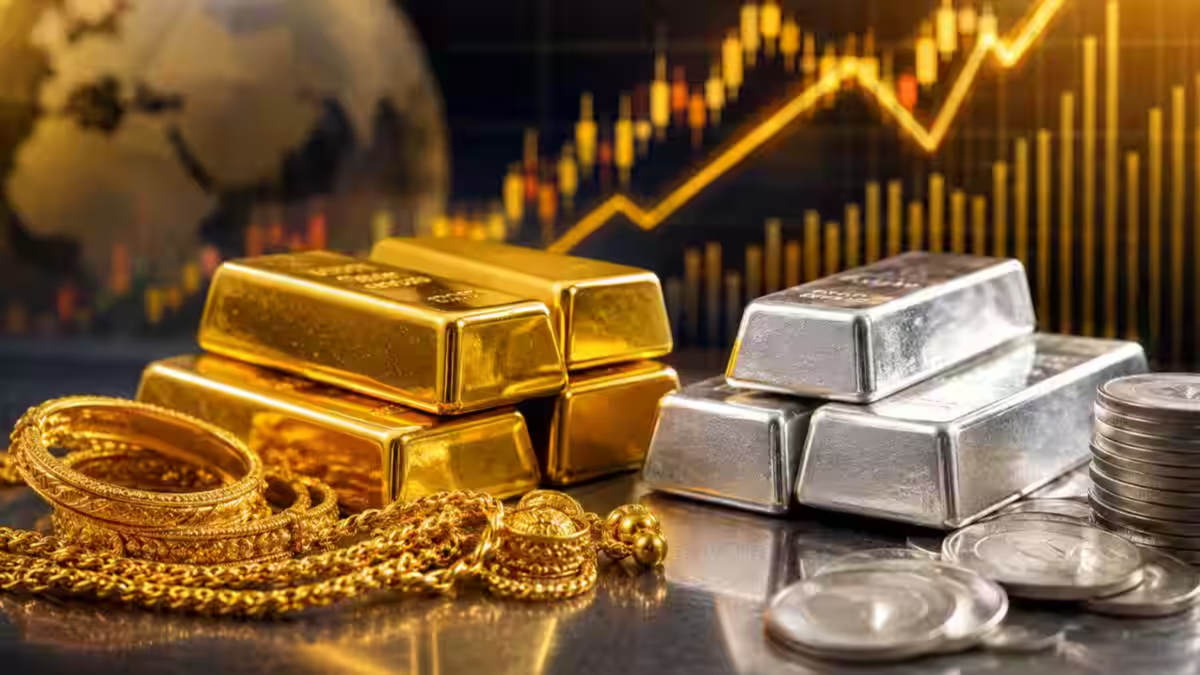
In Indian households, gold and silver have long served as primary instruments for investment and wealth preservation. However, data from the past few years indicate that the performance of these two metals has varied. While silver has shown rapid growth in recent years, gold has also succeeded in delivering strong returns over the long term. Consequently, investors often wonder: how much profit would I have made today if I had purchased gold or silver a few years ago?
Which performed better?
Based on the benchmark prices for 999-purity gold and silver—as tracked by the industry body IBJA—silver has outperformed gold over the past year. If an investor had invested ₹1 lakh in silver a year ago, that amount would have grown to approximately ₹1.18 lakh. In contrast, an investment of ₹1 lakh in gold would have grown to about ₹1.14 lakh.
Over a three-year period, silver’s performance has been even more impressive, yielding a return of approximately 149.29%. This means that an investment of ₹1 lakh made three years ago would have grown to about ₹2.49 lakh. Meanwhile, gold delivered a return of 125.26% over the same period, with a ₹1 lakh investment growing to approximately ₹2.25 lakh.
What about the last 5 years?
The picture shifts slightly when looking at five-year data. Over this longer horizon, gold has outperformed silver by a narrow margin. An investment of ₹1 lakh in gold five years ago would have grown to approximately ₹2.88 lakh, whereas the same investment in silver would have reached about ₹2.79 lakh. In short, while silver performed better in the short to medium term, gold maintained the lead over the long term.
According to experts, the prices of both gold and silver are influenced by common factors such as the movement of the US dollar, interest rates, global geopolitical tensions, and investor demand. A key characteristic of silver is that, beyond its role as an investment, it is also used extensively in industrial sectors. Due to growing demand in areas such as solar energy, electronics, and the electric vehicle industry, the price of silver can sometimes rise more rapidly than that of gold. Conversely, this same factor also makes it more volatile.
Market experts note that gold is generally considered a safe-haven investment, with investor confidence shifting toward it during times of economic or geopolitical uncertainty. Silver, on the other hand, experiences greater price fluctuations; consequently, while it offers higher profit potential, it also carries a higher level of risk.
According to experts, these figures are based solely on benchmark prices. In actual practice, the cost of purchasing gold or silver is influenced by factors such as a 3% GST, making charges (in the case of jewelry), as well as considerations regarding purity and dealer margins at the time of sale. Investors who prefer to avoid holding physical metal may consider alternatives such as Gold ETFs and Silver ETFs.
Disclaimer: This content has been sourced and edited from Dainik Jagran. While we have made modifications for clarity and presentation, the original content belongs to its respective authors and website. We do not claim ownership of the content.
