
Gold Loses Shine as Demand Slumps Amid Iran Crisis; Prices Return to Pre-War Levels
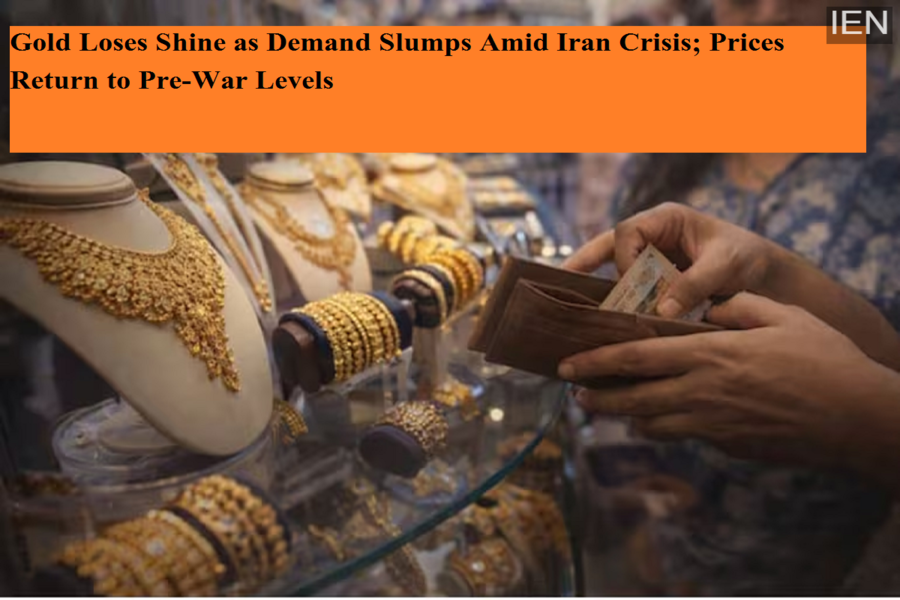
Gold Demand in India (March 2026): Despite a recent drop in prices, gold buying activity across India has weakened significantly. Ongoing geopolitical tensions in the Middle East, particularly involving Iran, have shifted consumer priorities, with households choosing to conserve cash for essential expenses instead of investing in precious metals.
According to industry experts, the bullion market is currently witnessing an unusual trend—falling prices but declining demand. This shift highlights changing consumer behavior during times of uncertainty.
Gold Demand Takes a Hit Despite Price Correction
Data from the India Bullion and Jewellers Association (IBJA) indicates that gold demand has dropped sharply in March. Typically, lower prices encourage buyers to invest more in gold. However, the current situation is different.
Surendra Mehta, Secretary of IBJA, explains that the average consumer is now prioritizing liquidity over investment. With uncertainty looming due to geopolitical tensions, people are choosing to hold onto cash rather than spend on gold.
Instead of buying jewellery or investing in bullion, households are allocating their budgets toward fuel, cooking gas, and daily essentials. As a result, even with softer prices, jewellery showrooms are seeing reduced footfall and muted interest.
Gold Price Movement: From Surge to Decline
Gold prices have experienced notable fluctuations over the past few weeks due to global developments:
-
Before the conflict (February 27, 2026): ₹1,59,097 per 10 grams
-
During peak tensions (March 2, 2026): Prices surged by around 5.5% to ₹1,67,471 per 10 grams
-
Current level (March 17, 2026): Prices have fallen back to nearly ₹1,57,821 per 10 grams, close to pre-war levels
This sharp rise followed by a decline reflects the volatile nature of the bullion market during global crises.
Why Isn’t Demand Rising Even After Price Drop?
Under normal market conditions, falling prices usually attract buyers. However, several factors are preventing a recovery in gold demand:
1. Shift in Consumer Spending
People are focusing on essential expenses such as fuel, food, and energy due to rising living costs and economic uncertainty.
2. Financial Year-End Impact
As the financial year draws to a close, jewellers are busy settling accounts and managing existing inventory. Instead of making fresh purchases, businesses are prioritizing stock clearance and bookkeeping.
3. Weak Retail and Wholesale Activity
Both wholesalers and retailers are reporting subdued demand, leading to an overall slowdown in the market.
Key Reasons Behind the Fall in Gold Prices
Experts attribute the recent decline in gold prices to multiple global and economic factors:
Strong US Dollar
Rising crude oil prices have strengthened the dollar index. A stronger dollar typically makes gold more expensive internationally, reducing global demand and putting downward pressure on prices.
High Interest Rates
Central banks may maintain higher interest rates to control inflation. Since gold does not offer interest returns, it becomes less attractive compared to other investment options during such periods.
Rising Crude Oil Prices
Brent crude prices have crossed the $100 per barrel mark. In times of energy crisis, investors often redirect their funds from commodities like gold to essential sectors, impacting bullion demand.
Global Tensions Continue to Influence Market Trends
The ongoing conflict involving Iran, the United States, and Israel has created a fragile global economic environment. While gold is traditionally seen as a safe-haven asset during crises, the current scenario shows that practical financial needs are outweighing investment sentiment.
Market analysts believe that volatility in gold prices may continue in the near term, depending on how geopolitical developments unfold.
Should Investors Consider Buying Gold Now?
Although prices have corrected, experts advise caution. The market remains highly sensitive to global events, currency movements, and interest rate policies.
For long-term investors, the current dip could present an opportunity. However, short-term buyers may prefer to wait for more stability before making significant investments.
Conclusion
Gold’s appeal has temporarily weakened as economic uncertainty and rising living costs reshape consumer behavior. Even as prices return to pre-war levels, demand remains subdued, signaling a cautious approach among buyers. With global tensions still unresolved, the gold market is expected to remain volatile, making it crucial for investors to stay informed and plan wisely.
