
Gold and Silver Prices Slide from Record Highs: Is This the Right Time to Buy After the Crash?
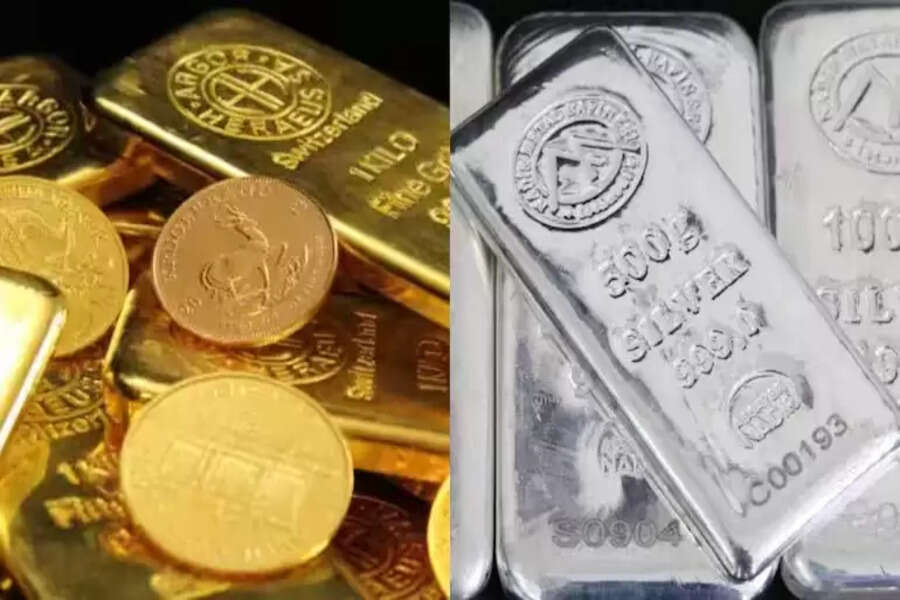
Gold and silver prices witnessed a sharp correction on December 29, slipping from their record highs and triggering concerns among investors. The sudden fall raised an important question in the market: does this decline offer a fresh buying opportunity, or is further consolidation likely in 2026 after a strong rally in 2025?
Market experts believe the recent fall should be seen more as a healthy correction rather than a trend reversal, especially for long-term investors.
Why Did Gold and Silver Prices Fall Sharply?
According to analysts, the primary reason behind the sharp fall in bullion prices was profit booking. Over the past few weeks, both gold and silver had surged rapidly, delivering exceptional returns in a short span of time. Such sharp rallies are often followed by selling pressure, as traders lock in profits.
Kelvin Wong, Senior Market Analyst at OANDA, explained that after the strong upward move seen in recent weeks, a correction was inevitable. He noted that leveraged bullish positions were unwound, putting pressure on prices. Once borrowed money positions were squared off, bullion prices faced a steep decline.
Gold Prices Show Recovery on December 30
After the sell-off on December 29, gold prices showed signs of recovery the very next day. On December 30, spot gold rose by 0.7% to $4,361.71 per ounce. However, prices are still significantly lower than the all-time high of $4,549.71 per ounce, recorded on December 26.
US gold futures for February delivery also moved higher, gaining 0.8% to $4,377.20 per ounce.
In India, gold futures reflected similar strength. On the Multi Commodity Exchange (MCX), gold futures were trading ₹824 higher, up 0.61%, at ₹1,35,766 per 10 grams during afternoon trade.
Technical Factors Also Played a Role
Experts point out that the December 29 decline was not just driven by profit booking but also by technical factors. Rahul Kalantri, Vice President (Commodities) at Mehta Equities, stated that pressure on long positions increased after the CME Group raised margin requirements. Such decisions often lead to forced position unwinding, adding short-term volatility to prices.
In 2025, silver has outperformed gold in terms of percentage returns. However, analysts caution that silver’s future performance is closely linked to global economic growth. If economic momentum weakens, silver prices could see a sharper correction compared to gold.
Gold Likely to Benefit from Strong Institutional Demand
While silver remains more sensitive to industrial demand and economic cycles, gold is expected to continue benefiting from strong institutional and central bank demand. Analysts believe that gold’s role as a hedge against uncertainty remains intact.
Ongoing concerns about the global economy, geopolitical risks, and expectations of a continued soft interest rate environment are likely to provide long-term support to gold prices. Lower interest rates typically reduce the opportunity cost of holding non-yielding assets like gold, making it more attractive to investors.
Should Investors Buy Gold and Silver After the Fall?
Market experts largely agree that the recent decline has not altered the long-term outlook for gold and silver. Instead, it has created an opportunity for investors who were waiting for a correction to enter the market.
Gold, in particular, appears attractive at current levels due to:
-
Persistent global economic uncertainty
-
Expectations of further monetary easing
-
Strong institutional and central bank demand
Silver may continue to remain volatile in the near term, as its price movement will depend heavily on industrial demand and economic growth trends.
Long-Term Perspective Remains Positive
Experts advise investors to focus on a long-term investment strategy rather than short-term price fluctuations. Gradual accumulation during price dips could be a prudent approach, especially for gold.
While short-term consolidation cannot be ruled out after the sharp rally of 2025, the broader fundamentals supporting precious metals remain strong. For long-term investors, the recent correction may serve as a strategic entry point rather than a warning signal.
Bottom Line
The crash in gold and silver prices on December 29 was largely driven by profit booking and technical factors, not by a deterioration in fundamentals. With prices showing signs of recovery and long-term drivers still intact, many experts believe this correction offers a buying opportunity—especially in gold—for investors with a long-term horizon.
