
Gold and Silver Outlook This Week: Key Global Triggers That Could Shape Precious Metal Prices
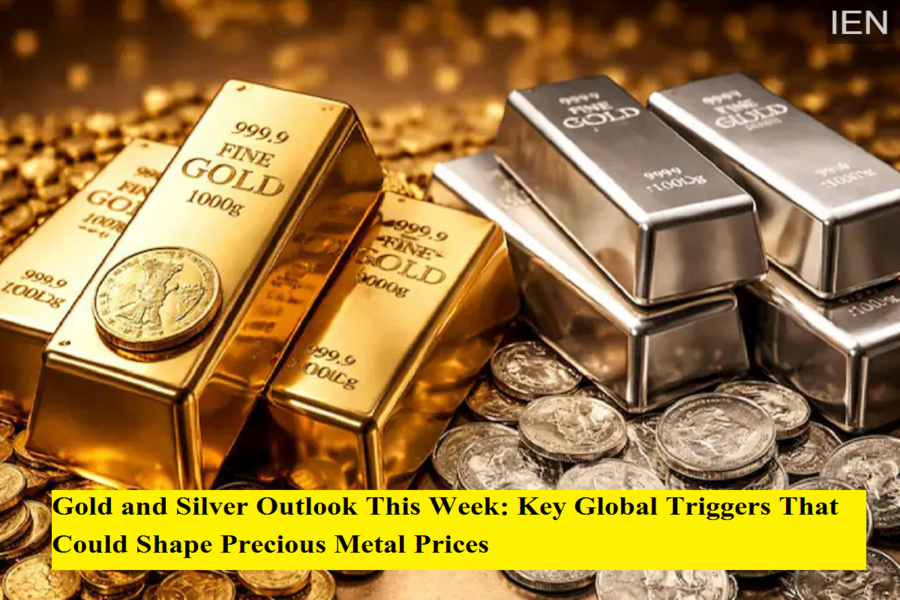
Gold Price Outlook: After a sharp decline in both gold and silver prices last week, investors are closely watching global economic developments to gauge the next move in precious metals. Market experts believe that inflation data, trade figures, crude oil prices, central bank decisions, and geopolitical tensions could play a decisive role in determining the direction of gold and silver in the week ahead.
Precious Metals End Last Week on a Weak Note
Gold and silver faced heavy selling pressure during the previous trading week, with prices witnessing one of their sharpest declines in recent months. The weakness was seen across both domestic and international markets as investors shifted focus toward stronger economic indicators and rising energy prices.
As trading begins this week, market participants are expected to monitor a range of economic and geopolitical factors that could influence demand for safe-haven assets.
Economic Data Releases to Drive Market Sentiment
Several important economic reports are scheduled for release this week, making it a crucial period for commodity markets.
Investors will closely track:
-
Trade data from China and the United States
-
Inflation figures from major economies
-
U.S. consumer sentiment numbers
-
India's Consumer Price Index (CPI) inflation data
-
Developments related to European Central Bank (ECB) monetary policy
These indicators are likely to influence expectations regarding global growth, inflation trends, and future interest rate decisions, all of which directly impact precious metal prices.
Why Did Gold and Silver Fall Last Week?
According to market analysts, a combination of economic and geopolitical developments weighed heavily on precious metals.
In the domestic market, gold futures for August delivery on MCX reportedly ended the week lower by over 3%, while silver futures witnessed an even steeper decline of around 7%.
The weakness was also visible in international markets, where both metals experienced significant profit booking after recent gains.
Rising Crude Oil Prices Shifted Investor Attention
One of the major reasons behind the decline was the sharp rise in crude oil prices.
When energy prices move higher, investor focus often shifts toward sectors that may benefit from inflationary trends, reducing the immediate appeal of traditional safe-haven assets such as gold.
Analysts believe that the recent strength in crude oil markets has contributed to reduced buying interest in precious metals.
Stronger Rupee Added Pressure in Domestic Markets
Currency movements also played an important role in shaping gold and silver prices.
A stronger Indian rupee against the U.S. dollar generally reduces the landed cost of imported commodities, including gold and silver. As a result, domestic prices often face downward pressure when the rupee appreciates.
The recent strength in the local currency has therefore limited any major recovery in precious metals despite ongoing global uncertainties.
International Markets Witnessed Heavy Selling
The decline was not limited to India alone.
Global commodity exchanges also recorded substantial losses in gold and silver prices. Investors booked profits amid improving economic indicators and reduced demand for defensive assets.
The sell-off reflected changing market sentiment as traders reassessed expectations regarding interest rates and economic growth.
Strong U.S. Economic Data Influenced Prices
Market experts point out that robust economic data from the United States has strengthened expectations that the U.S. Federal Reserve may maintain higher interest rates for longer than previously anticipated.
Recent indicators related to business activity and employment suggested that the American economy remains resilient. Higher interest rates typically reduce the attractiveness of non-yielding assets such as gold because investors can earn better returns from fixed-income instruments.
In addition, a stronger U.S. dollar and outflows from gold-backed exchange-traded funds (ETFs) added further pressure on bullion prices.
Geopolitical Developments Remain Important
Investors are also monitoring developments in ongoing global conflicts.
Recent indications of possible progress toward easing tensions in the Russia-Ukraine conflict have slightly reduced safe-haven demand for gold. When geopolitical risks appear to decline, investors often move capital toward riskier assets such as equities, reducing demand for precious metals.
However, any fresh escalation in global tensions could quickly revive buying interest in gold and silver.
What Could Be the Trend This Week?
Commodity market analysts believe gold and silver may continue to trade with a cautious bias unless major positive triggers emerge.
Factors that could influence prices include:
-
Global inflation readings
-
Central bank policy signals
-
Movements in crude oil prices
-
U.S. dollar strength
-
Geopolitical developments
-
Investor demand through ETFs
If economic data supports the view that interest rates will remain elevated for longer, precious metals could remain under pressure. On the other hand, any signs of weakening economic growth or rising geopolitical uncertainty may provide support to gold and silver.
Bottom Line
The upcoming week is expected to be highly event-driven for precious metals. Investors should closely monitor economic releases from the U.S., China, India, and Europe, along with developments in global conflicts and energy markets. These factors are likely to determine whether gold and silver stabilize after last week's decline or face additional selling pressure.
Disclaimer: Commodity investments are subject to market risks. Prices of gold and silver can fluctuate significantly due to economic, geopolitical, and currency-related factors. Investors should consult qualified financial advisors before making investment decisions.
