
Gas Price Surge: Will the Burden Finally Shift to Consumers?
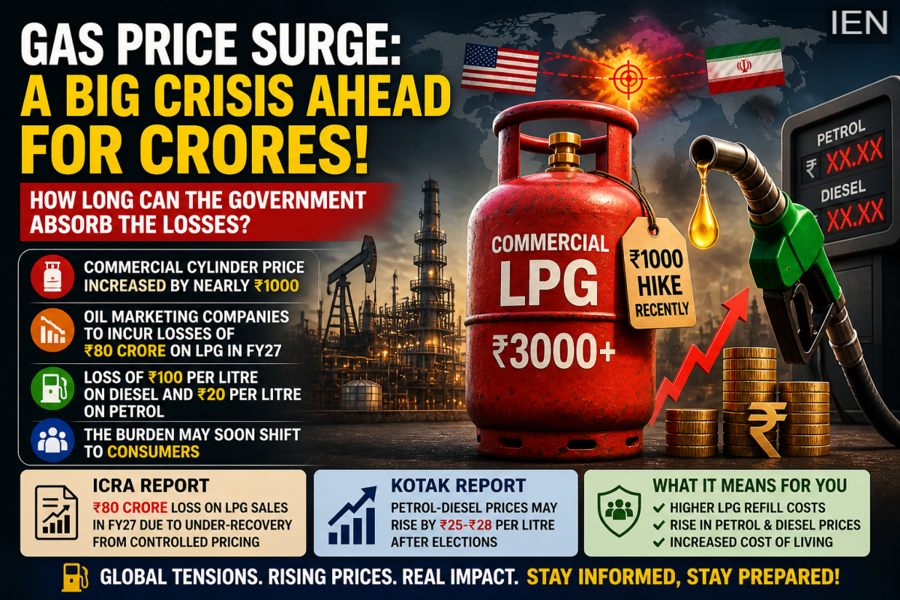
Rising global tensions, especially between the US and Iran, are beginning to ripple through India’s energy market—and the impact could soon hit millions of households. With LPG cylinder prices already surging and oil companies facing mounting losses, a critical question is emerging: how long can the government absorb the cost before passing it on to consumers?
📈 LPG Prices Skyrocket, Pressure Mounts
Commercial LPG cylinder prices have reportedly jumped by nearly ₹1,000, pushing the cost beyond ₹3,000 in some regions. This sharp increase is not just a temporary fluctuation—it reflects deeper global supply disruptions and rising crude oil prices.
For everyday consumers, this could mean higher expenses in the near future, especially if the government reduces subsidies or allows market-linked pricing to take over.
⚠️ Oil Companies Facing Heavy Losses
According to reports by rating agencies, Indian oil companies may face significant under-recoveries (losses) in FY27 due to controlled fuel pricing.
- Loss on LPG sales: Around ₹80 crore
- Loss on diesel: Up to ₹100 per litre
- Loss on petrol: Around ₹20 per litre
These numbers highlight a growing financial strain. When companies continue to sell fuel below cost, someone has to bear the burden—and historically, that burden eventually shifts to consumers.
⛽ Fuel Prices May Rise After Elections
A report by Kotak Institutional Equities suggests that petrol and diesel prices could increase by ₹25–₹28 per litre after elections.
If this prediction holds true, it could trigger a chain reaction:
- Transportation costs will rise
- Prices of goods and services may increase
- Household budgets could come under pressure
🧾 Why the Government Is Holding Back (For Now)
The government often absorbs such shocks temporarily to:
- Control inflation
- Avoid public backlash
- Maintain economic stability
However, this strategy is not sustainable in the long run. Continuous losses can weaken oil companies and impact the overall energy sector.
💡 What It Means for You
If global tensions persist and oil prices remain high, consumers should be prepared for:
- Higher LPG refill costs
- Increase in petrol and diesel prices
- Rising cost of living overall
🧠 Bottom Line
The current situation is a classic case of delayed impact. While the government is cushioning the blow for now, the real cost may eventually reach consumers’ pockets. Keeping an eye on global crude trends and policy decisions will be crucial in the coming months.
