
Following this RBI decision, banks immediately lowered FCNR interest rates; check the new rates..
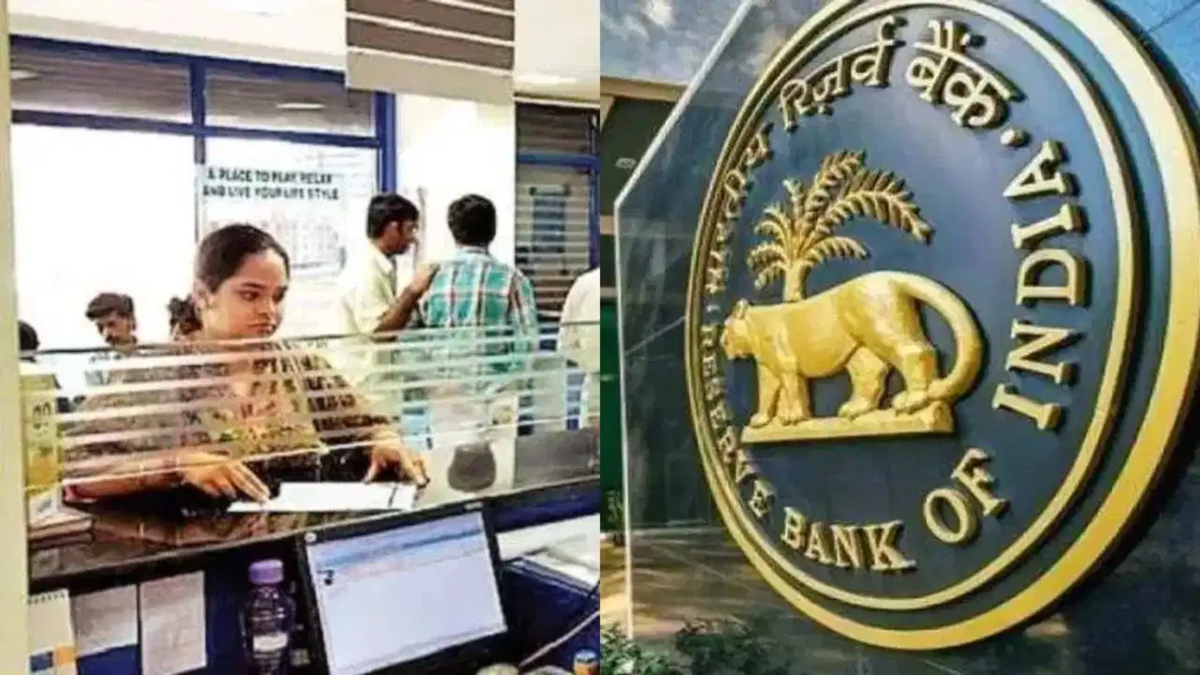
The golden era for Non-Resident Indians (NRIs) to earn substantial interest in India on their dollar earnings has, for the time being, come to a halt. Major banks in the country—including State Bank of India (SBI), HDFC Bank, and ICICI Bank—have drastically cut interest rates on Foreign Currency Non-Resident (FCNR) deposits. These cuts extend up to 310 basis points. Banks took this major step immediately after the special swap window initiated by the Reserve Bank of India (RBI) closed. The race to mobilize foreign funds, which had been intense over the past 10 weeks, has now subsided.
**The Math Behind the Sharp Drop in Interest Rates**
Banks have withdrawn the additional interest they had begun offering on long-term (three to five years) foreign currency deposits. The new rates came into effect on September 1. HDFC Bank slashed its five-year US Dollar FCNR(B) rate from 6.25% to 3.15%—a significant drop of 310 basis points. (One basis point is equivalent to one-hundredth of a percentage point.) Similarly, ICICI Bank reduced its five-year dollar deposit rate from 6.00% to 2.90%, also a cut of 310 basis points.
**Changed Scenario for SBI Customers**
The situation is much the same for the country's largest public sector bank, SBI. The bank's regular 5-year FCNR(B) rate now stands at 3.05%. Previously, deposits of up to $1 million yielded a return of 5.75% under the 'Advantage Scheme'; this has now been cut by 270 basis points. Meanwhile, SBI was offering 6% interest on deposits exceeding $1 million; this rate has now been reduced by 295 basis points.
RBI's Decision: The Key Driver
This entire shift was triggered by a move from the RBI. On June 8, the central bank launched a dollar-rupee swap facility, which lowered the cost for banks to mobilize foreign currency. Capitalizing on this, banks enticed NRI customers with the promise of higher returns. The scheme received such an overwhelming response that Indian banks mobilized $65.4 billion in foreign funds by August 21 alone. When factoring in overall foreign currency inflows—including overseas borrowings—the figure reached $73 billion. Due to the inflow exceeding targets, the RBI advanced its deadline from September 30 to August 31. Once the window closed, banks stopped offering the premium.
Short-term Rates Remain Largely Stable
Sanjay Agarwal, Senior Director at CareEdge Ratings, notes that the scheme provided banks with a new avenue for foreign currency funding, significantly improving their liquidity. However, with the facility now closed, the extra benefit previously available on long-term dollar deposits will gradually diminish. Interestingly, while banks have sharply cut long-term rates, short-term rates have remained largely stable. This indicates that, without RBI support, banks are unwilling to offer substantial premiums on long-term dollar deposits.
