
Fixed Deposit vs Corporate Bonds: Which Investment Delivers Better Returns and What Are the Risks?
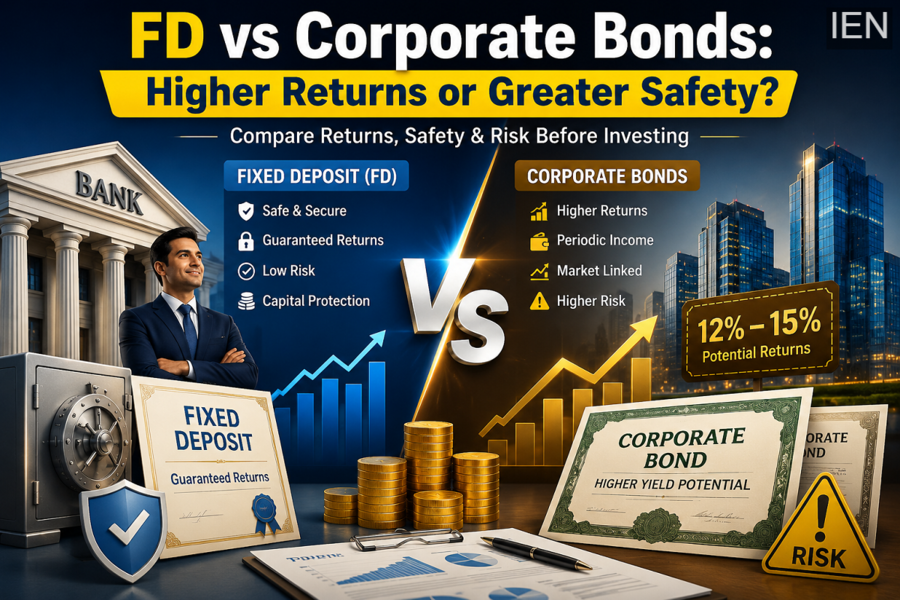
As market volatility continues to make investors cautious, many people are once again turning toward fixed-income investment options that promise stability and predictable earnings. Among the most popular choices are Fixed Deposits (FDs) and Corporate Bonds. While both are considered alternatives to equity investments, they differ significantly in terms of returns, safety, and risk exposure.
For investors looking to grow their savings while protecting their capital, understanding the strengths and weaknesses of each option is essential before making a financial commitment.
Why Investors Are Exploring Fixed-Income Investments Again
The recent fluctuations in stock markets have prompted many investors to seek safer avenues for wealth creation. Fixed-income products such as bank FDs and corporate bonds offer regular income and are generally easier to understand than market-linked instruments.
However, the decision is not always straightforward. While bank FDs provide security and guaranteed returns, corporate bonds often attract investors with the promise of substantially higher interest rates.
Fixed Deposits: Stability and Capital Protection
Fixed Deposits remain one of the most trusted investment products in India. Offered by banks and financial institutions, FDs provide a fixed rate of return over a predetermined tenure.
The biggest advantage of an FD is safety. Since the return is guaranteed at the time of investment, investors know exactly how much they will receive at maturity. This predictability makes FDs particularly suitable for retirees, conservative investors, and those looking to preserve capital.
Additionally, FDs are easy to open, require minimal financial knowledge, and are available in a variety of tenures. While interest rates may vary from one institution to another, the overall risk of losing principal is relatively low when compared with other investment products.
Corporate Bonds: Higher Returns but Greater Risk
Corporate bonds are debt instruments issued by companies to raise funds from investors. In return, the issuing company agrees to pay periodic interest and repay the principal amount upon maturity.
One of the main attractions of corporate bonds is their potential to offer significantly higher returns than traditional bank deposits. Depending on the issuer and market conditions, some bonds may offer annual yields ranging from 12% to 15% or even more.
These attractive returns often appeal to investors seeking better income generation. However, higher returns come with increased risk.
Unlike bank deposits, corporate bonds are directly dependent on the financial health of the issuing company. If the company faces financial difficulties or defaults on its obligations, investors may suffer partial or complete loss of their invested capital.
Key Factors to Evaluate Before Investing
Investors should never choose a corporate bond solely based on its high interest rate. A thorough assessment is necessary before committing funds.
1. Credit Rating
The credit rating assigned by recognized rating agencies provides insight into the issuer's ability to meet its debt obligations. Bonds with higher ratings generally carry lower risk.
2. Financial Strength of the Company
Reviewing the company's balance sheet, profitability, debt levels, and business performance can help investors understand its repayment capacity.
3. Security Structure
Some bonds are secured by company assets, while others are unsecured. Secured bonds may offer greater protection in case of financial distress.
4. Platform Credibility
Investors purchasing bonds through online platforms should verify the platform's credibility, regulatory compliance, and track record.
Which Option Is Better for You?
The choice between a Fixed Deposit and a Corporate Bond largely depends on an investor's risk tolerance and financial objectives.
Those who prioritize capital safety and predictable returns may find bank FDs more suitable. On the other hand, investors willing to accept a higher level of risk in exchange for potentially superior returns may consider carefully selected corporate bonds.
Financial experts often recommend maintaining a balanced portfolio rather than relying entirely on a single investment product.
Final Takeaway
Fixed Deposits and Corporate Bonds both serve important roles in a diversified investment strategy. While FDs offer security and peace of mind, corporate bonds can provide higher income opportunities. However, investors should remember that the promise of higher returns is always accompanied by higher risk.
Before investing in any corporate bond, carefully examine the company's financial position, credit rating, bond structure, and investment platform. Making an informed decision can help protect your capital while maximizing long-term returns.
