
First private, then government, and now private again: Will the sale of IDBI Bank affect your account and LIC policy?
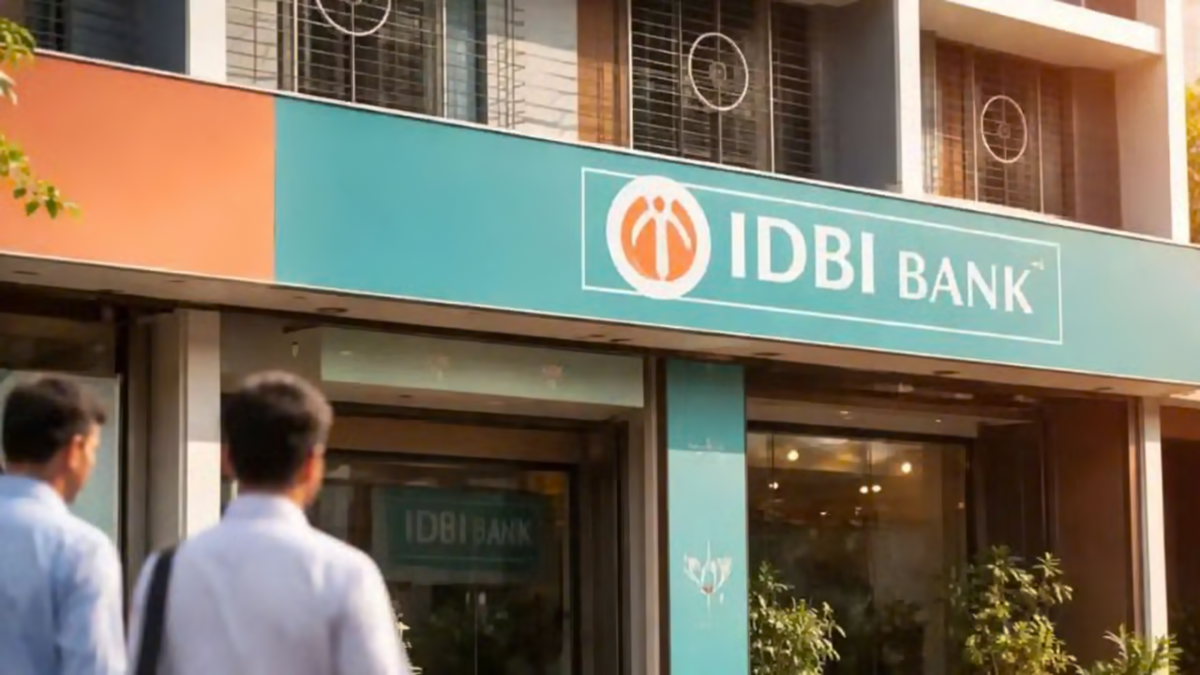
The story of IDBI Bank is taking a new turn once again. Once a private-sector bank, it later came under government control, and now, after nearly two decades, it is set to return to private hands. The government and the Life Insurance Corporation of India (LIC) have approved Fairfax Financial Holdings as the strategic buyer for their stakes in the bank.
Following this news, it is natural for IDBI Bank customers and LIC policyholders to have questions: Will the money deposited in the bank remain safe? Will the terms and conditions for accounts, fixed deposits (FDs), and banking services change? And will LIC policies or the funds associated with them be affected by this deal?
First and foremost, it is important to understand that the sale of stakes in IDBI Bank does not mean that customers' deposits or LIC policies are being sold. This represents a change in the bank's ownership, not an automatic alteration of the existing contracts with its customers.
Who is set to become the owner of IDBI Bank?
On October 14, 2026, the Cabinet Committee on Economic Affairs (CCEA) approved the sale of a 60.72% stake in IDBI Bank to a subsidiary of Fairfax Financial Holdings. The deal is valued at approximately ₹52,878 crore.
The breakdown of the stake sale is as follows:
The Central Government will sell its 30.48% stake.
LIC will sell its 30.24% stake.
Fairfax will acquire a total stake of 60.72%.
Post-deal, the government will retain a 15% stake.
Post-deal, LIC will retain a 19% stake.
In other words, while the government and LIC will not exit the bank entirely, they will relinquish control. They will also withdraw their nominees from the bank's board and become ordinary shareholders. However, before the deal can be finalized, the buyer must satisfy the Reserve Bank of India’s (RBI) 'fit and proper' assessment and fulfill other regulatory requirements.
The Story of IDBI: A Journey Beginning in 1964
To understand the history of IDBI, one must look back in time. It was established on July 1, 1964, as a Development Financial Institution (DFI), with the mandate to provide financial assistance to industries. On October 1, 2004, it was converted into a banking company, after which it began offering services typical of commercial banks—such as savings accounts, current accounts, loans, and other banking products. Following a weakening in the bank's financial position, the government and LIC infused capital into it. In January 2019, LIC acquired a 51% stake in IDBI Bank. Subsequently, the RBI classified it as a private-sector bank for regulatory purposes. Now, with the approval to hand over control to Fairfax by 2026, another major shift in the bank's ownership is on the horizon.
What will be the impact on your savings accounts and FDs?
For those holding savings accounts, current accounts, or fixed deposits (FDs) with IDBI Bank, the most pressing question is: will my money remain safe? A change in ownership does not result in the closure of your bank account, nor does it alter the funds you have deposited. The bank’s operations and its existing agreements with customers remain intact. Therefore, there is no need for customers to withdraw their funds or liquidate their FDs solely because of this transaction. However, the arrival of a new owner could lead to future changes in the bank’s business strategy, digital services, branch network, interest rates, and customer service offerings. Such changes will depend on the bank’s business decisions and applicable regulations. It would be premature to assume that interest rates or banking charges for customers will change immediately.
Is the money deposited in the bank 100% safe?
In India, the Deposit Insurance and Credit Guarantee Corporation (DICGC) provides insurance coverage for funds deposited in banks. Under this arrangement, a depositor in a bank receives insurance coverage of up to a maximum of ₹5 lakh on the total eligible deposits held in the same capacity and right. This includes the principal amounts—along with accrued interest—in savings accounts, current accounts, fixed deposits (FDs), and recurring deposits (RDs). It should be noted that this ₹5 lakh limit applies to the aggregate of all deposits held across all branches of the same bank; opening accounts at different branches does not increase the insurance coverage. This protection remains intact even if there is a change in the ownership of IDBI Bank. However, it is important to understand that this DICGC insurance coverage does not extend to any amount exceeding ₹5 lakh.
What will be the impact on LIC policyholders?
Since LIC is also selling its stake as part of this deal, policyholders might wonder whether their insurance policies or the premiums they have paid are also involved in this transaction. The answer is no—the sale of LIC’s stake in IDBI Bank does not mean that LIC’s insurance policies are being sold. LIC is an investor in the bank in its capacity as a shareholder; it is selling its 30.24% stake in IDBI Bank, and the proceeds from this sale will go to LIC. This transaction relates solely to LIC’s equity stake in the bank, not to the transfer of insurance contracts held by policyholders. Therefore, this deal will not result in the cancellation of your LIC policy, the termination of your insurance coverage, or any automatic changes to the terms and conditions of your policy. Rights and processes—such as premium payments, maturity, and claims—will continue to be governed by the existing terms of your policy. Even after this deal, LIC will retain a 19% stake in IDBI Bank, meaning it is not exiting the bank entirely.
Why is the government selling IDBI Bank?
At one point, the financial condition of IDBI Bank had become quite weak. In May 2017, the RBI placed it under the Prompt Corrective Action (PCA) framework, during which several restrictions were imposed on the bank. Subsequently, the bank's financial health improved, and in March 2021, the RBI lifted the PCA restrictions. The government argues that the entry of a private strategic investor could provide the bank with fresh capital, new technology, and better management. According to the government, this could help the bank expand its business in the future and compete more effectively in areas such as lending and deposits. However, the actual impact of these potential benefits will only become clear through the bank's performance in the time to come.
Disclaimer: This content has been sourced and edited from TV9. While we have made modifications for clarity and presentation, the original content belongs to its respective authors and website. We do not claim ownership of the content.
