
First job, first EPF: A smart retirement start guide for Gen Z..
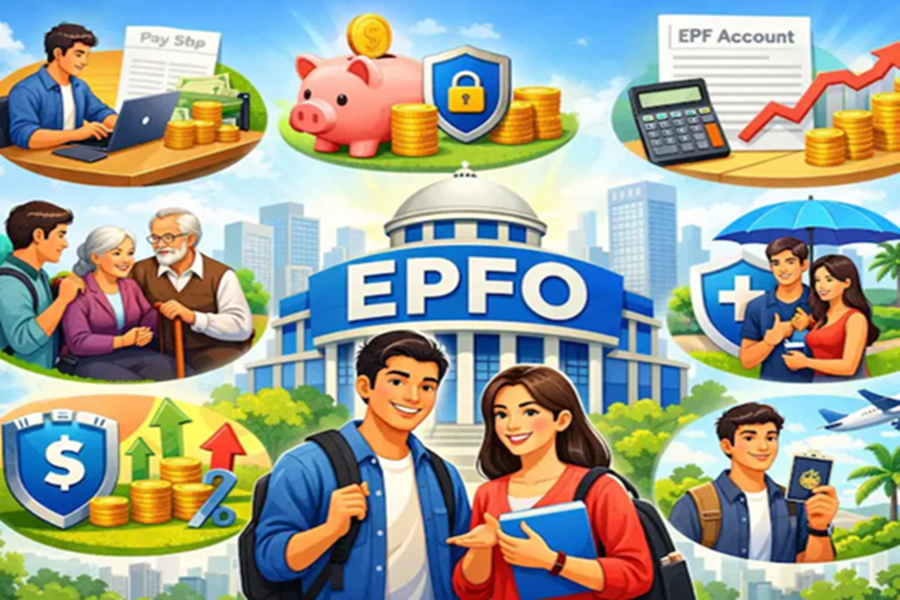
For Gen Z, their first job isn't just the beginning of earning, but also the first step toward financial independence. Making the right decisions during this time can strengthen their future. One of the most important benefits for employees is the Employees' Provident Fund (EPF). This retirement savings scheme is designed to provide long-term financial security to private sector employees. If you're just starting, understanding EPF is crucial.
When is joining EPF mandatory?
If you work for a company with 20 or more employees and your basic salary and DA combined is up to ₹15,000, the company is required to enroll you in EPF. This means that saving for retirement begins from your first salary. It works like an automatic savings system, allowing your fund to grow without any individual effort.
Your and the company's participation
Every month, 12% of your basic salary and DA is deposited into your EPF account. The employer also contributes the same 12%. However, a portion of the company's share goes to the Employees' Pension Scheme (EPS). This dual contribution helps build a larger fund over time. Many young people think that only their salary is being deducted, but in reality, the company's contribution also strengthens their future.
Tax-Free Interest Benefit
The amount deposited in an EPF account earns interest every year. The current interest rate is 8.25%, which is higher than many bank savings accounts or fixed deposits. If you work for five consecutive years, the interest earned is tax-free. This means that your savings earn income and are not taxed. Over the long term, this magic of compounding creates a large retirement fund.
UAN: One Number, Complete Career Tracking
Upon joining the EPF, you receive a Universal Account Number (UAN). This number remains the same throughout your career, no matter how many times you change jobs. With the UAN, you can check your balance online, download your passbook, and easily transfer funds to a new company. This keeps your money concentrated in a single account, preventing it from being dispersed.
Partial Withdrawals When Needed
Although EPF is primarily for retirement, partial withdrawals are permitted under specific circumstances. Funds can be withdrawn under regulations for matters such as home purchase, medical treatment, marriage, or higher education. This facility provides relief to young people, as they don't need to break their entire savings when meeting major life goals.
Tax Rules for Premature Withdrawal
If you withdraw EPF without completing five years of continuous service, the amount may be subject to tax. Withdrawals up to Rs 50,000 are exempt from TDS, but 10% TDS is applicable on amounts above this limit, provided a PAN is submitted. Failure to provide a PAN may result in a TDS deduction of up to 20%. Therefore, it's important to understand the rules before making hasty withdrawals.
A Safe and Reliable Retirement Tool
EPF is a Government-backed scheme of India, and therefore, is considered a low-risk investment. Its returns are not subject to fluctuations like the stock market. If you take EPF seriously early in your career, you can build a strong retirement corpus within 25–30 years. Small contributions can build the foundation for greater financial security in the future.
Disclaimer: This content has been sourced and edited from News18 Hindi. While we have made modifications for clarity and presentation, the original content belongs to its respective authors and website. We do not claim ownership of the content.
