
First glimpse of India’s first indigenous bullet train; trials to be conducted at 280 kmph
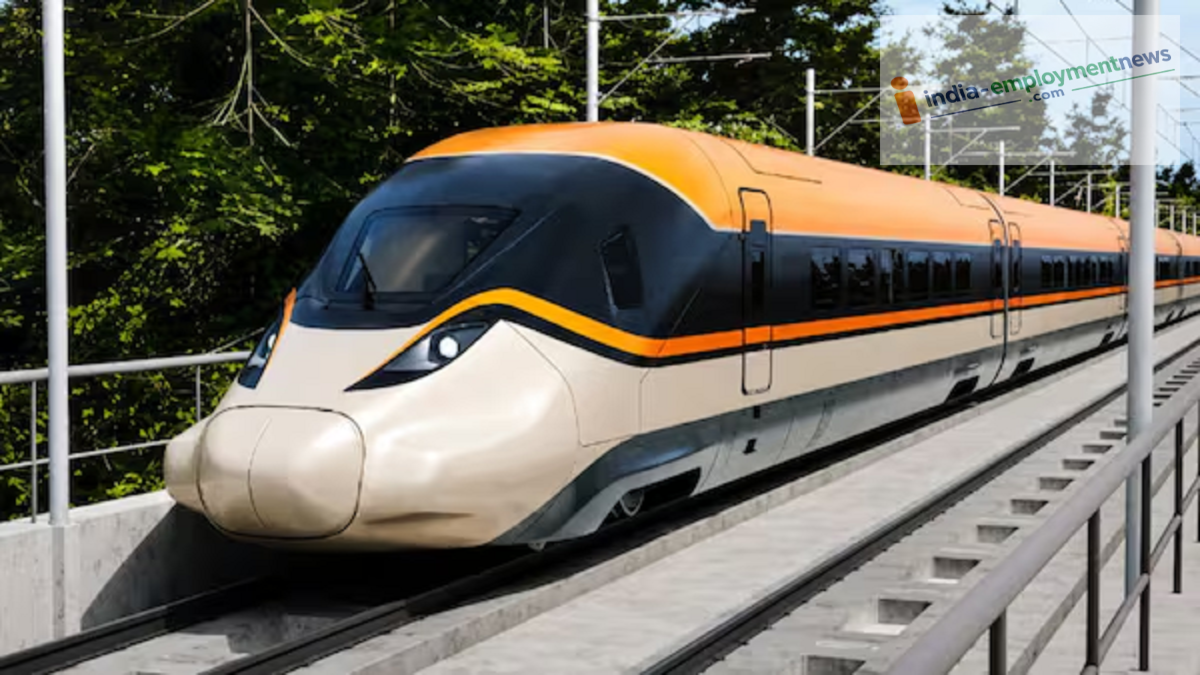
India’s first indigenous bullet train is currently under construction in Bengaluru. This 8-coach train will have a capacity of 557 passengers and will feature both Standard and Executive class accommodations.
The train is being developed for the Mumbai-Ahmedabad High-Speed Rail Corridor at the BEML facility in Bengaluru, Karnataka. Notably, the train has been designed specifically with Indian requirements and local climatic conditions in mind. Beyond high speed, significant emphasis has been placed on passenger convenience, safety, and comfort.
The bullet train will be approximately 202 meters long and consist of 8 coaches, accommodating 557 passengers. It will include 7 Standard class coaches and 1 Executive class coach. In the Standard class, the seating configuration will feature three seats on one side and two on the other, while the Executive class will have two seats on each side.
What will be the speed of the bullet train?
The train will undergo trials at a speed of 280 kmph, with an intended operational speed of 249 kmph. If required, two such train sets can be coupled together to form a 16-coach train.
What amenities will the bullet train offer?
Passenger comfort has been a key priority in the design. The seats are crafted to ensure a comfortable journey, providing ample legroom. Each seat will be positioned next to a wide window. There will be overhead racks for luggage, along with dedicated stands for larger bags. Power sockets will also be available for charging mobile phones and laptops. Additionally, the train will be equipped with modern restrooms. A passageway has been provided between coaches, allowing passengers to move easily from one coach to another.
Screens will be installed throughout the train to provide essential information to passengers; this information will be available in Hindi, English, and regional languages. Important updates will also be communicated via an announcement system. In the event of an emergency, passengers can contact the train staff using a dedicated communication system installed within the coaches. The train will also feature a Wi-Fi-based infotainment system, allowing passengers to access and enjoy pre-loaded entertainment content.
Special provisions for passengers with disabilities
The train has been designed with the needs of passengers with disabilities in mind. The height of the train floor will be aligned with the platform to ensure ease of boarding and alighting. Additionally, the doors will be equipped with special steps to minimize the gap between the train and the platform. Other features include wheelchair-accessible doors, designated seating, accessible restrooms, and signage in Braille.
Measures to mitigate heat and noise
Each coach will be equipped with two HVAC (Heating, Ventilation, and Air Conditioning) units to ensure effective climate control and optimal airflow, maintaining a comfortable temperature and humidity level inside. Special measures have also been taken to reduce noise during the journey; these include sound insulation in the coach body and flooring, noise-dampening coatings, and protective covers around the wheels.
Powered by 25,000 volts of electricity
It is also worth noting that this bullet train will operate on 25,000 volts of electricity. It will be equipped with a regenerative braking system, which allows a portion of the energy generated during braking to be recovered and reused, thereby contributing to energy conservation. Furthermore, the front section and the overall body of the train have been aerodynamically designed to minimize air resistance at high speeds. For this, the airflow has also been studied using computer-based techniques.
This design will help reduce air resistance and manage pressure fluctuations within tunnels. Consequently, it will enhance the train's stability at high speeds and ensure a more comfortable journey for passengers. Being developed for the Mumbai-Ahmedabad bullet train project, this train is considered a significant step toward advancing indigenous engineering and high-speed rail technology in the country.
