
Firecrackers Not to Blame for Pollution; Ban Threatens Livelihoods of 1 Million Families – CTI
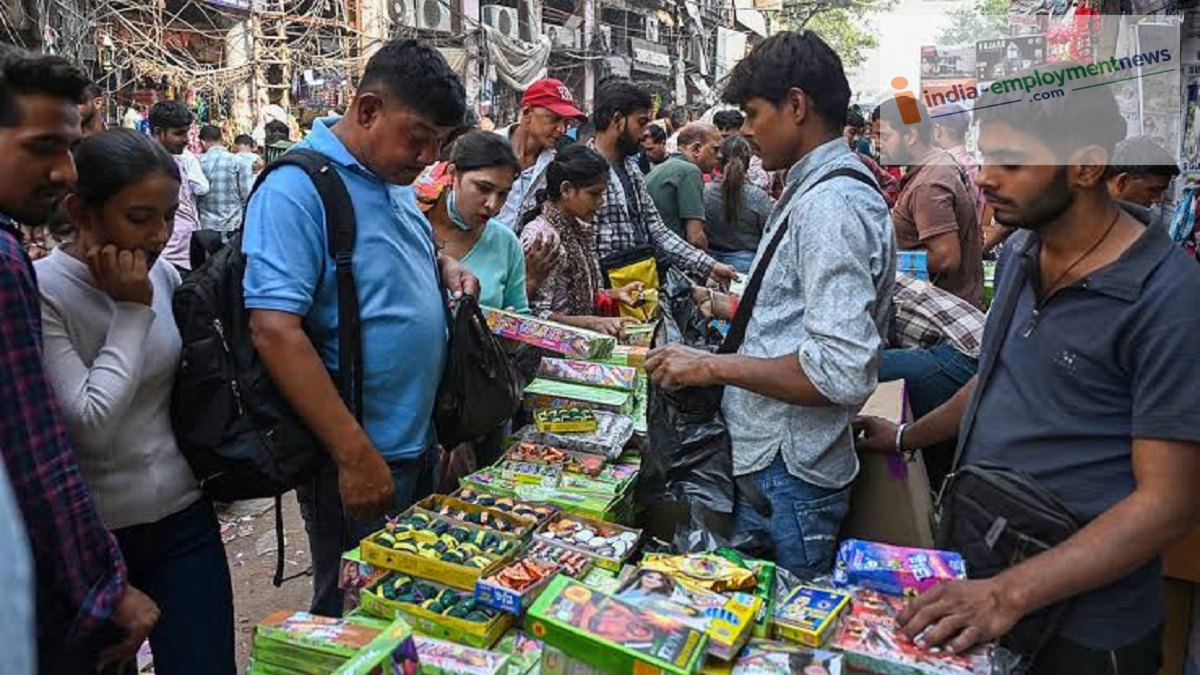
The Chamber of Trade and Industry (CTI) has questioned the practice of blaming only Diwali firecrackers for pollution in Delhi. The organization has called for action against other contributors to pollution, including stubble burning.
Amid the ongoing controversy surrounding the bursting of firecrackers during Diwali in Delhi, the Chamber of Trade and Industry (CTI)—an organization representing traders—has challenged the narrative that firecrackers are solely responsible for the city's pollution. In a letter to various political parties, CTI Chairman Brijesh Goyal urged them not to hold Diwali firecrackers exclusively responsible for Delhi’s poor air quality.
He also highlighted the issue of stubble burning in neighboring states, calling for a collaborative effort with the central government to address it. Brijesh Goyal stated that while the CTI opposes pollution and supports the need for clean air in Delhi, it is unfair to attribute the entire pollution problem to a single day—Diwali. According to him, destroying the livelihoods of firecracker traders in the name of curbing pollution is not a viable solution.
What caused the rise in AQI between November 5 and 7?
The CTI has raised a significant question regarding pollution levels recorded on November 5, 6, and 7. The organization points out that firecrackers were burst in Delhi on November 8; yet, in the three days leading up to that, the Air Quality Index (AQI) was already hovering between 350 and 400. This raises the question: if no firecrackers had been burst yet, why was the air quality so poor? The CTI argues that these figures clearly indicate the existence of other factors contributing to Delhi’s pollution. The organization asserts that while it is easy to blame firecrackers, it is essential to take action against the actual root causes of the problem.
Why does Delhi’s air quality deteriorate between October and January?
The CTI has also raised questions regarding the seasonal patterns of pollution. The organization states that Delhi’s air quality consistently worsens between October and January each year, whereas pollution levels do not reach such extremes from March to September. According to Goyal, a primary reason for this is the burning of crop stubble in neighboring states; when stubble burning begins in the fields, Delhi’s air quality is directly affected.
Conditions tend to improve once the stubble burning ceases. The CTI questions why, instead of taking effective action against the annual issue of stubble burning, the authorities focus their strictness primarily on firecrackers during Diwali.
Concerns for 1 million families dependent on the firecracker trade
The CTI Chairman has also highlighted the economic plight of those involved in the firecracker industry. According to the organization, approximately 1 million families across the country—ranging from workers in the factories of Sivakasi to small-scale retail shopkeepers in Delhi—rely on this trade. For a small trader, the Diwali season serves as a major source of annual income.
These traders invest capital, secure licenses, and stock up on inventory months in advance. However, when a ban is imposed just before the festival, their investments become trapped, and their hopes for earnings vanish. The CTI asks: given that traders have manufactured "green crackers" in compliance with court directives, what is the justification for repeatedly targeting them?
Preserving the joy of Diwali for children
Pointing to the joy that Diwali brings to children—who look forward to the festival all year round—the CTI notes that new clothes, sweets, *diyas* (lamps), and firecrackers are all integral to their celebration. The organization advocates for a regulated and limited approach to the use of firecrackers, rather than an outright ban.
This would involve using fewer firecrackers, restricting them to specific time slots, and mandating the use of "green crackers." While the CTI acknowledges the necessity of environmental protection, it argues that it is unfair to stifle the joy of festivals through blanket restrictions.
Why are strict restrictions imposed specifically on Hindu festivals? In his statement, Brijesh Goyal has raised questions regarding the regulations applied to religious events. He stated that the CTI is not against any religion and respects all faiths; however, he questioned why strict measures are disproportionately directed toward Hindu festivals in the name of the environment. He pointed to the restrictions imposed on firecrackers during Diwali, the use of water during Holi, activities in the Yamuna river during Chhath, the use of DJs during the Kanwar Yatra, and concerns regarding pollution during the immersion of Ganpati idols.
The CTI also questioned why similar objections are not raised with equal prominence when firecrackers are burst across the country at midnight on New Year’s Eve. Laws and environmental regulations should be applied equally to everyone.
Pollution should be addressed throughout the year.
Brijesh Goyal has urged political parties to stop scapegoating Diwali firecrackers as the primary cause of pollution and, instead, to work alongside the central government to address issues such as stubble burning. He asked: if firecrackers were to be completely banned, would anyone take responsibility for ensuring that Delhi’s Air Quality Index (AQI) does not exceed 300 between October and January? If no such guarantee can be provided, is it fair to penalize only those in the firecracker trade?
The CTI Chairman emphasized that the organization seeks to ensure clean air while simultaneously preserving trade, cultural traditions, and the joy of children. According to him, the solution to pollution does not lie in selective bans, but rather in a scientific and balanced management approach implemented consistently throughout the year.
