
Fees to be levied on UPI transactions; Delhi traders say they will now promote cash payments..
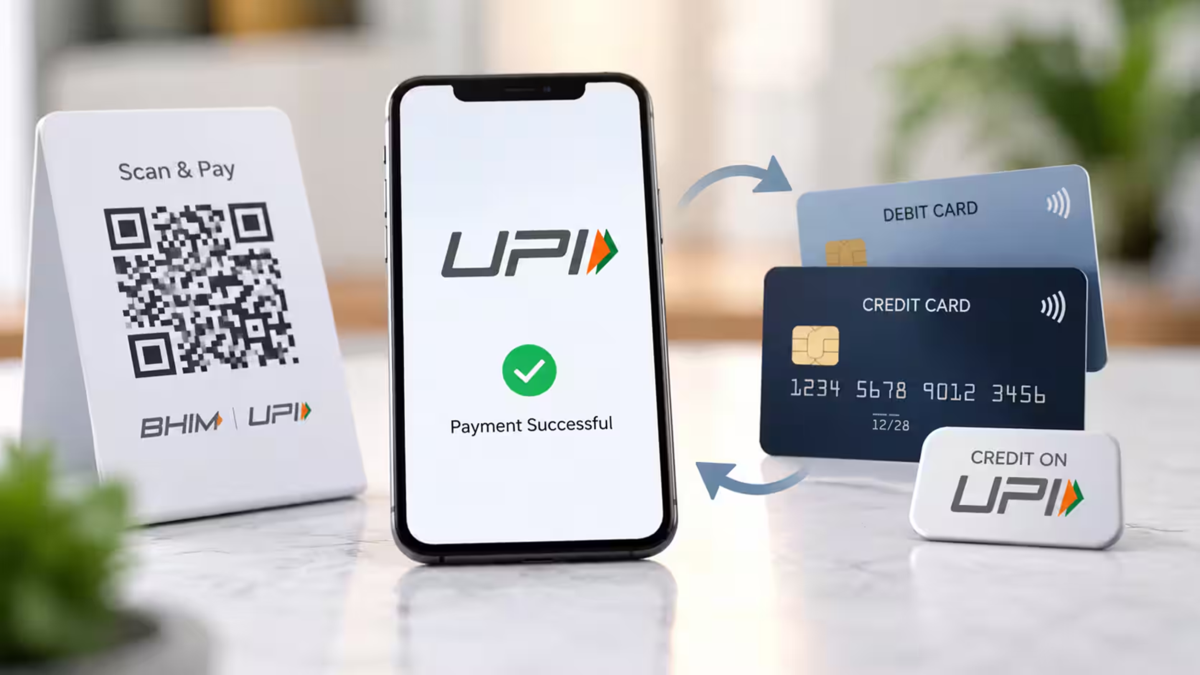
There is growing resentment among merchant associations following the government's decision to levy a 0.4% charge on UPI payments exceeding ₹2,000. Several business associations in Delhi have indicated that, to avoid this additional cost, they might encourage customers to opt for cash transactions instead of digital payments.
On Tuesday, the government implemented a new system for large digital business payments, under which a 0.4% charge will be levied on UPI transactions exceeding ₹2,000. This move effectively ends the zero Merchant Discount Rate (MDR) regime that had been in place since January 2020. Under the new system, a maximum charge of ₹300 can be levied on payments of ₹75,000 or more. The government maintains that this measure will help strengthen the digital payment infrastructure; however, a section of the merchant community views it as an additional financial burden on their businesses.
"We will encourage cash payments": President, Kamla Nagar Market Association
Nitin Gupta, President of the Kamla Nagar Market Association, stated that while merchants had previously supported the government's initiative to promote digital payments, they would encourage cash transactions if forced to pay additional charges. Gupta said, "We are already paying transaction fees and 18% GST (Goods and Services Tax). If the government now levies a UPI MDR on us as well, we will promote cash payments. We had supported UPI payments when the government first introduced them."
He added, "If charges are imposed on UPI transactions too, we will not support it and will start encouraging cash payments." Amit Gupta, General Secretary of the New Delhi Traders Association, remarked that following the decision to impose this additional charge, UPI payments would become an expensive option for merchants operating on low profit margins.
What did the Retailers Association of India say? Meanwhile, the Retailers Association of India (RAI) stated on Wednesday that the government's decision to impose a 0.4 percent Merchant Discount Rate (MDR) on UPI transactions could adversely affect the progress made in digital payment adoption among small retailers ahead of the festive season. After keeping UPI payments completely free for nearly six years, the government announced that, effective October 15 this year, a 0.4 percent charge would apply to payments exceeding ₹2,000 made to merchants or shopkeepers via this platform. This charge is to be borne by the merchant and will not be passed on to the customer.
In its statement, the RAI warned that this fee could reverse years of progress in digital payment adoption among India's smallest retailers, particularly at a time when the festive season is approaching. RAI CEO Kumar Rajagopalan said, "Small merchants will now have to consider whether to accept cash or UPI."
The RAI noted that a shift back to cash would also undermine the government's formalization efforts, as transactions occurring outside the UPI network would not be recorded under the Goods and Services Tax (GST) regime. This runs counter to the direction established through a decade of digitalization policies.
Not a charge levied on customers: Swadeshi Jagaran Manch
Separately, the Swadeshi Jagaran Manch (SJM)—an affiliate of the Rashtriya Swayamsevak Sangh (RSS)—stated on Wednesday that the government should reconsider any proposal to impose an MDR on UPI transactions exceeding ₹2,000. The Manch argued that such a move is unjustified given the costs associated with the transactions. In a statement, the Finance Ministry clarified, "Customers will not have to pay any charge for making such payments via UPI." The Ministry further added, "MDR is a charge levied within the merchant payment ecosystem; it is not a fee charged to customers making UPI payments."
Disclaimer: This content has been sourced and edited from Amar Ujala. While we modified it for clarity and presentation, the original content belongs to its respective authors and website. We do not claim ownership of the content.
