
FD Returns to Fall Further: RBI Rate Cut Signals Lower Interest Ahead—Investors Should Review Plans
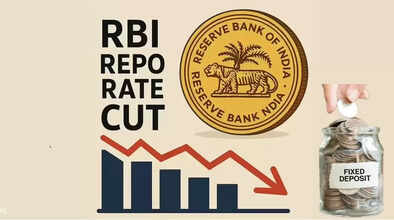
Fixed deposits (FDs), once considered the safest and most reliable savings option in India, may no longer deliver the returns investors were used to. With the Reserve Bank of India (RBI) reducing the repo rate again, banks are expected to cut FD interest rates further, impacting millions of depositors—especially senior citizens and low-risk investors who rely on guaranteed income.
RBI Cuts Repo Rate by 25 Basis Points
On 5 December, the RBI announced a 25-basis-point (0.25%) reduction in the repo rate, bringing it down to 5.25%. This marks the fourth rate cut since February, reinforcing the central bank’s strategy to boost economic activity through cheaper lending.
While the move may support business growth, it poses a challenge for depositors who depend on fixed-income instruments like FDs for stability and assured returns.
FD Rates Won’t Drop Immediately—But a Reduction Is Coming
Banks typically do not revise their FD interest rates on the same day the repo rate is changed. However, the trend is clear:
Most banks have already been reducing FD rates over recent months, especially for short- and medium-term deposits.
Key trends include:
-
The sharpest declines are visible in the 1–2 year FD slabs, which earlier offered the best yields.
-
High-return FD options have become scarce.
-
With this new rate cut, the peak FD rate may fall even further in the coming weeks.
Current 3-Year FD Rates Across Major Banks (as of 28 Nov 2025)
| Bank | Interest Rate (3-Year FD) |
|---|---|
| IndusInd Bank | 6.65% |
| ICICI Bank | 6.60% |
| Axis Bank | 6.60% |
| Union Bank | 6.40% |
| Bank of Baroda | 6.40% |
| HDFC Bank | 6.40% |
| Kotak Mahindra Bank | 6.40% |
| State Bank of India (SBI) | 6.30% |
| Punjab National Bank (PNB) | 6.25% |
| Canara Bank | 6.25% |
These rates highlight how the returns on medium-tenure deposits have been declining steadily.
Major Banks Already Cut FD Rates by 50–100 bps
Since February 2025, several banks have slashed FD interest rates by 50 to 100 basis points.
For example:
-
SBI’s Amrit Vrishti Scheme: Peak rate for regular customers dropped from 7.1% in January to 6.6% now.
-
HDFC Bank: Top FD rate reduced from 7.25% to 6.6%.
These reductions represent only a partial reflection of the RBI’s total 100-basis-point rate cuts so far. With the latest repo cut, more FD rate revisions are expected.
What Should Investors Do Now?
RBI’s move indicates that FD returns may continue to decline. To protect their income and manage liquidity smartly, investors should consider adjusting their strategies.
1. Use the FD Laddering Strategy
Instead of placing your entire savings into one long-term FD, divide the amount into multiple FDs of different tenures.
Benefits include:
-
Regular liquidity as FDs mature at intervals
-
The chance to reinvest at better rates if market conditions improve
-
Reduced impact of falling interest on your entire deposit
2. Lock In Long-Term FDs While Rates Are Still Higher
Some banks still offer slightly higher interest on longer tenures.
If you need steady returns over the next few years, this may be a good time to secure a long-duration FD, before banks revise their rates downward.
Senior Citizens May See Reduced Premium Benefits
Senior citizens currently earn a 0.50% interest premium on most FDs.
However, as banks continue cutting rates, this additional benefit may also shrink. Retirees who rely on FDs for monthly income should plan ahead to avoid disruptions.
Bottom Line
FDs may soon become less profitable as banks adjust to consistent repo rate cuts by the RBI. While FDs remain safe, their returns are no longer as attractive as before. Investors—especially senior citizens—should consider strategies like laddering and long-term locking to safeguard their earnings.
