
Explainer: Why You Won’t Be Able to Get a 10th SIM Card After August 24, 2026—All Key Questions Answered
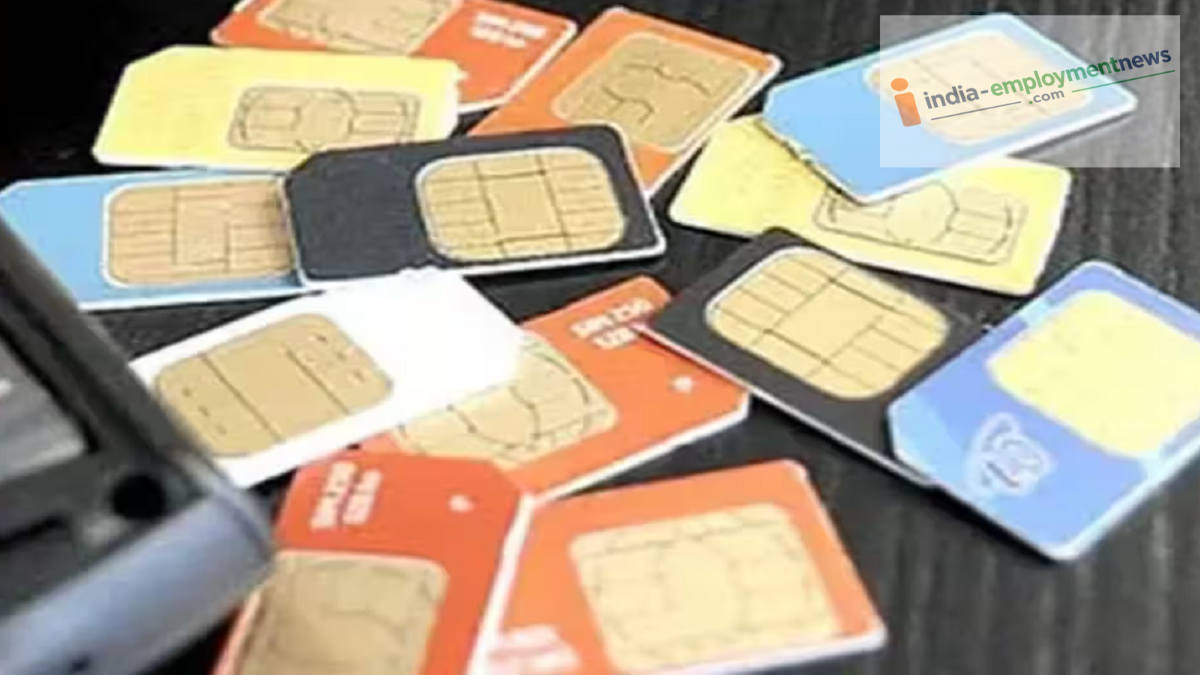
Starting August 24, 2026, before issuing a new SIM, companies will verify whether you have already reached the limit of connections registered in your name. If the limit has been reached, you will not be able to obtain a 10th SIM card. If you already possess more than nine SIMs, the extra numbers will be deactivated.
If you already have nine mobile connections registered in your name and are considering getting a 10th SIM card, this information is relevant to you. The Department of Telecommunications (DoT) has further tightened the regulations regarding SIM card issuance. From August 24, 2026, telecom companies will not issue a new SIM card to any customer who has already reached the maximum limit (9 or 6) of registered mobile connections. In other words, a 10th SIM card will no longer be available. This rule has been implemented nationwide. Let us understand every aspect of this new rule in this explainer...
How many SIM cards can an individual hold?
This limit is not new. The Department of Telecommunications (DoT) had established as early as August 9, 2012, that an individual could hold a maximum of nine mobile connections in their name. This limit applies across all telecom companies (Jio, Airtel, Vi, BSNL) and all licensed service areas combined.
The implication is clear: if you hold three Airtel SIMs, four Jio SIMs, and two Vi SIMs, the total comes to nine. You cannot obtain a 10th SIM from any company.
What is the SIM limit in different states?
The limit is not uniform across the country; there are two distinct categories:
| Region | Maximum SIM Cards |
|---|---|
| Most States in India | 9 |
| Jammu and Kashmir | 6 |
| Assam | 6 |
| Northeastern States | 6 |
This means that in Jammu & Kashmir, Assam, and the Northeastern states, an individual can hold a maximum of only six mobile connections. The limit is lower in these regions due to specific security requirements.
What changed on August 24?
Previously, while the limit existed, it was not strictly enforced. Scammers used to exploit loopholes to obtain more SIM cards in their names than the permitted limit.
All this changed on August 24, 2026. Now, telecom companies are required to verify how many mobile connections are already registered in an applicant's name before issuing a new SIM. On August 17, 2026, the Department of Telecommunications (DoT) issued a circular directing telecom companies to implement the necessary technical and organizational measures for this purpose.
Obtaining a 10th SIM card has now become impossible.
How can one determine how many SIM cards are registered in a person's name?
To address this, the government has developed the Digital Intelligence Platform (DIP). This system consolidates customer data from all telecom companies into a single repository.
Starting August 23, 2026, the DoT began making photographs available on the DIP for customers who have reached the maximum limit of registered SIM cards. Telecom companies will use this data to check if a customer seeking a new SIM has already hit the limit.
Additionally, when acquiring a new SIM, customers must declare in the Customer Application Form (CAF) how many mobile numbers are already registered in their name—regardless of the telecom operator or the service circle.
What happens if a person has more than 9 SIM cards?
If a person is found to have more than 9 SIM cards, all additional SIM cards issued beyond the first nine will be blocked.
According to the DoT, if a customer obtains SIM cards exceeding the limit and a telecom company activates them, the connection may be immediately suspended for one day pending resolution of the matter.
Initially, this verification process will operate on a post-facto basis (i.e., after the SIM has been issued). However, the government has directed telecom companies to implement a real-time system by November 30, 2026, ensuring verification takes place immediately upon SIM issuance.
Why did the government take this step? The primary objective of this new system is to curb cyber fraud, financial scams, and other illegal activities. Scammers often obtain fake SIM cards by using other people's Aadhaar or identity documents; the new regulations aim to put a stop to this practice.
The Department of Telecommunications (DoT) has clearly stated that the aim of this directive is to ensure customers use mobile connections only within the prescribed limits.
How can you check how many SIM cards are registered in your name?
If you are unaware of how many mobile numbers are active in your name, you can check via the government's 'Sanchar Saathi' platform (TAFCOP portal). By entering your mobile number there, you can view the number of connections linked to your identity. You can also report any unfamiliar numbers that appear.
