
Explainer: What will be the impact of the new Labour Codes on gratuity and PF?
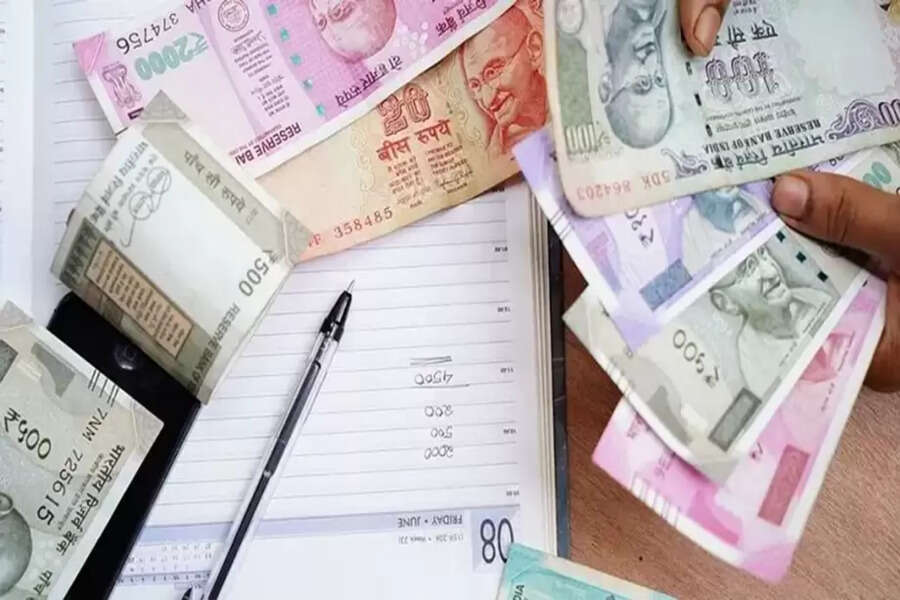
The Central Government has announced new Labor Codes, consolidating employment laws into four codes. The new Labor Codes make significant changes to the calculation of salary, gratuity, provident fund (PF), pension, and other social security benefits. These changes affect both employees and employers. Let us explain how much each benefit will be and whether your take-home salary will be affected.
What is the new definition of wages?
The definition of 'wages' has been standardized across four new codes. The new definition includes basic salary, dearness allowance (DA), and all other retaining allowances that are part of the cost-to-company (CTC) and are not specifically exempted. According to the Labor Codes, 2019, key exclusions include HRA, transportation costs, the employer's PF contribution, and commission. But importantly, these exclusions cannot exceed 50% of your total remuneration.
This means that at least half of your CTC will be considered as 'labor' for calculating key benefits like gratuity, PF, Employees' State Insurance Corporation (ESIC), maternity benefits, and other social security benefits.
Will your gratuity and PF increase?
Gratuity will increase significantly. Until now, gratuity was calculated based on basic salary and DA for each completed year of service. Since most companies kept the basic salary and DA at a lower amount, while the remaining amount was paid as gratuity, the new calculation basis will now be reset to at least 50% of your CTC.
However, PF contributions will not increase under the new rules. These are governed by the existing EPF, Employees' Pension Scheme (EPS), and Employees' Deposit-Linked Insurance (EDLI) schemes, which are still in effect. According to the EPF scheme, mandatory PF contributions are calculated on salaries up to ₹15,000.
Puneet Gupta, Partner, People Advisory Services-Tax, EY India, told Mint in a report that the labor codes themselves specify that the current schemes will continue for the foreseeable future, so the ₹15,000 limit will apply. He further added that PF calculations based on the new 'wage' definition will only be applicable for employees whose basic salary and DA are less than ₹15,000. The PF contribution for such employees may be subject to change, but only up to the ₹15,000 limit.
Who will be eligible for gratuity now and when?
The minimum service period for gratuity for fixed-term employees has been reduced from 5 years to one year. Any employee whose employment contract has an expiration date will be considered a fixed-term employee, even if the contract is regularly renewed. This rule does not apply to permanent, tenured employees, who must complete five years to be eligible (unless they leave service due to death or disability). However, Sirwala cautions that while clarity is awaited, recurring renewals of fixed-term contracts, with no break or termination in service, may not be considered fixed-term employment.
Will these changes be effective immediately?
The previous Act relating to gratuity has been repealed as of November 21, 2025, so gratuity calculation based on the new, broader definition of salary is already in effect. This will apply retrospectively, meaning anyone who leaves or retires after November 21 and is eligible for gratuity can expect higher payments based on the new salary definition.
EY's Gupta said this will apply retrospectively unless the government introduces a new rule removing the retrospective effect. Employers can implement changes to gratuity, PF, and ESI (Employees' State Insurance) calculations immediately. Specifically, for PF, the current ₹15,000 salary limit will remain in effect until the revision, limiting any changes to employer or employee contributions.
Will your take-home salary be reduced?
Employees' take-home salaries are unlikely to be immediately affected. Gratuity is paid upon leaving the job and is not deducted from the monthly salary, so it does not reduce regular income. PF contributions will be limited to ₹15,000, meaning there will be no change for most employees. However, those earning less than ₹15,000 may see a slight increase in their contributions, thus reducing their take-home pay.
Disclaimer: This content has been sourced and edited from TV9. While we have made modifications for clarity and presentation, the original content belongs to its respective authors and website. We do not claim ownership of the content.
