
Explained: Excise Duty Cut—How Petrol Reaches You and How Its Price Is Determined, know..
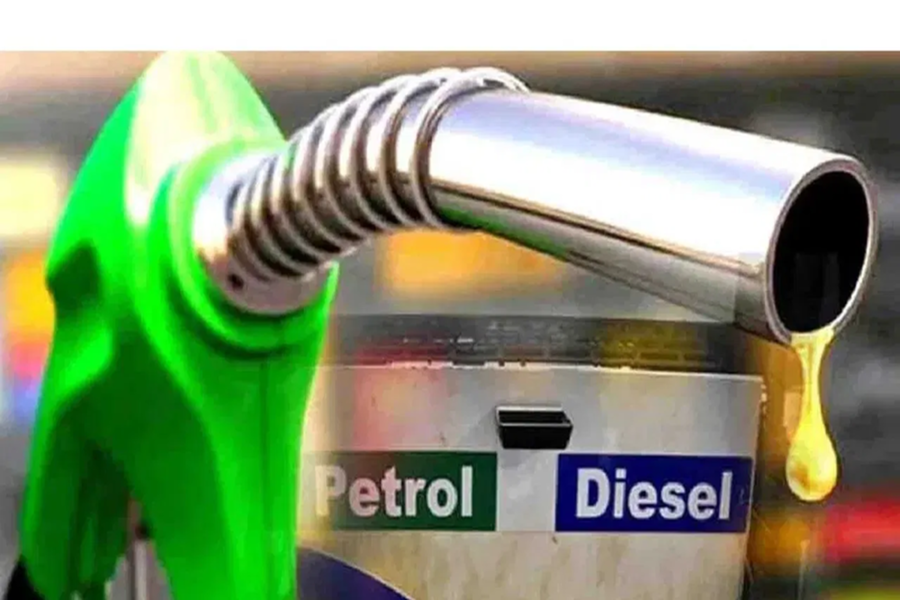
Amidst rising tensions in the Middle East and apprehensions regarding a disruption in supplies through the Strait of Hormuz, the government has decided to reduce the excise duty on petrol and diesel. This move signals an intent to provide relief to both the public and oil companies from the volatility of crude oil prices; however, its full impact will depend on the specific mechanism by which fuel prices are determined in India.
Taking a major decision, the government has slashed taxes on both petrol and diesel by ₹10 per liter. Consequently, the tax component on petrol has dropped to approximately ₹3 per liter, while the tax on diesel has effectively been reduced to nearly zero. The objective behind this measure is to alleviate the pressure of rising costs currently weighing on oil companies.
Why has the government cut excise duty?
Following the reduction in excise duty, Union Petroleum Minister Hardeep Singh Puri stated that the government faced two options: either significantly hike fuel prices for Indian citizens—as most other nations have done—or absorb the financial burden itself to shield Indian citizens from the volatility of the international market. The government has taken a significant hit to its tax revenue to ensure that, at a time when international prices are skyrocketing, the massive losses currently being incurred by oil companies—estimated at approximately ₹24 per liter on petrol and ₹30 per liter on diesel—can be mitigated.
Will petrol and diesel prices drop immediately?
Not necessarily. While crude oil prices have fluctuated significantly in recent months, retail petrol and diesel prices in India have remained relatively stable. This occurs because oil companies often absorb losses for a certain period to avoid the administrative complexities and market disruption associated with frequent price revisions. Therefore, the immediate benefit of the tax cut may accrue to the oil companies rather than directly to the consumers. Relief for the general public will likely materialize gradually over time. Once companies manage to absorb their losses, they may potentially cut fuel prices in the coming days.
How Petrol Prices Are Determined
According to a report by *Business Standard*, the prices of petrol and diesel in India are determined through a multi-stage process, beginning with crude oil and culminating at the petrol pump. India imports approximately 85% of its crude oil requirements from abroad and pays for it in US dollars; consequently, the rupee-dollar exchange rate plays a pivotal role in this pricing. If the rupee weakens against the dollar, the cost of oil rises—even if international market prices remain stable. The cost of one barrel (equivalent to 159 liters) of crude oil typically works out to be around ₹35–45 per liter.
Subsequently, the crude oil is refined into usable fuel at refineries; this process incurs an additional cost of approximately ₹3–5 per liter, which includes expenses for transportation and insurance. This figure constitutes the Refinery Transfer Price (RTP). Following this, oil marketing companies add a margin of roughly ₹2–3 per liter to cover their operational costs and profit margins. The Central Government then levies an excise duty (tax) on the fuel. Next, a commission of approximately ₹3–4 per liter is paid to the petrol pump dealer. Finally, State Governments impose Value Added Tax (VAT), the rate of which varies from state to state. The final retail price of the fuel is determined only after this entire process is complete.
How Much Tax Do You Pay on Petrol?
Taxes constitute a significant portion of the retail price of petrol and diesel. Before the recent price cuts, the Central Government's tax on petrol stood at approximately ₹19–20 per liter, and on diesel at ₹15–16 per liter—accounting for roughly 20–25% of the total retail price. In addition to this, State Governments levy VAT, which varies across different states and contributes approximately 20–30% to the final retail price.
According to the *Business Standard* report, if one analyzes the overall pricing structure, the combined costs of crude oil, refining, and transportation account for approximately 35–45% of the total retail price. Central government taxes amount to approximately 20–25%, while the State VAT ranges from 20–30%. Meanwhile, the combined dealer commission and oil company margins account for roughly 5–8%. Consequently, taxes alone constitute approximately 40–55% of the total price paid by the consumer.
Let's understand this with an example:
Suppose the base price of crude oil is ₹40 per liter. Refining and transportation costs add another ₹5 to this figure, and oil companies add a margin of approximately ₹3. Subsequently, the Central Government levies a tax of ₹20, and the State Government adds a VAT of ₹25. Additionally, the dealer receives a commission of ₹4 per liter. When all these components are combined, the final retail price of petrol comes to approximately ₹97 per liter. However, please note that these figures are illustrative and have been used solely for explanatory purposes.
What do the recent tax cuts signify?
The reduction in taxes can help alleviate the pressure of rising inflation and provide relief to oil companies. It also demonstrates the government's willingness to take proactive measures during times of crisis. However, this move will impact the government's revenue, as taxes levied on fuel constitute a significant source of income for the exchequer. The government's revenue derived from the oil sector may decline during the current financial year (FY2027).
Disclaimer: This content has been sourced and edited from TV9. While we have made modifications for clarity and presentation, the original content belongs to its respective authors and website. We do not claim ownership of the content.
