
Explained: Could the 2000 rupee notes be changed again this year? Here's the answer...
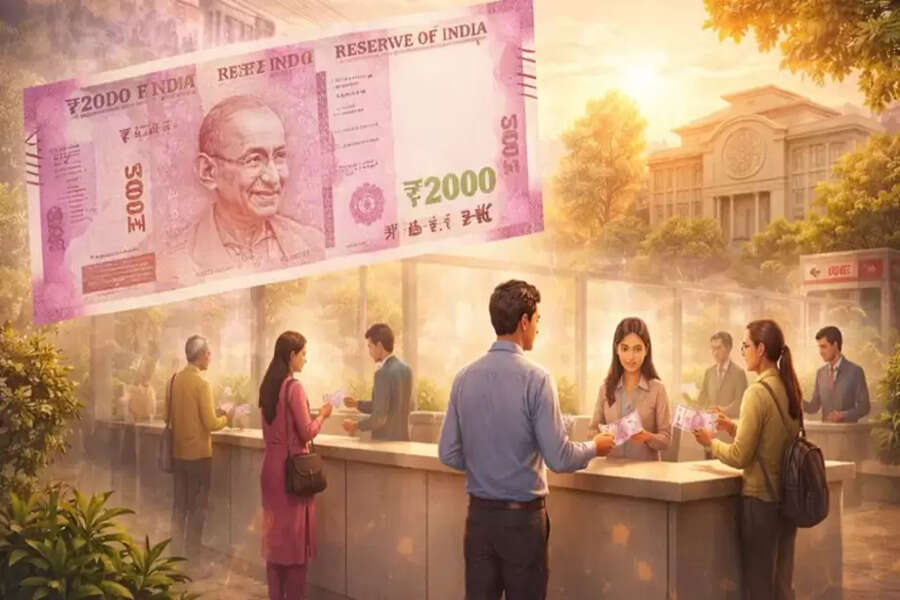
If you are still holding onto ₹2000 notes in 2026, you are sitting on a currency that has been completely withdrawn from circulation. After demonetization in November 2016, when ₹500 and ₹1000 notes were suddenly withdrawn from circulation, the country faced a severe cash crunch. The RBI issued the ₹2000 note to increase the supply of currency in the economy, allowing people to exchange their old ₹500 and ₹1000 notes within a limited deadline. By 2018-19, the currency shortage had eased, and the RBI completely stopped printing these notes.
By then, people had sufficient notes of other denominations. Therefore, under its “Clean Note Policy,” the RBI announced the withdrawal of ₹2000 notes from circulation in May 2023. More than 98 percent of the ₹2000 notes have been returned to the RBI, and only ₹5,669 crore worth of notes are still held by the public. Now, the biggest question is whether ₹2000 notes can still be exchanged in 2026. Let's try to find the answer to this question.
Are ₹2000 notes still legal tender?
B. Shravanth Shankar, Advocate-on-Record at the Supreme Court of India, says that ₹2000 notes will remain legal tender until 2026, but their practical utility has significantly decreased. He further adds that the RBI has already withdrawn them from circulation, and holding onto them for a long time poses a risk of inconvenience, not illegality.
How can you exchange ₹2000 notes in 2026? Although ₹2000 notes will remain legal tender until further notice, the facility to exchange these notes at any regular bank branch in the country ended on October 7, 2023. This means you can no longer go to a bank and exchange your ₹2000 notes for other circulating currency notes. However, there is an option under which you can still exchange or deposit ₹2000 notes at 19 designated RBI issue offices.
There are 19 such RBI offices where you can still exchange your ₹2000 notes. These offices are located in Ahmedabad, Bengaluru, Bhopal, Bhubaneswar, Chandigarh, Chennai, Guwahati, Hyderabad, Jaipur, Jammu, Kanpur, Kolkata, Lucknow, Mumbai, Nagpur, New Delhi, Patna, Thiruvananthapuram, and Belapur. At these offices, you can exchange ₹2000 notes for notes of other denominations, up to a maximum limit of ₹20,000. These notes can also be directly deposited into a bank account in India.
The Post Office will also help.
Those who cannot visit an RBI issue office can send their ₹2000 notes to an RBI issue office through India Post from any post office in India, so that they can be deposited into their bank account. This option is especially useful for people living in remote areas, senior citizens, or those with mobility issues. Presenting valid identification and undergoing due diligence as per RBI or government regulations will be required for exchanging or depositing the notes.
What documents will be needed?
Manisha Shroff, Partner at Khaitan & Co., states in an ET report that although the RBI or income tax authorities have not prescribed any specific documents for the exchange/deposit of ₹2000 notes, it may be beneficial for individuals to maintain audit records of each deposit. She says that people should keep with them receipts from the RBI or India Post, bank statements showing details of the deposited amount, PAN/KYC documents, and the receipt of the submitted form, source documents for the cash received such as salary slips, copies of income tax returns, and a short note recording when and why the cash was received and withdrawn.
Shankar says that individuals should maintain basic records such as bank deposit slips, exchange receipts issued by the RBI office, and details of the source of funds. He further adds that while holding ₹2000 notes is not automatically illegal, maintaining clear documentary records protects against any future income tax inquiries and demonstrates your integrity.
What if someone gives you a ₹2000 note today?
Adhil Shetty, CEO of BankBazaar, tells ET that accepting ₹2000 notes is legal, but not always practical. If you receive such a note, deposit it into your bank account as soon as possible. It is also prudent to refuse such payments, especially when digital options or smaller denominations are available. He further adds that accepting these notes often only postpones the problem. Shroff also agrees that, given the limited avenues for exchange/deposit currently available, the receiver should avoid accepting ₹2000 notes as much as possible and request alternative methods of payment.
Will the RBI set a final deadline?
The RBI has announced the withdrawal of ₹2000 notes from circulation under its “Clean Note Policy,” but this is a phased process, not a demonetization (like the one in 2016). Shankar says there is currently no official indication of immediate invalidation. Shetty explains that the RBI typically works in a phased manner. First, circulation is reduced, then exchange options are made stricter, and a final deadline is given only if necessary. While no deadline has been shared, any complete withdrawal would likely be announced well in advance.
Disclaimer: This content has been sourced and edited from TV9. While we have made modifications for clarity and presentation, the original content belongs to its respective authors and website. We do not claim ownership of the content.
