
Expensive Gold Is Changing Buying Habits in India; Old Jewellery May Return to the Market
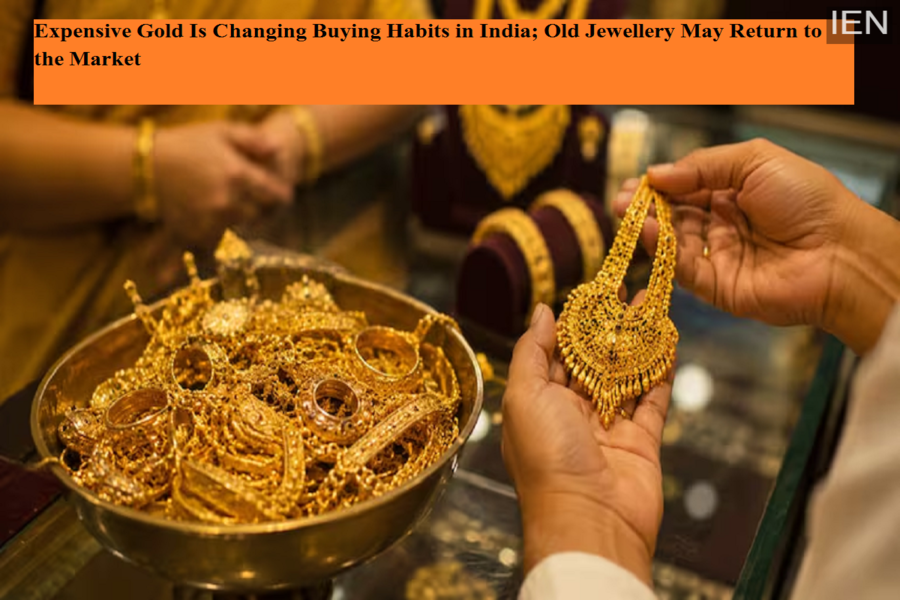
Rising gold prices and higher import duties are beginning to reshape jewellery buying trends across India. According to industry experts, consumers are unlikely to stop purchasing gold entirely, but the way they buy and use gold jewellery may change significantly in the coming years.
Jewellers and gold finance companies now expect more people to bring unused gold jewellery stored in homes back into circulation through exchange programs, recycling, remodelling, and gold-backed financing.
The trend is gaining momentum as gold prices continue climbing sharply across the country, making fresh purchases increasingly expensive for middle-class families and retail buyers.
Rising Gold Prices Are Changing Consumer Behaviour
India has traditionally been one of the world’s largest consumers of gold, where jewellery is viewed not only as a fashion product but also as a long-term investment and family asset.
However, with gold prices touching record highs and import duties rising sharply, many buyers are becoming more cautious.
Recently, the government increased gold import duty from 6 percent to 15 percent, which further pushed domestic gold prices higher.
Industry analysts say consumers are now focusing more on:
- Exchanging old jewellery
- Recycling unused gold
- Buying lighter jewellery
- Upgrading existing ornaments instead of purchasing entirely new sets
Old Gold Jewellery Could Return to the Market
Jewellery companies believe households may now begin unlocking value from old and unused gold lying idle for years.
According to industry estimates, Indian households and temple trusts together are believed to hold more than 32,000 tonnes of gold.
Experts say even partial recycling of this massive stockpile could significantly reduce India’s dependence on imported gold.
Muthoot Exim CEO Keyur Shah reportedly said that customers are increasingly likely to exchange old ornaments for newer designs rather than buying fresh gold at current elevated prices.
He also noted that consumers facing financial needs may choose to:
- Sell unused jewellery
- Pledge gold for loans
- Exchange old ornaments for updated designs
instead of making large new purchases.
Exchange Programs May Become More Popular
Jewellery retailers expect exchange-based buying models to grow rapidly, especially during wedding and festive seasons.
Under such programs:
- Customers submit old gold jewellery
- The gold value is adjusted against new purchases
- Buyers pay only the balance amount
This approach allows consumers to upgrade designs without bearing the full cost of new gold purchases.
Experts believe such schemes could become one of the biggest growth areas for jewellers over the next few years.
Consumers Are Becoming More Value Conscious
Industry leaders say buyers are now paying closer attention to value rather than emotional purchasing alone.
Zen Diamond India Managing Director Neil Sonawala reportedly said customers are trying to maximize value from existing jewellery instead of spending aggressively on fresh purchases.
This shift means many families may increasingly prefer:
- Remodelling existing jewellery
- Reusing inherited ornaments
- Converting old gold into modern designs
- Reducing overall fresh gold buying
Experts say this trend reflects changing financial priorities amid rising inflation and expensive precious metals.
Demand for Lightweight Jewellery Is Rising
Another major change visible in the jewellery industry is the growing demand for lightweight and everyday-wear jewellery.
Traditional heavy jewellery sets are gradually giving way to:
- Minimalist designs
- Daily-wear ornaments
- Lightweight chains and rings
- Fashion-oriented jewellery
Younger buyers, especially Millennials and Gen Z consumers, are increasingly viewing jewellery as a lifestyle and fashion accessory rather than purely as a store of wealth.
9KT and 14KT Jewellery Could See Strong Demand
Industry experts also expect lower-karat jewellery categories such as:
- 9KT gold
- 14KT gold
to witness rising demand because of their relatively affordable pricing.
Svariya Jewels CEO Vishnupriya Singh reportedly indicated that younger buyers are moving toward stylish, lightweight jewellery that fits both budget and fashion preferences.
As gold prices remain elevated, lower-weight and lower-karat products could become more attractive for first-time buyers and younger consumers.
Gold Recycling Could Help Reduce Import Dependence
India imports a large portion of its gold requirement from international markets, which puts pressure on:
- Foreign exchange reserves
- Trade deficit
- Dollar outflow
Experts believe increased domestic recycling of gold could help reduce some of this pressure.
If more households begin monetizing unused jewellery, the country’s dependence on imported gold may gradually decline.
Jewellery Industry Preparing for Long-Term Shift
Industry insiders believe this is not a temporary trend linked only to current price spikes.
Instead, they expect long-term structural changes in consumer buying patterns, including:
- More recycling and exchange transactions
- Growth in gold loan demand
- Preference for lightweight jewellery
- Higher focus on practical value
As gold continues to remain expensive, India’s jewellery market may increasingly move toward smarter consumption patterns rather than purely volume-driven purchases.
