
EPFO New Rules: UAN activation will now be done solely via Aadhaar face authentication..
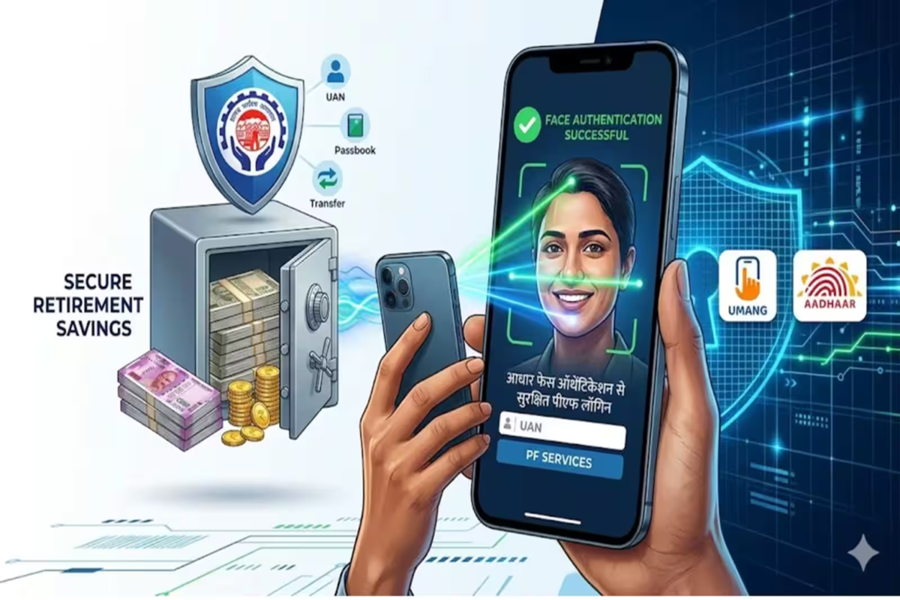
The Employees' Provident Fund Organisation (EPFO) has introduced a major change to make the Universal Account Number (UAN) process completely digital and secure for employees. Aadhaar-based Face Authentication Technology (FAT) has now been made mandatory for UAN generation and activation. This facility is available via the central government's UMANG app, allowing employees to generate and activate their UAN from the comfort of their homes.
Under this new system, EPFO has made face authentication mandatory, replacing the traditional process, effective from August 1, 2025. The objective is to minimize errors, curb the creation of fake accounts, and enhance the security of the process. Previously, employees had to rely on their employers to generate a UAN; now, they can complete this process themselves.
**What is the new system?**
In this new system, identity is verified using an Aadhaar-linked mobile number and facial recognition. This improves data accuracy and speeds up the process. The UAN is a unique 12-digit number linked to the PF account that remains constant throughout an employee's career.
**How to activate UAN (Step-by-step)**
To generate or activate a UAN, you must first download the UMANG app and the Aadhaar Face RD app. Next, select the "UAN Allotment and Activation" option under EPFO services within the UMANG app. Enter your Aadhaar number and the linked mobile number. You will then need to complete OTP verification and, after providing consent, perform a face scan. Once your face is successfully verified, your UAN will be generated or activated.
**What are the benefits?**
Employees will derive several benefits from this new process. The biggest advantage is that they will no longer need to visit offices or rely on employers to generate a UAN. Additionally, services such as KYC updates, passbook downloads, and claim processing will become faster. EPFO believes this move will strengthen the Digital India initiative and make PF services more transparent and accessible. Although some organizations have raised concerns regarding technical issues, the government maintains that the system will be further improved over time. Overall, this change is seen as a major step towards making PF-related tasks easier and more secure for salaried employees.
Disclaimer: This content has been sourced and edited from Dainik Jagran. While we have made modifications for clarity and presentation, the original content belongs to its respective authors and website. We do not claim ownership of the content.
