
EPF Account: Withdrawing the entire PF amount immediately after retirement is a big mistake! You earn extra interest for up to 3 years..
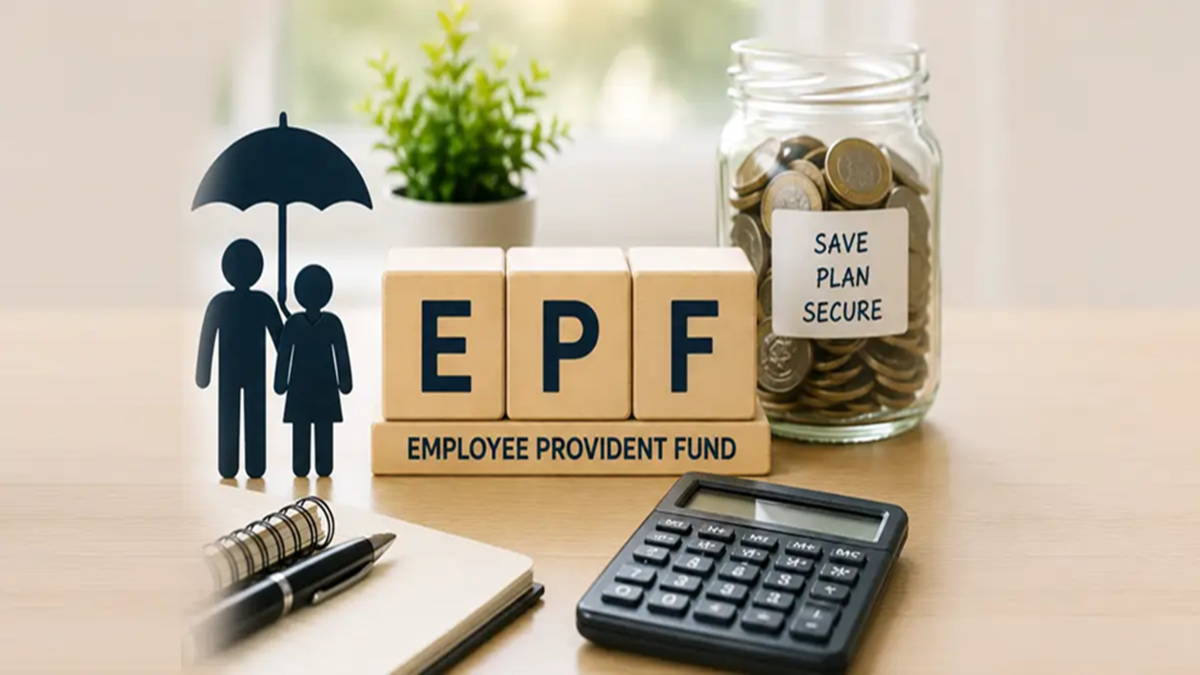
EPF Withdrawal Options After Retirement: For most salaried employees, the Employees' Provident Fund (EPF) represents their lifelong savings and the primary financial support for retirement. Decades of salary deductions, employer contributions, and compound interest build a substantial retirement corpus. However, upon retirement, many mistakenly believe that withdrawing the entire PF amount immediately is mandatory, fearing that the money might be lost or stop earning interest.
The reality is that your PF account remains active even after retirement and continues to earn interest. Here is what happens to your PF money after retirement, whether or not you should withdraw it immediately, and how to make the right financial decision.
**Immediate withdrawal of the entire amount is not mandatory**
Many people think they must fill out the PF claim form on their very last day of work. However, according to EPFO rules, this is not compulsory. There is no need to rush into an immediate withdrawal. If you do not require the funds right after retirement for major expenses—such as repaying a loan, home repairs, or a child's wedding—you can leave your PF balance in the account. Make a decision based on your specific needs.
**PF continues to earn interest even after retirement**
This is a fact that most retired employees overlook:
**Interest earned for 3 years:** Under EPFO rules, the balance in your PF account continues to earn interest at government-mandated rates for three years following retirement.
**Inoperative Account:** An account is classified as 'inoperative' only if no withdrawals are made from it for three years after retirement.
**Better returns than bank savings accounts:** If you withdraw the entire PF amount and deposit it into a standard bank savings account, you would earn 3% to 4% interest. In contrast, EPF returns exceed 8%. Therefore, withdrawing the money unnecessarily and keeping it in a bank account could result in a financial loss. Don't just focus on PF; keep the EPS pension in mind too
Employees often focus solely on their PF (EPF) balance and overlook the pension component (EPS):
Monthly Pension: If you have contributed to the EPFO for at least 10 years, you become eligible to receive a monthly pension under the Employees' Pension Scheme (EPS) upon reaching the age of 58.
Balancing Funds and Income: PF provides a lump-sum amount, whereas the EPS pension guarantees a fixed monthly income after retirement.
4 excellent rules for managing your PF fund after retirement
Avoid hasty, emotional decisions: Do not immediately invest your entire corpus in risky schemes or real estate based on the advice of relatives, friends, or agents right after retiring. Take your time to formulate a well-thought-out retirement plan.
Adopt a phased withdrawal approach: Instead of withdrawing the entire amount at once, withdraw funds systematically based on your monthly needs, or invest the money in secure options like Fixed Deposits (FD), the Senior Citizen Savings Scheme (SCSS), or a Mutual Fund Systematic Withdrawal Plan (SWP).
Assess your total retirement income: Determine your monthly budget by aggregating the income from all sources—PF, pension, personal savings, FDs, rental income, etc.
Consider tax implications and liquidity: After retirement, park your funds in avenues that offer quick access to cash during emergencies while also minimizing the tax burden.
Disclaimer: This content has been sourced and edited from Money Control. While we have made modifications for clarity and presentation, the original content belongs to its respective authors and website. We do not claim ownership of the content.
