
E20 Fuel: Will you get an insurance claim if the engine is damaged by E20 petrol? Understand the rules and expert opinions..
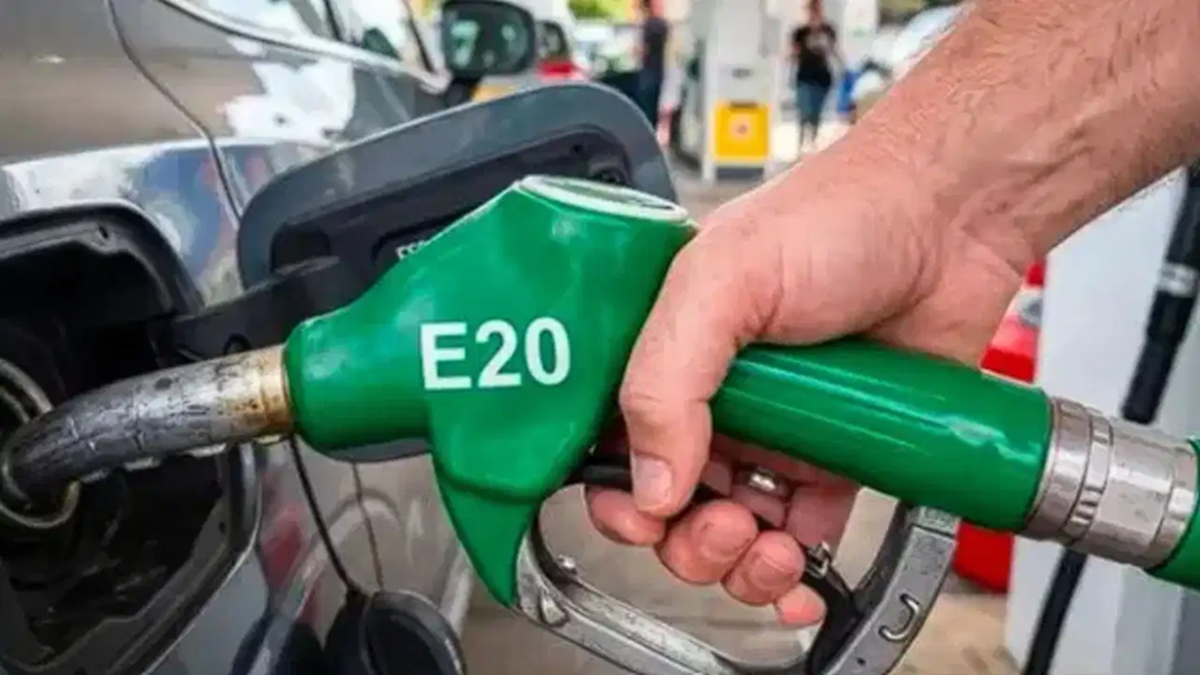
Motor Insurance Policy on E20 Fuel: Since April 1, E20 petrol—petrol blended with 20% ethanol—has become the standard fuel in India. Consequently, owners of older petrol vehicles are raising a key question: if the use of E20 petrol damages the vehicle's engine or fuel system, will a claim be covered under a comprehensive motor insurance policy?
The stance of the government, insurance companies, and automotive experts on this matter is quite clear. Let us explain what the rules regarding E20 petrol and car insurance state.
Does using E20 fuel alone void the insurance?
Absolutely not; the government and insurance companies have clarified that using E20 petrol in your vehicle does not cancel your insurance policy. Following some confusion, ICICI Lombard General Insurance clarified, "Using E20 fuel in the vehicle does not invalidate the policy. A claim depends on whether an insured event—such as an accident or theft—has occurred. Using E20 in older vehicles will not be considered negligence."
According to Paras Pasricha, Business Head of Motor Insurance at Policybazaar, a claim is not rejected solely due to the use of E20 fuel. The claim's outcome depends on the actual cause of the damage.
This is where it is important to understand the nuances of insurance rules:
According to Paras Pasricha, "If a surveyor's inspection proves that the damage to the engine or fuel system was caused solely by using a fuel (E20) not recommended by the vehicle manufacturer, it will be classified as mechanical breakdown or consequential damage under the standard policy." In this scenario, obtaining a claim under a standard comprehensive policy would be difficult.
What is the point of contention?
ICICI Lombard blog post: A blog post by ICICI Lombard stated that damage caused by E20 fuel to older, non-E20-compatible vehicles could be viewed as negligence. However, upon seeing the controversy escalate, the company immediately issued a clarification to set the record straight. All BS6 Phase-2 vehicles manufactured after April 2023 are fully E20-compatible and do not face such issues.
What is the stance of the government and the industry?
The government and the ethanol industry have categorically dismissed claims regarding widespread engine failures caused by E20 fuel. In a written reply to the Lok Sabha, Union Minister of State for Petroleum and Natural Gas Suresh Gopi stated that the government has received no official complaints from vehicle manufacturers or consumer groups regarding reduced mileage or engine/tank damage due to E20 fuel.
Union Petroleum Minister Hardeep Singh Puri stated that insurance companies have clarified their position and advised the public to ignore misleading reports circulating on social media.
According to the government, over 20 crore two-wheelers and 3 crore cars in the country have been running on ethanol-blended petrol without any issues for the past two and a half years.
Akshay Modi, Joint Vice President of the Bharat Independent Ethanol Producers Association (BIEPA), stated that the social media campaign is based solely on misinformation and that ethanol blending was implemented only after thorough scientific testing and OEM approval.
Conclusion and practical advice for car owners
Using E20 petrol does not void your car insurance; in the event of an accident or theft, you will still be eligible to claim insurance just as before. If E20 fuel causes a mechanical breakdown due to issues with the fuel pipe or injectors, or due to corrosion, standard insurance will not cover it. To be covered for this, you need an 'Engine Protect' add-on or an extended warranty. Be sure to check your vehicle's user manual for fuel compatibility.
Disclaimer: This content has been sourced and edited from Money Control. While we have made modifications for clarity and presentation, the original content belongs to its respective authors and website. We do not claim ownership of the content.
