
Do you have a PAN card? Avoid these mistakes at all costs; the Income Tax Department keeps a close watch on your expenses.
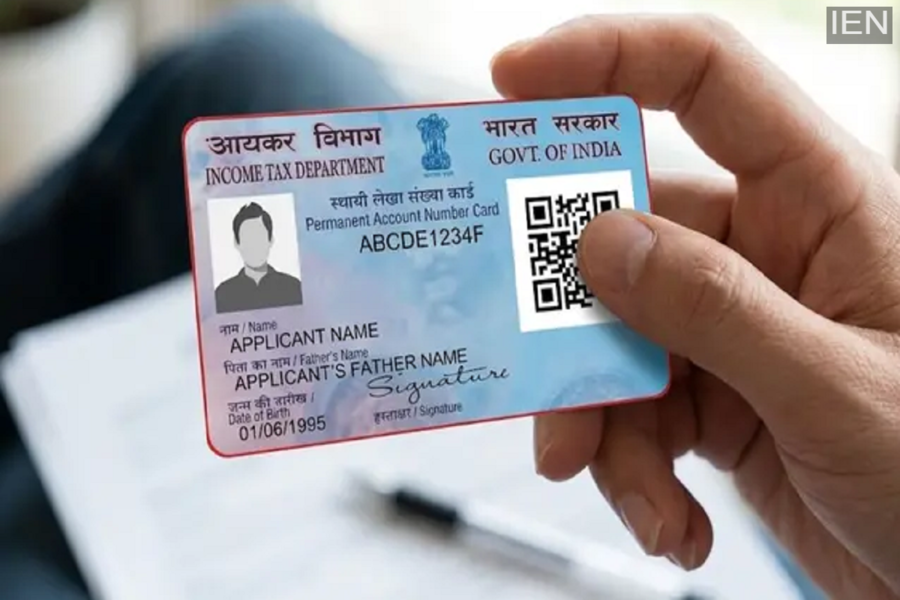
PAN Card: People often view the PAN card merely as a tool for filing tax returns. However, did you know that providing your PAN is mandatory for five major activities, such as purchasing property, an expensive vehicle, or shares? Providing an incorrect number can even result in a penalty of ₹10,000. Read on for full details.
PAN Card: Most people consider the PAN card (Permanent Account Number) to be a document needed only when filing an Income Tax Return (ITR) at the end of the year. However, this view is incomplete. In reality, the PAN card is central to all your major financial transactions.
From opening a bank account to buying land or a house and investing in the stock market, there are numerous instances where providing the correct PAN number is legally mandatory. According to tax experts, the Income Tax Department uses the PAN number to monitor all your significant transactions.
The primary objective is to ensure that a precise record of your actual earnings and expenditures is maintained in government accounts.
Providing a PAN card is mandatory for these 5 major transactions:
Under current income tax regulations, possessing a PAN card is essential if you intend to undertake any of the five activities listed below. Without it, your transaction could be halted midway.
- Buying or selling property worth more than ₹20 lakh: Providing a PAN card is mandatory if you are buying or selling any immovable property (such as land, a flat, or a shop) valued at over ₹20 lakh.
- Cash or other purchases exceeding ₹2 lakh: Providing a PAN number is mandatory when making a payment of more than ₹2 lakh for any goods or services in a single transaction.
- Transactions involving unlisted shares exceeding ₹1 lakh: If you buy or sell shares of a company not listed on the stock exchange and the transaction value exceeds ₹1 lakh, it cannot be completed without a PAN.
- Vehicles costing over ₹5 lakh: If you purchase a car or motorcycle priced above ₹5 lakh from a showroom, you are required to submit a copy of your PAN card.
- Demat accounts and mutual funds: A PAN is mandatory for opening a Demat account to invest in the stock market or for starting investments in various specialized financial instruments.
All these transactions are directly linked to your financial profile, and full details are reported to the Income Tax Department.
Can you receive an Income Tax Department notice for not providing a PAN card?
Providing a PAN card is a legal requirement. If you fail to provide it where mandatory, the concerned entity or bank may refuse to process your transaction. Whenever you provide your PAN for a major transaction, the data is recorded in government records such as TDS, TCS, the Statement of Financial Transactions (SFT), and your Annual Information Statement (AIS).
Consequently, if there is a significant discrepancy or inconsistency between your declared annual income and the major expenses incurred, the Income Tax Department may issue a notice seeking an explanation.
Heavy penalty for providing an incorrect or fake PAN
Under the rules, intentionally or negligently entering an incorrect PAN in any financial or tax-related document is considered a serious offense. Doing so can attract a penalty of up to ₹10,000.
You may face difficulties in claiming tax credits.
A discrepancy will arise in your financial records.
The Income Tax Department may initiate a detailed scrutiny of your profile. Therefore, always double-check your PAN number when writing it on any form or document.
The Income Tax Department monitors you using high-tech methods.
Your PAN card serves as a unique identity within the entire tax system. Information regarding your bank deposits, mutual fund investments, stock market transactions, and even foreign remittances is linked to your PAN.
Nowadays, the Income Tax Department employs advanced data analytics and modern technologies to scrutinize this data. The department’s systems instantly detect whether an individual’s income and expenditure align. Thus, the safest way to avoid legal trouble or receiving a notice is to strictly adhere to tax regulations and always provide accurate information.
