
Do 'Tractor' Banknotes Really Sell for Lakhs? Discover the Story Behind Old 1-Rupee and 5-Rupee Notes
Do old 1-rupee and 5-rupee banknotes actually sell for lakhs? Learn the history of the 5-rupee 'tractor' note, how the value of old currency is determined, and how to protect yourself from online scams.
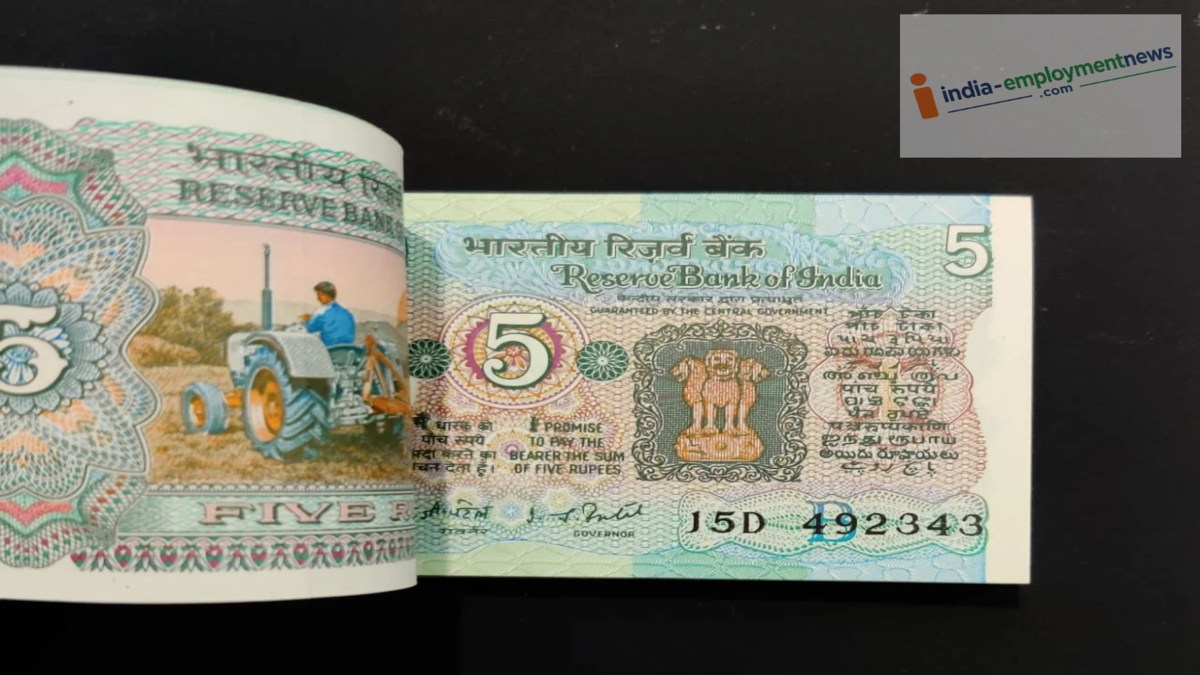
Do you have any old 1-rupee or 5-rupee notes at home? If so, you might have come across claims on social media suggesting that selling these notes could earn you lakhs of rupees. There is, in particular, a lot of talk about an old 5-rupee note that features an image of a farmer plowing a field with a tractor on the back. Many online posts claim that such notes can fetch lakhs.
But are these notes truly worth that much? Can any old 'tractor' note make you rich, or is this just a front for online fraud? Let’s explore the story behind these old 1-rupee and 5-rupee notes and understand how their actual value is determined.
Why is the 'Tractor' Note Special?
The old 5-rupee note is known as the 'tractor note' because it depicts a farmer plowing a field with a tractor on its reverse side. This design represents the modernization of agriculture and farming in India. The note belongs to a currency series introduced in the 1970s, which featured imagery related to the nation's progress, science, and technology.
The 5-rupee note highlights the use of machinery in farming—a feature that gives it a distinct status among collectors of old currency.
What is the Story Behind the 1-Rupee Note?
The history of the 1-rupee note in India goes back a long way. According to the Reserve Bank of India, the first 1-rupee note was issued in the country on November 30, 1917. At that time, India was under British rule, and the banknotes featured a portrait of King George V.
Subsequently, the one-rupee note was discontinued in 1926, but it was reissued in August 1940 during the Second World War. Following independence, in 1949, the Government of India introduced a new design for the one-rupee note, which featured the Emblem of the Ashoka Pillar. Notably, the one-rupee note is issued by the Government of India, not the Reserve Bank of India (RBI).
How much do old banknotes sell for?
The value of old banknotes depends on factors such as their date of printing, condition, serial number, and rarity. For instance, collectors might show interest in notes with a serial number like '786' or those containing a sequence of identical digits. Similarly, notes with printing errors or those bearing specific, rare signatures can command a higher value than standard notes. However, this does not mean that every old banknote will fetch thousands or lakhs of rupees.
In one auction record, a five-rupee note from the 'tractor series' was sold for ₹3,000; this note contained a printing error and was considered rare. In another instance, a note with a distinct printing error was recorded as having sold for ₹10,000.
Are old banknotes being sold online?
There have been reports of online fraud involving the buying and selling of old banknotes and coins. Various websites and social media accounts claim that they can help individuals earn lakhs of rupees in exchange for old banknotes. To facilitate this, they often demand payments for registration fees, GST, or commissions. On August 4, 2021, the Reserve Bank of India issued a warning to the public regarding such fraudulent offers.
The RBI has explicitly stated that it does not engage in the buying or selling of old banknotes and coins, nor has it authorized any individual or organization to collect fees or commissions on its behalf. Therefore, if someone claims they will pay lakhs of rupees in exchange for old currency notes, be cautious.
Are old currency notes still valid?
According to the RBI, the 2 and 5 rupee notes issued in the past remain legally valid. Although their printing has been discontinued, these old notes have not lost their validity. Similarly, old 1 rupee notes are also valid.
