
Crude Oil Slips Below $107: Why Global Prices Eased Despite Ongoing Tensions
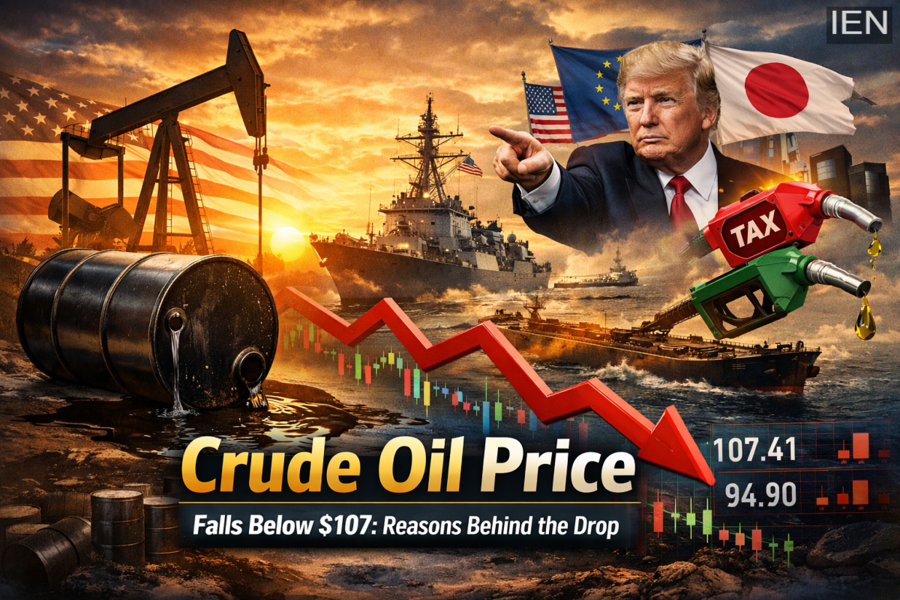
Global oil markets showed signs of relief on Friday as crude prices pulled back from recent highs. After days of sharp gains driven by geopolitical tensions, both benchmark crude prices declined, offering some respite to markets and consumers.
According to latest data, Brent Crude futures fell by $1.24 (around 1.1%) to $107.41 per barrel. Meanwhile, WTI Crude Oil dropped by $1.24 (about 1.3%) to $94.90 per barrel.
Why Did Crude Oil Prices Fall?
Several global developments contributed to the cooling of oil prices, despite ongoing tensions in the Middle East.
1. Efforts to Secure Strait of Hormuz
Major European countries along with Japan have stepped forward to support efforts aimed at ensuring safe passage for ships through the Strait of Hormuz—a critical global oil route.
This narrow waterway handles nearly 20% of the world’s oil and LNG shipments. Any disruption here directly impacts global energy prices. The assurance of safer transit reduced fears of supply disruptions, easing pressure on oil prices.
2. US Moves to Boost Oil Supply
The United States is taking steps to stabilize global oil markets by increasing supply.
Officials indicated that:
-
Restrictions on Iranian oil stuck in tankers may be relaxed
-
Additional crude could be released from strategic reserves
These measures are aimed at balancing supply-demand dynamics and preventing further price spikes.
3. Diplomatic Signals to Reduce Escalation
In a significant development, Donald Trump reportedly urged Israel to avoid targeting Iran’s energy infrastructure again.
This move signaled a possible de-escalation in the conflict, which helped calm investor concerns and reduced speculative pressure on oil prices.
Despite Drop, Weekly Trend Remains Strong
Even with the recent dip, crude oil prices have shown strong upward momentum this week.
-
Brent crude is still on track for a weekly gain of over 4%
-
Earlier price surge was driven by attacks on oil and gas facilities in Gulf nations
-
Production disruptions in key regions pushed prices higher
This highlights that while short-term relief is visible, underlying risks remain.
WTI Trading at a Deep Discount
Interestingly, WTI crude is currently trading at one of its largest discounts compared to Brent in over a decade.
-
This reflects regional supply differences
-
US production levels remain relatively strong
-
Global demand and geopolitical factors continue to favor Brent pricing
What’s Happening in the US Oil Sector?
Production in North Dakota—one of the largest oil-producing regions in the US—is expected to rise in the coming months.
-
Inactive wells are being restarted
-
Winter-related restrictions are easing
-
Output could increase depending on price trends
However, officials have noted that future production depends on how long oil prices remain elevated and company budgets.
Market Outlook: What Lies Ahead?
While the recent drop in crude prices is a positive sign, the situation remains highly volatile.
Key factors to watch:
-
Developments in the Middle East conflict
-
Stability in the Strait of Hormuz
-
US supply decisions and reserve releases
-
Global demand trends
Any sudden escalation or supply disruption could quickly push prices higher again.
Conclusion
The recent fall in crude oil prices below $107 reflects a combination of diplomatic efforts, supply-side measures, and improved confidence in global shipping routes. However, the market remains sensitive to geopolitical developments.
For now, prices may appear stable, but uncertainty continues to loom. Investors, businesses, and consumers should stay alert, as the oil market can change direction rapidly in response to global events.
