
Crops ruined by rain and hailstorms? If you want compensation from the government, keep these 5 things in mind..
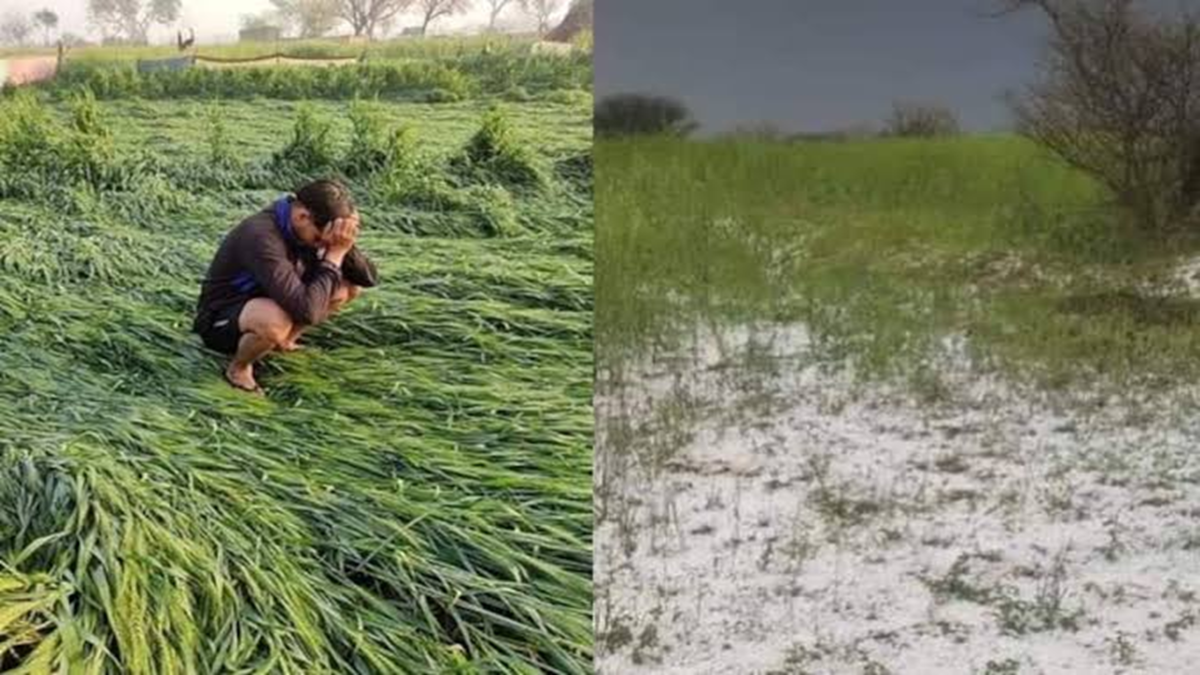
Crop Loss Compensation Rules: Heavy monsoon rains have caused significant damage to crops such as paddy, sesame, and moong across states ranging from Uttar Pradesh, Bihar, and Jharkhand to Madhya Pradesh and Odisha. In UP, rainfall has been continuous for three days, stretching from the Lucknow-Kanpur region to Gorakhpur. If you are a farmer whose crops have been damaged, do not delay in applying for government compensation. Even if you do not have crop insurance, the government provides compensation to farmers in the event of natural disasters. Here is what you need to do to claim compensation for crop loss...
Report crop loss within 72 hours
The most crucial step when crops are damaged is to report the loss on time. Government regulations mandate that a complaint be filed within 72 hours of the disaster occurring. You can report the crop loss using the methods listed below. *Lekhpal* (revenue official) Yagya Prakash Dixit advises that if your crops have suffered damage, you should first inform the *Tehsil* office so that the *Lekhpal* can visit and conduct a field survey as soon as possible.
File a complaint directly by calling the toll-free number 14447 of the 'Krishi Rakshak' portal.
Submit an online report using the Central Government's Crop Insurance App.
Contact the agriculture officer, *Lekhpal* or *Patwari* of your area, a representative of the relevant insurance company, or the bank branch where you hold your KCC (Kisan Credit Card) account.
Required percentage of crop loss
Under the Pradhan Mantri Fasal Bima Yojana (PMFBY), farmers are entitled to an insurance claim if local disasters—such as hailstorms, lightning strikes, or waterlogging—result in a crop loss of 25 percent or more in the field.
To receive input subsidy from the state government's disaster relief fund (under SDRF or NDRF), a minimum crop loss of 33 percent is required.
**Criteria for Crop Loss Claims**
If a single farmer's field suffers damage due to hailstorms, lightning strikes, landslides, or unseasonal rain, compensation is provided based on a survey of that specific field alone; widespread damage across the entire village or block is not a prerequisite in such cases.
In the event of drought, floods, or major pest infestations, the total loss is assessed using 'Crop Cutting Experiments,' treating the entire notified area—such as a village or a *Patwari Halqa* (revenue circle)—as a single unit.
**Avoid These 5 Major Mistakes**
Notifications regarding crop loss submitted after 72 hours are not considered valid, and claims may be rejected; therefore, ensure you register your complaint within the 72-hour window. Details such as your name and its spelling must match exactly across your Aadhaar card, bank passbook, and land records (such as *Khasra-Khatauni*). Ensure the crop registered in the insurance policy is the one actually sown in the field; if the crop has been changed, visit your bank or CSC center within 7 days to update the records. When uploading proof of loss, use the 'Crop Insurance App' instead of a standard camera so that the field's location and the date are automatically recorded in the photo. The government disburses compensation directly into bank accounts via Direct Benefit Transfer (DBT); therefore, ensure your bank account is linked to your Aadhaar and the DBT service is active.
Disclaimer: This content has been sourced and edited from NDTV India. While we have made modifications for clarity and presentation, the original content belongs to its respective authors and website. We do not claim ownership of the content.
