
Country’s first LNG train to run from Sabarmati; expected annual savings of around ₹12 lakh
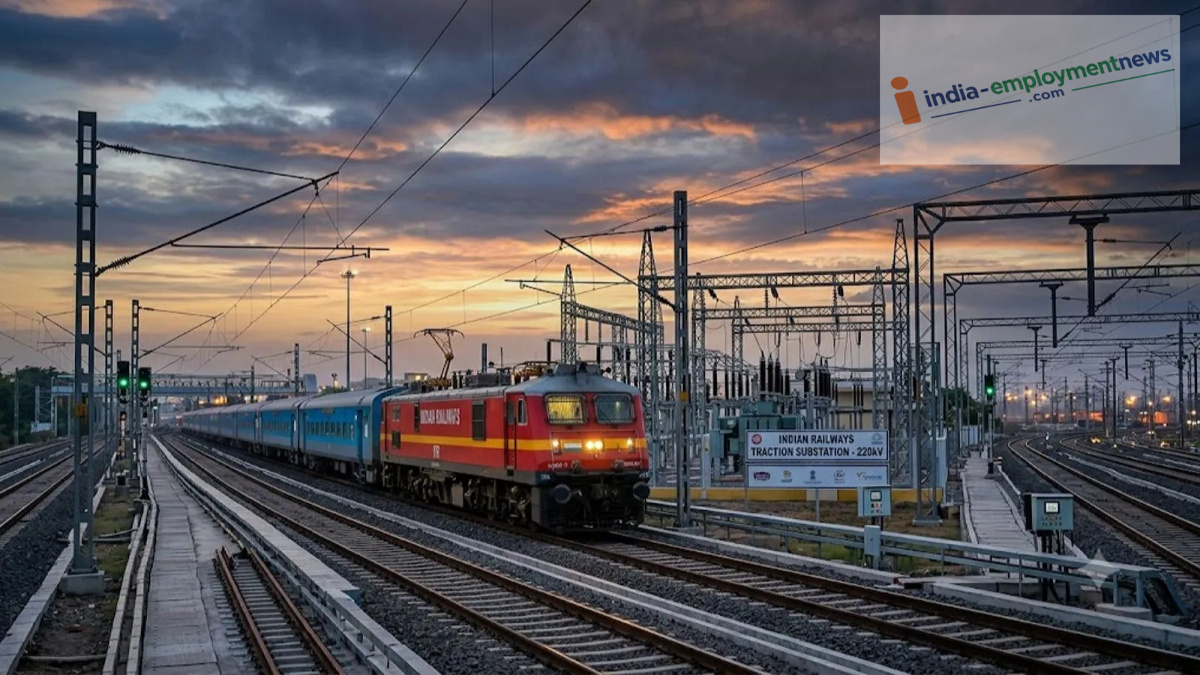
India is set to launch its first LNG train, a move that will save the Railways approximately ₹12 lakh annually. Union Home Minister Amit Shah is scheduled to flag off this train today, September 27.
This marks a significant day for Indian Railways in its shift towards alternative and cleaner fuels, as Union Home and Cooperation Minister Amit Shah flags off the country’s first LNG (Liquefied Natural Gas)-powered dual-fuel train from Sabarmati station in Gujarat. The objective of this technology is to reduce the Railways’ dependence on diesel, cut fuel costs, and lower pollution levels.
According to the Ahmedabad Railway Division, Indian Railways is utilizing an LNG-based fuel system in the train’s Driving Power Car (DPC) for the first time. This technology allows the engine to operate on both LNG and diesel; the engine can switch between the two fuels based on availability.
Trials Completed
Under this project, two Driving Power Cars have been converted to the LNG-diesel dual-fuel system, with each DPC boasting a capacity of 1,400 horsepower. The Railways reports that field trials covering over 2,000 kilometers have already been completed for both converted DPCs. During these trials, the capability and reliability of the new technology were thoroughly tested. According to the Railways, this system can substitute diesel with LNG by up to approximately 40 percent.
60 Percent Diesel Usage
It is worth noting that the train will not rely entirely on LNG. Thanks to the dual-fuel system, the engine can run on both LNG and diesel as required. In situations where LNG is unavailable, the train can operate on diesel. This is expected to mitigate operational challenges related to fuel availability. According to the Railways, the use of LNG can enable trains to cover greater distances before needing to refuel.
The Railways states that using LNG will reduce diesel consumption and engine-generated carbon emissions. This will help lower pollutants such as carbon dioxide (CO₂), nitrogen oxides (NOx), and particulate matter (PM).
Savings for the Railways
Significantly, the Railways also expects to save on fuel costs because LNG is cheaper than diesel. Based on trial data, the Railways estimates an annual saving of approximately ₹11.9 lakh per DPC (Diesel Power Car). Meanwhile, the estimated annual saving for an 8-coach rake is around ₹23.9 lakh.
Each DPC is equipped with an LNG tank with a capacity of approximately 2,200 liters, capable of holding about 950 to 1,000 kilograms of usable LNG. According to the Railways’ approved design, a fully fueled LNG tank in a DPC provides enough fuel for daily operations covering about 444 kilometers. This can reduce the frequency of refueling stops.
According to the Railways, the LNG dual-fuel system has been designed to maintain the power, reliability, and operational capability of the conventional diesel engine. In other words, fuel savings and reduced emissions will be achieved without compromising the train’s performance.
